Arthritis-Friendly Kitchen Tools and Gadgets
Discover adaptive kitchen tools that make cooking easier with hand and wrist arthritis. Ergonomic gadgets for grip, opening, and daily kitchen tasks.
By Joint Pain Authority Team
Key Takeaways
- Simple kitchen tool swaps can dramatically reduce hand pain during cooking and meal prep
- Look for tools with thick, cushioned handles and ergonomic grips
- Electric versions of manual tools (can openers, jar openers, choppers) save your joints significant strain
- Most adaptive kitchen gadgets cost between $10-$30 and are widely available online
- Maintaining your independence in the kitchen supports both your nutrition and your confidence
Cooking a meal should be satisfying, not painful. But when you have hand and wrist arthritis or psoriatic arthritis, even simple kitchen tasks — opening a jar, peeling a potato, gripping a knife — can cause enough pain to make you skip meals or rely on less healthy convenience foods.
You don’t have to give up cooking. Adaptive kitchen tools are specifically designed to reduce the force, grip, and twisting motions that aggravate arthritic hands. These small changes in your kitchen can make a big difference in your daily life.
The Biggest Kitchen Challenges With Arthritis
Understanding which motions cause the most trouble helps you target your tool upgrades.
Gripping: Holding knives, utensils, pots, and pans requires sustained grip strength. Thin, smooth handles are the worst offenders.
Twisting: Opening jars, turning knobs, and wringing out dishcloths require rotational force that stresses thumb and wrist joints.
Pinching: Peeling vegetables, opening packages, and picking up small items requires fine motor control from inflamed finger joints.
Lifting: Heavy pots, cast iron pans, and full dishes of food put tremendous strain on hand, wrist, and shoulder joints.
Essential Adaptive Tools
Jar and Bottle Openers
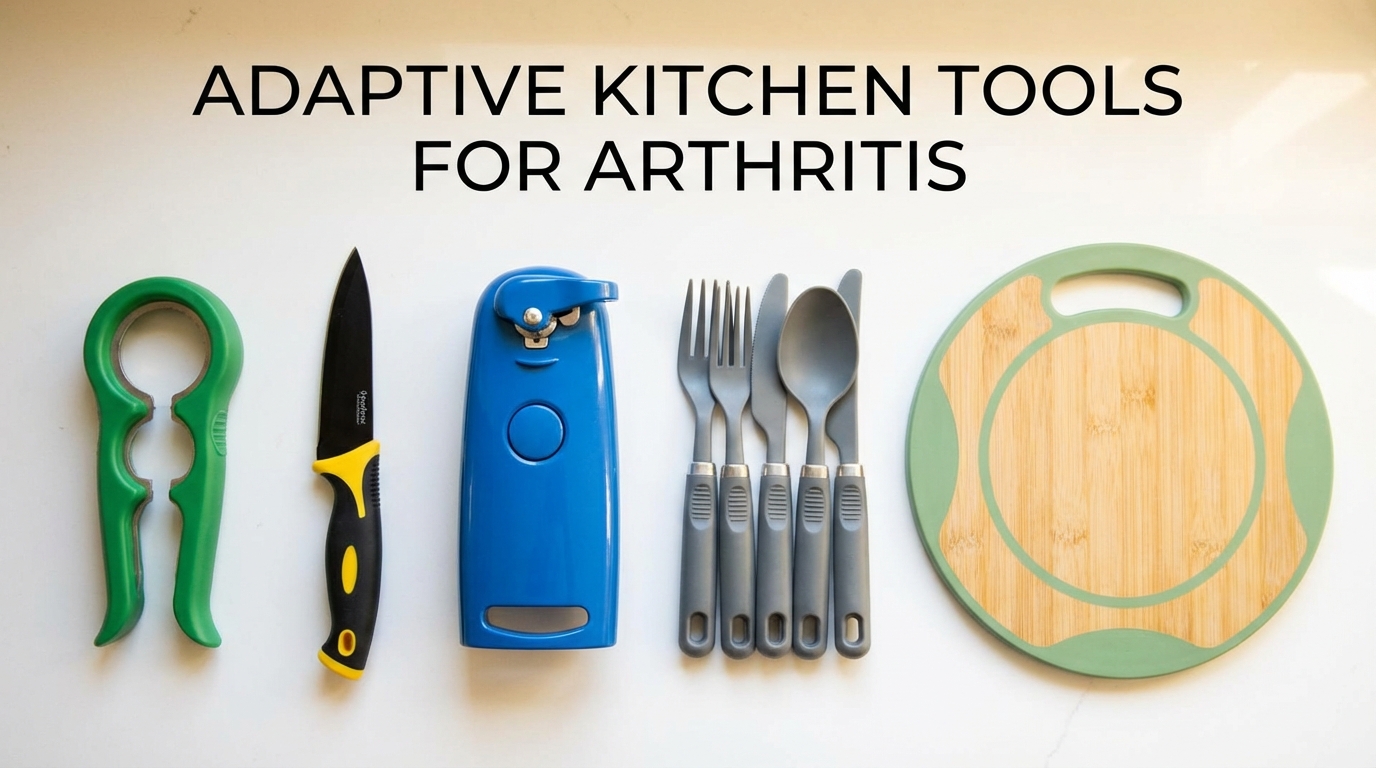
Jars are the number-one kitchen frustration for people with hand arthritis. Several types of openers can help:
- Under-cabinet jar openers: Mount under a cabinet and grip the lid while you turn the jar with both hands
- Electric jar openers: One-touch operation — no grip strength needed
- Rubber grip pads: Increase friction so you need less force to turn a lid
- V-shaped jar openers: Wedge under the lid to break the seal before twisting
Best pick: An electric jar opener ($20-$35) eliminates the problem entirely.
Ergonomic Knives and Cutting Tools
Standard kitchen knives require a tight grip and downward pressure — both painful with arthritis.
- Rocker knives: Curved blade that you rock back and forth instead of pushing down. Requires minimal grip.
- Ergonomic-handle knives: Thick, cushioned handles at a right angle to the blade, keeping your wrist neutral
- Food choppers: Manual or electric devices that dice vegetables without knife work
- Pizza-wheel-style cutters: Let you roll through food with less force than a standard knife
Can Openers
Manual can openers require strong pinch and twist motions. Switch to:
- Electric can openers: Touch a button and walk away
- One-touch openers: Battery-powered, hands-free operation
- Easy-turn manual openers: Large, cushioned handles require less force
Utensils With Built-Up Handles
Standard forks, spoons, and spatulas have thin handles that are hard to grip. Adaptive alternatives include:
- Weighted utensils: Extra weight reduces the need for a tight grip
- Foam handle grips: Slip over existing utensils to make handles thicker and softer
- Angled utensils: Bent at an angle so you don’t need to twist your wrist
- Universal cuff holders: Strap utensils to your hand if grip is very limited
Budget tip: Buy a pack of foam tubing ($5-$10) and slip it over the handles of your existing utensils. Instant ergonomic upgrade.
Cutting Boards
A cutting board that slides around while you’re trying to chop is dangerous and frustrating.
- Non-slip cutting boards: Rubber feet or suction cups keep them in place
- Boards with spikes: Metal spikes hold food in place so you can cut with one hand
- Boards with raised edges: Keep food from falling off
Smart Kitchen Organization
The right tools aren’t enough if your kitchen setup forces painful reaching, bending, and lifting.
Reduce Reaching and Bending
- Move frequently used items to counter height or the lowest overhead shelves
- Use a lazy Susan in cabinets for easy access to spices and small items
- Install pull-out shelving in lower cabinets so you don’t have to bend and reach into deep spaces
- Keep a step stool with a handrail for safely reaching higher items
Reduce Lifting
- Use lightweight pots and pans (hard-anodized aluminum instead of cast iron)
- Fill pots with a measuring cup at the sink instead of carrying heavy pots full of water
- Use a colander that sits in the pot and lifts out, so you don’t need to carry and tilt a heavy pot to drain
- Slide heavy items across the counter instead of lifting them
Other Helpful Gadgets
- Electric can/jar openers: Already mentioned, but worth repeating — they’re game changers
- Lever-style faucet handles: Easier than round knobs if you’re remodeling
- Touch-activated soap dispensers: No need to squeeze or pump
- Silicone oven mitts: Easier to grip than bulky fabric mitts
- Rolling cart: Move items between the counter and table without carrying
Supporting Your Hands Beyond the Kitchen
Kitchen modifications work best alongside broader hand care strategies.
Bracing and orthotics: A thumb stabilizer or wrist splint provides support during kitchen tasks. Many people wear a light splint while cooking and remove it afterward.
Hand exercises: Gentle daily exercises maintain the grip strength and flexibility you need for kitchen tasks. Simple finger stretches and ball squeezes make a real difference over time.
Pacing: Don’t try to cook an entire Thanksgiving dinner in one marathon session. Break meal prep into smaller chunks spread across the day. Prep vegetables in the morning, assemble in the afternoon.
Where to Buy Adaptive Kitchen Tools
- Amazon: Search for “arthritis kitchen tools” for the widest selection
- Occupational therapy supply stores: Websites like Patterson Medical, Sammons Preston
- Big-box retailers: Target and Walmart carry some ergonomic kitchen items
- Your occupational therapist: Can recommend specific products for your needs and may have samples to try
Insurance note: Most adaptive kitchen tools are not covered by insurance because they’re considered “convenience items.” However, if prescribed by an occupational therapist as part of your treatment plan, some items may qualify for health savings account (HSA) or flexible spending account (FSA) reimbursement.
Frequently Asked Questions
What is the single most helpful kitchen tool for hand arthritis?
An electric jar opener is consistently rated as the most helpful tool by people with hand arthritis. Jars create the most frustration and require the most grip and twist force. Eliminating that struggle removes a daily source of pain and discouragement.
Are arthritis-friendly kitchen tools expensive?
Most adaptive tools cost between $10-$30. Foam handle grips run about $5-$10 for a multi-pack. Electric jar openers are $20-$35. You don’t need to replace everything at once — start with the tools that address your biggest pain points and add more over time.
Should I see an occupational therapist for kitchen adaptations?
If you’re struggling significantly with daily kitchen tasks, an occupational therapist (OT) can be very helpful. OTs specialize in adapting daily activities for people with physical limitations. They can assess your specific challenges, recommend tools, teach joint protection techniques, and even visit your home to suggest layout improvements.
Can I still cook large meals with hand arthritis?
Yes, with planning and the right tools. The key is pacing — spread prep work across several sessions rather than doing everything at once. Use electric appliances (food processor, stand mixer, electric can opener) to reduce hand strain. Ask family members to help with the most demanding tasks like lifting heavy pots.
Do weighted utensils really help?
Yes, for many people. The extra weight in the handle means your hand doesn’t need to grip as tightly to control the utensil. They’re especially helpful for people with tremors or weakness. Try them before buying a full set — some people love them, while others prefer the foam grip approach.
The information in this article is for educational purposes only and is not intended as medical advice. Consult with your healthcare provider or occupational therapist for personalized recommendations about adaptive tools and joint protection strategies.
Last medically reviewed: February 2026
Enjoyed this article?
Get more insights like this delivered to your inbox weekly.
Join 10,000+ readers. No spam.