Best Knee Injection for Osteoarthritis: Comparing All Options in 2026
Which knee injection works best for osteoarthritis? Evidence-based comparison of cortisone, hyaluronic acid (gel), and PRP injections — effectiveness, duration, cost, and Medicare coverage.
By Joint Pain Authority Team
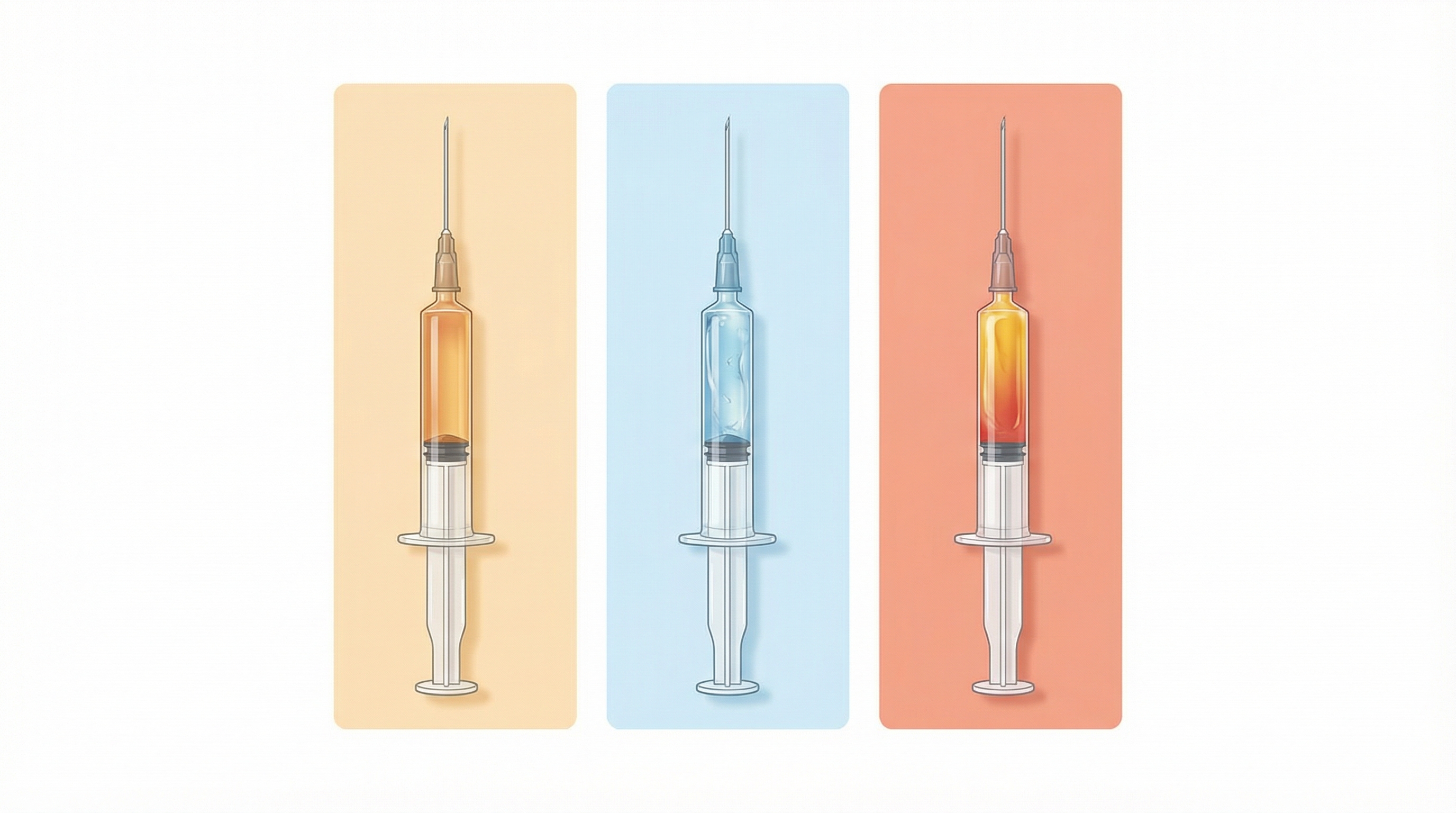
Key Takeaways
- There is no single “best” knee injection — the right choice depends on your arthritis stage, insurance coverage, treatment goals, and how quickly you need relief
- Cortisone provides the fastest pain relief (1–3 days) but lasts only 1–6 weeks and may harm cartilage with repeated use
- Hyaluronic acid (gel) injections offer 6–12 months of relief, are covered by Medicare Part B, and have no cartilage damage risk — the strongest combination of durability, safety, and affordability for most Medicare beneficiaries
- PRP shows the best long-term outcomes in recent meta-analyses (6–18 months) but is not covered by Medicare and costs $500–$2,000 out of pocket
- Recent 2024–2025 meta-analyses involving over 3,300 patients confirm PRP outperforms cortisone at mid- and long-term follow-up, while hyaluronic acid offers similar long-term benefits with proven insurance coverage
- Your doctor can help you choose based on your X-ray findings, pain level, budget, and whether you’re trying to delay knee replacement surgery
If you’ve searched for the “best knee injection for osteoarthritis,” you’ve probably found conflicting answers. Some sites say cortisone. Others push PRP. Many recommend gel injections.
Here’s the truth: there is no single best injection for everyone. The right choice depends on your arthritis severity, how fast you need relief, your insurance coverage, and your long-term goals. What works best for an active 55-year-old paying out of pocket is different from what works best for a 72-year-old on Medicare who wants to avoid surgery.
This guide compares all three major knee injection types using the latest clinical evidence so you can make an informed decision with your doctor.
Quick Answer: Which Injection Is Best for Your Situation?
| Your Situation | Best Option | Why |
|---|---|---|
| Need fast relief for a flare-up | Cortisone | Works in 1–3 days; covered by insurance |
| Want long-lasting relief + Medicare coverage | Hyaluronic acid (gel) | 6–12 months relief; covered by Medicare Part B |
| Want the best long-term outcomes and can pay out of pocket | PRP | Strongest 12-month outcomes in recent studies |
| Trying to delay knee replacement | Hyaluronic acid (gel) | Large studies show each course extends time before surgery |
| Have early arthritis and want to protect cartilage | PRP or Hyaluronic acid | Both are cartilage-neutral or potentially protective |
| Need a bridge before physical therapy | Cortisone | Rapid inflammation reduction allows you to exercise |
The 3 Major Knee Injection Types
1. Cortisone (Corticosteroid) Injections
Cortisone injections deliver a powerful anti-inflammatory steroid directly into your knee joint. They are the oldest and most widely used injection for knee arthritis.
Cortisone: Quick Facts
| How it works | Blocks inflammation in the joint |
| Onset of relief | 1–3 days |
| Duration | 1–6 weeks (average 4–6 weeks) |
| Medicare coverage | Yes — covered under Part B |
| Self-pay cost | $100–$300 per injection |
| Cartilage impact | May accelerate cartilage loss with repeated use |
| Frequency limit | Maximum 3–4 times per year per joint |
| Evidence level | Strong for short-term relief |
How Cortisone Works
Your arthritic knee produces inflammatory chemicals that cause pain, swelling, and stiffness. Cortisone blocks this inflammatory cascade quickly and effectively. Most patients feel meaningful relief within 24–72 hours — faster than any other knee injection.
The Evidence
Cortisone has decades of research supporting its short-term effectiveness. A 2024 meta-analysis published in EFORT Open Reviews analyzing 35 randomized controlled trials (3,348 patients) confirmed that cortisone provides significant short-term pain relief comparable to other injection types during the first few weeks.
However, the same study found that cortisone’s benefits fade quickly. At mid-term (3–6 months) and long-term (6–12 months) follow-up, both hyaluronic acid and PRP significantly outperformed cortisone.
The Limitation: Cartilage Concerns
A landmark 2017 study following patients over two years found that those receiving repeated cortisone injections experienced greater cartilage volume loss compared to those receiving placebo saline injections. A separate 2019 study in JAMA showed patients receiving multiple cortisone injections had a higher likelihood of eventually needing knee replacement compared to those receiving hyaluronic acid.
Important Safety Note
Most orthopedic guidelines recommend no more than 3–4 cortisone injections per year per joint, with at least 3 months between injections. Cortisone is most appropriate for acute flares — not as a long-term management strategy.
Pros and Cons
Pros:
- Fastest onset of any knee injection (1–3 days)
- Lowest cost ($100–$300)
- Covered by Medicare and nearly all private insurance
- No prior authorization typically required
- Effective for reducing acute swelling
Cons:
- Shortest duration (1–6 weeks on average)
- May accelerate cartilage breakdown with repeated use
- Limited to 3–4 injections per year
- Does not address underlying joint fluid depletion
- Diminishing returns over time in many patients
Who Cortisone Is Best For
- Patients experiencing an acute arthritis flare with significant swelling
- Those who need quick relief before a planned event or trip
- Patients who need to reduce inflammation before starting physical therapy
- First-time injection patients who want to confirm the knee joint as the pain source
- Occasional use for breakthrough pain between other treatments
2. Hyaluronic Acid (Gel) Injections
Hyaluronic acid injections — also called gel injections, viscosupplementation, or knee gel shots — deliver a lubricating gel into your knee joint. This gel replaces and supplements the natural joint fluid that deteriorates in osteoarthritis.
Hyaluronic Acid (Gel): Quick Facts
| How it works | Restores joint lubrication and cushioning |
| Onset of relief | 2–8 weeks (gradual) |
| Duration | 6–12 months |
| Medicare coverage | Yes — covered under Part B |
| Self-pay cost | $500–$1,500 per course |
| Cartilage impact | Neutral to protective — no damage risk |
| Frequency | Can be repeated every 6 months |
| Evidence level | Moderate |
How Gel Injections Work
In a healthy knee, synovial fluid contains high concentrations of hyaluronic acid, which acts as a lubricant and shock absorber. In arthritic knees, this fluid becomes thin and watery — less effective at protecting the joint surfaces during movement.
Gel injections restore this cushioning function. Unlike cortisone, which masks inflammation temporarily, HA addresses the mechanical problem of depleted joint fluid — which is why relief lasts significantly longer.
The Evidence
Hyaluronic acid injections have been FDA-approved since 1997 and have the largest body of long-term safety data among knee injections. Key findings from recent research include:
- A 2024 meta-analysis of 9,338 knees found HA provides significant pain and function improvement compared to placebo with a favorable safety profile
- A study of 182,022 knee osteoarthritis patients found that HA injections significantly delayed knee replacement surgery — each additional course extended the time before surgery by months to years
- Patients receiving 5 courses of HA injections delayed knee replacement by an average of 3.6 years compared to 0.7 years for non-users
- 70–80% of patients experience meaningful pain reduction with gel injections
- A 2024 Korean health insurance database study confirmed the surgery-delaying effect in an independent population
The EFORT 2024 meta-analysis found that hyaluronic acid offered comparable or superior results to cortisone at mid- and long-term follow-ups, with no WOMAC score differences between the two at any time point — but HA showed superior VAS pain improvement at long-term follow-up.
No Cartilage Damage Risk
This is one of HA’s most important advantages. Research consistently shows hyaluronic acid is neutral to protective for cartilage. Patients can safely receive gel injections every six months for years without concerns about accelerating joint damage — a critical distinction from cortisone.
Available HA Brands
Several FDA-approved HA products are available. While all are effective, they differ in molecular weight, number of injections required, and cost:
| Brand | Injections Required | Molecular Weight | Key Feature |
|---|---|---|---|
| Synvisc-One | 1 injection | Highest (6,000 kDa) | Strongest pain reduction in comparative studies |
| Gel-One | 1 injection | High | Single-injection convenience |
| Monovisc | 1 injection | High | Single-injection option |
| Euflexxa | 3 injections (weekly) | Medium | Best cost-effectiveness ratio in economic analyses |
| Supartz FX | 5 injections (weekly) | Medium | Longest track record |
| Hyalgan | 3–5 injections | Lower | Most studied; extensive safety data |
Your doctor will typically choose a brand based on your insurance formulary, clinical experience, and whether a single-injection or multi-injection course is preferred. No brand has been shown to be dramatically superior to another — all provide meaningful relief for most patients.
Pros and Cons
Pros:
- Long-lasting relief (6–12 months per course)
- Covered by Medicare Part B
- No cartilage damage risk — safe for long-term repeated use
- May delay knee replacement by years
- FDA-approved since 1997; extensive safety data
- Can be combined with physical therapy for enhanced results
Cons:
- Slower onset than cortisone (2–8 weeks for full effect)
- May require prior authorization from some insurance plans
- Not effective for everyone (about 20–30% of patients don’t respond)
- Less effective for severe (bone-on-bone) arthritis
- Some plans require documented failure of conservative treatment first
- 20% coinsurance after Part B deductible for Medicare patients
Who Gel Injections Are Best For
- Medicare beneficiaries seeking long-lasting, covered treatment
- Patients who’ve tried cortisone but want longer-lasting results
- Anyone focused on delaying or avoiding knee replacement surgery
- Patients with mild to moderate knee osteoarthritis (Kellgren-Lawrence grades 2–3)
- Those who want a treatment safe enough to repeat every 6 months for years
- Patients concerned about the cartilage risks of repeated cortisone
3. PRP (Platelet-Rich Plasma) Injections
PRP injections use concentrated growth factors from your own blood, which are injected into your knee to stimulate repair and reduce inflammation.
PRP: Quick Facts
| How it works | Growth factors from your blood promote healing and reduce inflammation |
| Onset of relief | 4–8 weeks |
| Duration | 6–18 months |
| Medicare coverage | No — considered investigational |
| Self-pay cost | $500–$2,000 per treatment |
| Cartilage impact | Potentially regenerative (early evidence) |
| Frequency | Typically 1–3 initial injections; annual boosters |
| Evidence level | Moderate and growing |
How PRP Works
A small amount of your blood is drawn and spun in a centrifuge to concentrate platelets and growth factors. This platelet-rich concentrate — typically 3–5 times the normal platelet concentration — is then injected into your knee joint. The growth factors signal your body to reduce inflammation and may stimulate repair processes in damaged joint tissue.
The Evidence
PRP research has accelerated significantly in recent years. The evidence base is now substantial:
- A 2025 meta-analysis in Arthroscopy based on 15 randomized, double-blinded controlled trials (1,632 patients) found PRP was more effective than HA for knee osteoarthritis pain and function at 12 months
- The EFORT 2024 meta-analysis (35 RCTs, 3,348 patients) found PRP offered superior WOMAC improvement over cortisone at short-, mid-, and long-term follow-ups, exceeding the minimal clinically important difference at mid- and long-term
- A 2025 ESSKA safety meta-analysis examining over 76,000 patients found PRP had the lowest adverse event rate of all injection options
- Patient satisfaction rates in recent studies range from 78–82% for PRP, comparable to or slightly higher than HA
However, important limitations remain:
- No standardized preparation protocol — PRP products vary significantly between providers, making direct comparisons difficult
- No Medicare coverage — this is the most significant barrier for older adults
- Less effective for severe arthritis — not recommended for Kellgren-Lawrence grade 4 (bone-on-bone) disease
- Fewer large, long-term studies compared to HA, which has nearly 30 years of post-market data
Pros and Cons
Pros:
- Strongest long-term pain and function outcomes in recent meta-analyses
- Uses your own blood — low risk of allergic reaction
- Lowest adverse event rate among all injection types (2025 ESSKA data)
- Potentially regenerative for cartilage (early evidence)
- May provide 6–18 months of relief
- Growing evidence base with high-quality studies
Cons:
- Not covered by Medicare or most private insurance
- Highest out-of-pocket cost ($500–$2,000)
- Slowest onset of relief (4–8 weeks)
- No standardized preparation — results vary by provider
- Fewer decades of safety follow-up compared to HA
- Less effective for severe (bone-on-bone) arthritis
- Some preparation methods work better than others (leukocyte-poor PRP may be preferred)
Who PRP Is Best For
- Patients willing and able to pay out of pocket for potentially superior long-term outcomes
- Those who haven’t responded adequately to cortisone or gel injections
- Patients with early to moderate osteoarthritis (Kellgren-Lawrence grades 1–3)
- Active patients who want to optimize joint health and function
- Patients who want to explore the newest evidence-based treatments
What the Latest Research Says (2024–2025)
The last two years have produced several landmark studies that have shifted how researchers and clinicians view knee injections. Here is a summary of the most important findings.
Key Research Findings: 2024–2025
EFORT Open Reviews Meta-Analysis (2024) — 35 RCTs, 3,348 patients
- Cortisone offers similar benefits to HA and PRP only in the short term (first few weeks)
- PRP is superior to cortisone at mid-term (3–6 months) and long-term (6–12 months), exceeding the minimal clinically important difference
- HA and cortisone show no significant WOMAC differences at any time point, but HA shows superior VAS pain scores at long-term follow-up
Arthroscopy Meta-Analysis (2025) — 15 double-blinded RCTs, 1,632 patients
- PRP is more effective than HA for knee osteoarthritis based on WOMAC pain and total scores at 12 months
- Both PRP and HA groups exceeded the minimal clinically important difference
ESSKA Safety Meta-Analysis (2025) — 76,000+ patients
- PRP had the lowest total adverse event rate among all injection options
- All three injection types are generally safe
Korean Health Insurance Database (2024) — Large population study
- Confirmed that HA injections delay total knee replacement in an Asian population
- Results consistent with the U.S. database study of 182,022 patients
What This Means for Patients
The research trend is clear: PRP appears to offer the best long-term clinical outcomes, while hyaluronic acid offers the best combination of proven effectiveness, insurance coverage, and long-term safety. Cortisone remains valuable for short-term relief but is increasingly seen as a bridging treatment rather than a long-term management strategy.
However, evidence level matters. HA has been studied since the 1990s with consistent results across hundreds of trials. PRP’s evidence base, while growing rapidly, is still newer — and results can vary depending on the preparation method used by your provider.
Master Comparison Table
| Factor | Cortisone | Hyaluronic Acid (Gel) | PRP |
|---|---|---|---|
| Mechanism | Blocks inflammation | Restores joint lubrication | Growth factors promote repair |
| Onset of Relief | 1–3 days | 2–8 weeks | 4–8 weeks |
| Duration of Relief | 1–6 weeks | 6–12 months | 6–18 months |
| Medicare Coverage | Yes | Yes (Part B) | No |
| Self-Pay Cost | $100–$300 | $500–$1,500 | $500–$2,000 |
| Evidence Level | Strong (short-term only) | Moderate (decades of data) | Moderate (rapidly growing) |
| Cartilage Safety | Potentially harmful long-term | Neutral to protective | Potentially regenerative |
| Repeat Safety | Limit to 3–4x per year | Every 6 months; no limit | Variable; typically annual |
| Number of Injections | 1 per course | 1–5 per course (varies by brand) | 1–3 per course |
| Best Arthritis Stage | Any (for flares) | Mild to moderate (KL 2–3) | Early to moderate (KL 1–3) |
| Patient Satisfaction | High short-term | 70–80% | 78–82% |
| Years of Safety Data | 60+ years | 27+ years (since 1997) | ~15 years |
| Surgery Delay Evidence | No | Yes — up to 3.6 years | Limited data |
| AAOS Recommendation | Recommended | Inconclusive (under review) | Not addressed |
| OARSI Recommendation | Conditionally recommended | Conditionally recommended | Conditionally not recommended |
Best Injection By Situation: Decision Matrix
Not sure which injection fits your situation? Use this decision matrix as a starting point for your conversation with your doctor.
Decision Matrix: Best Injection by Goal
Best for quick relief from an acute flare → Cortisone Works in 1–3 days; best for getting through a flare-up fast
Best for long-term relief with Medicare coverage → Hyaluronic Acid (Gel) 6–12 months of relief; covered by Medicare Part B; safe to repeat
Best for sustained long-term outcomes (if cost isn’t a barrier) → PRP Strongest 12-month outcomes in recent meta-analyses; lowest adverse events
Best for delaying knee replacement surgery → Hyaluronic Acid (Gel) Large database studies (182,000+ patients) show each course extends time before surgery
Best for an acute flare before physical therapy → Cortisone Rapid inflammation reduction allows you to start PT sooner
Best for younger/active patients with early arthritis → PRP Potentially regenerative; may modify disease course in early OA
Best overall for Medicare beneficiaries (65+) → Hyaluronic Acid (Gel) Combines long-lasting relief, Medicare coverage, cartilage safety, and surgery delay
Best when other injections haven’t worked → PRP or switch HA brands Try a different approach before considering surgical options
The Stepwise Approach Most Doctors Follow
In clinical practice, most physicians follow a logical sequence:
- Conservative care first — physical therapy, weight management, OTC medications, bracing
- Cortisone — for acute flares and to confirm the knee joint is the source of pain
- Hyaluronic acid (gel) — for longer-lasting relief when cortisone wears off too quickly
- PRP — if gel injections don’t provide adequate relief and the patient can afford out-of-pocket costs
- Surgery consultation — when non-surgical options are exhausted
This sequence isn’t rigid. Your doctor will adjust based on your imaging findings, arthritis severity, pain level, insurance, and personal goals. Some patients with early arthritis and good insurance may consider PRP earlier in the sequence.
HA Brand Recommendations: What the Data Shows
If you and your doctor choose hyaluronic acid, you may have several brand options. Here’s what the evidence says about brand selection.
Choosing an HA Brand
Key takeaway: All FDA-approved HA products are effective. The differences between brands are smaller than the difference between HA and no treatment. Your insurance formulary and doctor’s experience will likely guide the choice.
That said, research has identified some differences:
- Synvisc-One showed the greatest WOMAC score improvement in head-to-head comparative studies and has the highest molecular weight (6,000 kDa), which creates a more elastoviscous gel
- Euflexxa demonstrated the best cost-effectiveness ratio in health economic analyses — patients paid the least per unit of quality-of-life improvement
- Single-injection products (Synvisc-One, Gel-One, Monovisc) offer convenience — one office visit instead of 3–5 weekly appointments
- Multi-injection products (Euflexxa, Supartz FX, Hyalgan) may be preferred by some insurers and have extensive safety records
Ask your doctor: “Which HA brand does my insurance prefer, and which have you had the best clinical results with?”
For more on HA brands, see our complete HA brands guide.
A Note About Injection Accuracy
Regardless of which injection type you choose, how accurately the injection is placed matters enormously. Studies show that injections performed with ultrasound or fluoroscopic (X-ray) guidance reach the joint space accurately in 96–100% of cases. Without imaging guidance, there can be up to a 30% miss rate.
An injection that misses the joint space provides no benefit, regardless of the medication used. When choosing a provider, ask: “Do you use imaging guidance for knee injections?”
Frequently Asked Questions
What is the most effective knee injection for osteoarthritis?
Recent meta-analyses suggest PRP may provide the best long-term pain and function improvement at 12 months. However, “most effective” depends on your situation. PRP is not covered by Medicare, making it inaccessible for many older adults. Hyaluronic acid offers the best combination of long-lasting relief (6–12 months), Medicare coverage, cartilage safety, and evidence for delaying surgery. Cortisone is most effective for rapid short-term relief. Discuss your goals, budget, and arthritis stage with your doctor.
Are gel injections better than cortisone for knee arthritis?
For long-term management, yes — gel injections last significantly longer (6–12 months vs. 1–6 weeks) and don’t carry the cartilage damage risk of repeated cortisone. A 2024 meta-analysis found hyaluronic acid provides superior VAS pain scores at long-term follow-up compared to cortisone. However, cortisone works faster and is better for acute flare management. Many patients use both at different times. Learn more in our HA vs. cortisone comparison.
Is PRP really better than hyaluronic acid?
A 2025 meta-analysis of 15 double-blinded RCTs (1,632 patients) found PRP provided better WOMAC pain and function scores at 12 months compared to HA. However, PRP is not covered by Medicare, costs $500–$2,000 out of pocket, results vary by preparation method, and it has less long-term safety data than HA (which has been used since 1997). For Medicare beneficiaries, HA often makes more practical sense. Read our detailed PRP vs. HA comparison.
How much do knee injections cost with Medicare?
Medicare Part B covers cortisone and hyaluronic acid (gel) injections for knee osteoarthritis. After your annual Part B deductible ($257 in 2026), you typically pay 20% coinsurance. For cortisone, that’s roughly $20–$60 out of pocket. For HA, it’s roughly $100–$300 per course depending on the brand and facility fees. PRP is not covered by Medicare — you’d pay the full $500–$2,000. See our Medicare Part B coverage guide for details.
Can I get different types of knee injections at different times?
Yes. Many patients use multiple injection types at different times. A common approach is cortisone for an acute flare-up, followed by hyaluronic acid injections for ongoing management. If HA doesn’t provide adequate relief, PRP can be considered. Your doctor will typically not combine different injection types simultaneously in the same joint — you’d wait for one course to take effect before switching.
How many times can I get knee injections?
This depends on the type. Cortisone: maximum 3–4 per year per joint, with at least 3 months between injections. Hyaluronic acid: every 6 months, with no documented limit on the number of courses — patients have safely received gel injections for 10+ years. PRP: varies by protocol, typically 1–3 initial treatments followed by annual maintenance if effective. Your doctor will determine the appropriate schedule based on your response.
Which knee injection has the fewest side effects?
All three injection types are generally safe. A 2025 ESSKA meta-analysis of over 76,000 patients found PRP had the lowest total adverse event rate among all injection options. Hyaluronic acid has a well-established safety profile over 27+ years of clinical use. Common side effects for all types include temporary pain, swelling, or stiffness at the injection site lasting 1–3 days. Serious complications are rare with any type.
Do knee injections work for bone-on-bone arthritis?
Knee injections tend to be most effective for mild to moderate osteoarthritis (Kellgren-Lawrence grades 2–3). For severe bone-on-bone arthritis (grade 4), effectiveness drops significantly for all injection types. That said, some patients with severe arthritis do still benefit — especially from hyaluronic acid, which can reduce pain enough to delay surgery. Cortisone can help manage flares even in advanced disease. Your doctor can assess your X-rays to determine if injections are worth trying.
Get the Facts on Knee Injection Options
Join thousands of readers who receive evidence-based guidance on knee injections, Medicare coverage, and finding the right provider.
Join 10,000+ readers. No spam.
Related Resources
Compare Injections Head-to-Head
- Hyaluronic Acid vs. Cortisone: Which Injection Is Right for You?
- PRP vs. Hyaluronic Acid Injections: Evidence-Based Comparison
- PRP vs. Cortisone Injections: What the Research Shows
Learn About Each Injection Type
- What Are the 3 Injections for Knee Pain?
- Hyaluronic Acid Injections: Complete Guide
- Cortisone Injections: Benefits, Risks, and Limits
- PRP Injections: What the Evidence Actually Shows
Evidence and Research
Cost and Coverage
References
-
Bensa A, Sangiorgio A, Boffa A, et al. Corticosteroid injections for knee osteoarthritis offer clinical benefits similar to hyaluronic acid and lower than platelet-rich plasma: a systematic review and meta-analysis. EFORT Open Reviews. 2024;9(9). doi:10.1530/EOR-23-0198
-
Platelet-Rich Plasma Is More Effective Than Hyaluronic Acid Injections for Osteoarthritis of the Knee: A Meta-analysis Based on Randomized, Double-Blinded, Controlled Clinical Trials. Arthroscopy. 2025.
-
Safety profile comparison of intra-articular corticosteroids, hyaluronic acid, platelet-rich plasma, and cell-based injections for knee osteoarthritis: A systematic review and meta-analysis by the ESSKA Orthobiologics Initiative. 2025.
-
Ong KL, Anderson AF, Niazi F, et al. Hyaluronic Acid Injections Are Associated with Delay of Total Knee Replacement Surgery in Patients with Knee Osteoarthritis: Evidence from a Large U.S. Health Claims Database. PLOS ONE. 2016;11(2):e0145776.
-
Efficacy and safety of corticosteroids, hyaluronic acid, and PRP and combination therapy for knee osteoarthritis: a systematic review and network meta-analysis. BMC Musculoskeletal Disorders. 2023.
-
Association between intra-articular hyaluronic acid injections in delaying total knee arthroplasty and safety evaluation in primary knee osteoarthritis: analysis based on Health Insurance Review and Assessment Service (HIRA) claim database in Republic of Korea. BMC Musculoskeletal Disorders. 2024.
-
Bensa A, Previtali D, Sangiorgio A, et al. PRP Injections for the Treatment of Knee Osteoarthritis: The Improvement Is Clinically Significant and Influenced by Platelet Concentration: A Meta-analysis of Randomized Controlled Trials. American Journal of Sports Medicine. 2025.
-
McAlindon TE, et al. Effect of Intra-articular Triamcinolone vs Saline on Knee Cartilage Volume and Pain in Patients With Knee Osteoarthritis: A Randomized Clinical Trial. JAMA. 2017;317(19):1967-1975.
Last reviewed: March 2026
Medical Disclaimer: This article is for educational purposes only and does not constitute medical advice. Treatment effectiveness varies by individual. The “best” injection depends on your specific arthritis severity, health conditions, insurance coverage, and treatment goals. Always consult your healthcare provider to determine which treatment is appropriate for your situation. The studies cited reflect current evidence as of March 2026 — new research may change these recommendations over time.
Topics
Enjoyed this article?
Get more insights like this delivered to your inbox weekly.
Join 10,000+ readers. No spam.