Best Foods for Knee Osteoarthritis: A Practical Guide
Discover the best foods proven to help knee osteoarthritis. Specific meals, portions, and shopping tips to reduce knee pain and protect your cartilage.
By Joint Pain Authority Team
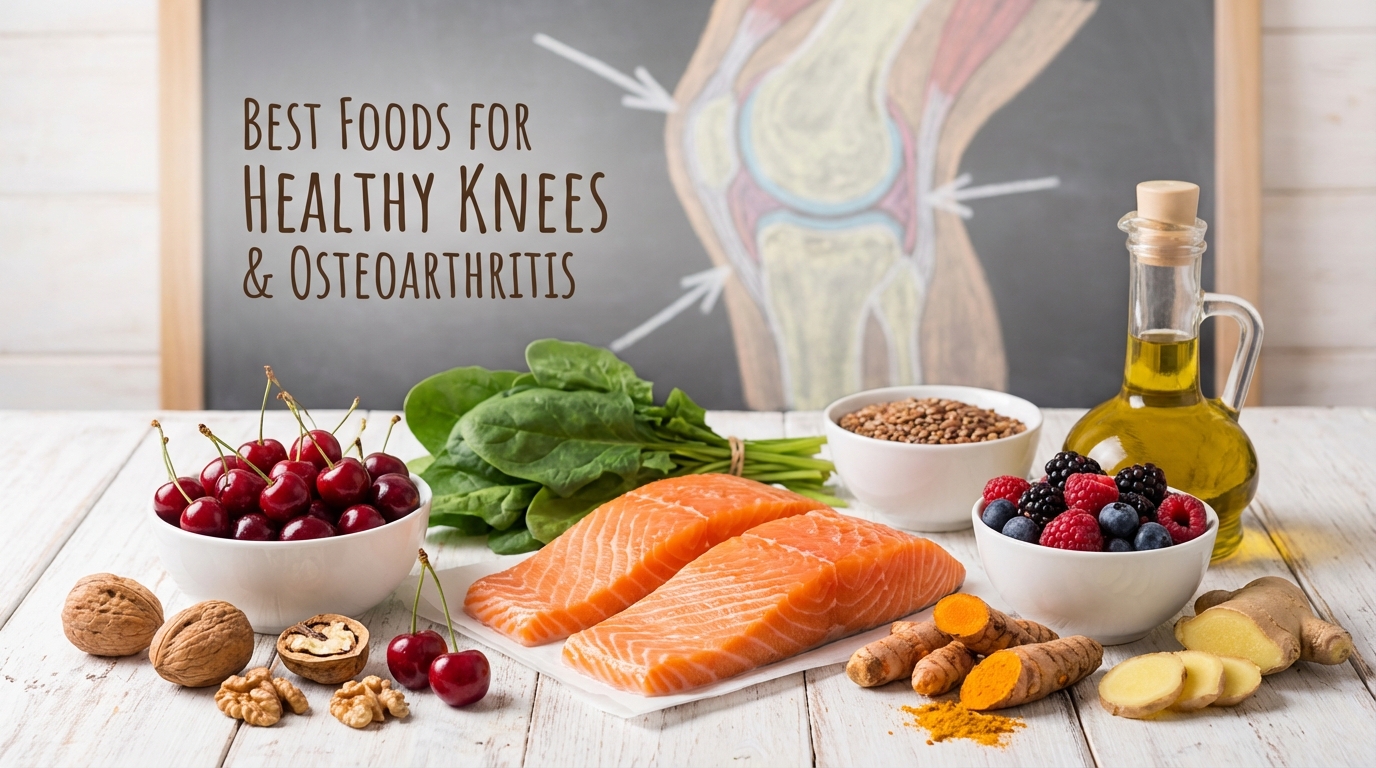
Key Takeaways
- Specific foods have been shown to reduce knee pain, slow cartilage loss, and lower inflammation
- Fatty fish, berries, leafy greens, and olive oil have the strongest evidence for knee OA
- Avoiding sugar, refined carbs, and processed meats is equally important
- Simple meal swaps can make a significant difference without overhauling your diet
- Combining the right foods with appropriate medical care provides the best outcomes
If you have knee osteoarthritis, you’ve probably tried pain medications, exercise, and maybe even injections. But have you looked at your plate? Research increasingly shows that certain foods can reduce knee inflammation, slow cartilage breakdown, and improve pain levels—while other foods make everything worse.
This isn’t about following a complicated diet plan. It’s about knowing which specific foods help your knees and finding practical ways to eat more of them. Let’s look at what the evidence says and how to put it on your table.
Foods Proven to Help Knee Osteoarthritis
Fatty Fish: The Top Choice
Salmon, sardines, mackerel, and herring are the most consistently beneficial foods for knee OA in research studies.
What the research says: A study published in the American Journal of Clinical Nutrition tracked 2,092 adults and found that those with the highest omega-3 intake had significantly less cartilage loss in their knees over 2 years compared to those with the lowest intake.
How much: 2-3 servings per week (3-4 ounces each)
Easy meal ideas:
- Canned salmon patties (mix canned salmon with breadcrumbs, egg, diced onion, and bake at 400F for 15 minutes)
- Sardines on whole grain toast with lemon and a drizzle of olive oil
- Simple baked salmon with garlic, lemon, and herbs (15 minutes in the oven)
- Salmon mixed into pasta with olive oil and roasted vegetables
Tart Cherries: Nature’s Pain Reliever
Tart cherries contain anthocyanins—powerful anti-inflammatory compounds that block the same enzymes as aspirin and ibuprofen.
What the research says: A study in Osteoarthritis and Cartilage found that patients with knee OA who drank two 8-ounce bottles of tart cherry juice daily for 6 weeks experienced significant reductions in pain, stiffness, and inflammatory markers compared to the placebo group.
How much: 8 ounces of unsweetened tart cherry juice daily or 1 cup of fresh/frozen tart cherries
Easy meal ideas:
- Tart cherry juice diluted with sparkling water as a refreshing drink
- Frozen tart cherries blended into a smoothie with yogurt and banana
- Tart cherry concentrate (1 tablespoon) added to oatmeal
- Tart cherries mixed into a salad with walnuts and goat cheese
Extra Virgin Olive Oil: Your Daily Joint Medicine
Olive oil contains oleocanthal, a compound that works like a natural ibuprofen. Research shows oleocanthal inhibits the same COX enzymes targeted by NSAIDs.
What the research says: A study in the Journal of Nutritional Biochemistry found that the polyphenols in extra virgin olive oil protect cartilage cells from inflammatory damage. People who consumed olive oil regularly had lower levels of cartilage-degrading enzymes.
How much: 2-3 tablespoons daily
Easy meal ideas:
- Drizzle over any cooked vegetables as a finishing oil
- Use as the base for all salad dressings (olive oil + lemon juice + herbs)
- Dip whole grain bread instead of using butter
- Saut vegetables and proteins in olive oil instead of corn or vegetable oil
Leafy Greens: Cartilage Protectors
Spinach, kale, collard greens, and Swiss chard provide vitamins C, K, and E plus antioxidants that protect cartilage from oxidative damage.
What the research says: Vitamin K is particularly important for knee health. A Boston University study found that people with low vitamin K levels had greater knee cartilage loss and a higher risk of knee OA progression. Vitamin C is essential for collagen production, the protein that gives cartilage its structure.
How much: 2-3 cups raw or 1 cup cooked daily
Easy meal ideas:
- Baby spinach stirred into scrambled eggs (wilts in seconds)
- Kale massaged with olive oil and lemon as a base for grain bowls
- Frozen spinach blended into smoothies (you won’t taste it)
- Collard greens braised with garlic and olive oil as a side dish
Walnuts: The Anti-Inflammatory Snack
Among all nuts, walnuts have the highest content of alpha-linolenic acid (ALA), a plant-based omega-3 fatty acid.
What the research says: A study in The Journal of Nutrition found that regular walnut consumption reduced CRP (C-reactive protein) levels by 25-30%, a marker directly linked to arthritis severity.
How much: 1 ounce (about 14 halves) daily
Easy meal ideas:
- Add to morning oatmeal or cereal
- Toss into salads for crunch
- Blend into smoothies
- Pair with a piece of fruit for an afternoon snack
Garlic, Onions, and Leeks: Allium Power
These flavorful vegetables contain diallyl disulfide, a compound shown to limit cartilage-damaging enzymes.
What the research says: A study in BMC Musculoskeletal Disorders examined over 1,000 female twins and found that those who ate the most allium vegetables had fewer signs of early knee OA.
How much: Include in meals daily—use as a base for cooking
Easy meal ideas:
- Start every soup, stew, or sauce with sauteed garlic and onions
- Roast whole garlic cloves alongside vegetables
- Add raw onion slices to sandwiches and salads
- Use leeks in soups and grain dishes
Ginger: A Warming Joint Soother
Fresh ginger root contains gingerols that reduce inflammation and may slow cartilage damage.
What the research says: A randomized controlled trial published in Arthritis and Rheumatism found that concentrated ginger extract significantly reduced knee pain in OA patients compared to placebo. The effect was greatest in patients with moderate pain.
How much: 1-2 teaspoons fresh grated ginger or 1/2 teaspoon dried daily
Easy meal ideas:
- Grate fresh ginger into stir-fries during the last minute of cooking
- Brew ginger tea by steeping sliced fresh ginger in hot water for 10 minutes
- Add to smoothies for a spicy kick
- Mix grated ginger into salad dressings
Foods That Worsen Knee Osteoarthritis
Avoiding certain foods is just as important as adding beneficial ones.
Sugar and Refined Carbohydrates
White bread, pastries, candy, and sugary drinks trigger inflammatory cascades that accelerate knee cartilage breakdown. A study in The American Journal of Clinical Nutrition linked high sugar consumption to increased inflammatory markers and worsening OA symptoms.
Swap: Replace soda with tart cherry juice. Choose whole grain bread over white. Satisfy sweet cravings with fresh berries.
Processed Meats
Hot dogs, bacon, sausage, and deli meats contain advanced glycation end products (AGEs) and preservatives that promote inflammation.
Swap: Use leftover baked chicken or canned salmon in sandwiches. Choose turkey breast over processed deli meats.
Fried Foods
Deep-frying creates inflammatory compounds and adds omega-6-heavy oils that tip your inflammatory balance in the wrong direction.
Swap: Bake, roast, air-fry, or grill instead. Oven-baked sweet potato fries with olive oil are a satisfying replacement for French fries.
Excess Omega-6 Oils
Corn oil, soybean oil, and safflower oil are in nearly every processed food and restaurant meal. They promote inflammatory prostaglandins when consumed in excess.
Swap: Cook with extra virgin olive oil at home. When eating out, ask for olive oil for bread instead of butter, and choose grilled over fried items.
A Knee-Friendly Daily Meal Plan
Breakfast: Steel-cut oatmeal with walnuts, frozen tart cherries, and ground flaxseed. Green tea.
Mid-Morning Snack: Greek yogurt with a handful of blueberries.
Lunch: Large spinach salad with canned salmon, chickpeas, red onion, cherry tomatoes, and olive oil-lemon dressing. Whole grain roll.
Afternoon Snack: Apple slices with almond butter. Tart cherry juice (diluted with water).
Dinner: Baked salmon with garlic and herbs. Roasted broccoli and Brussels sprouts with olive oil. Brown rice.
Evening: Ginger tea. Small handful of walnuts.
Practical Shopping Tips
At the grocery store:
- Shop the perimeter first (produce, fish, dairy)
- Buy canned wild salmon and sardines—they’re affordable and shelf-stable
- Stock up on frozen berries and vegetables (nutritionally equivalent to fresh)
- Choose extra virgin olive oil in dark bottles
- Buy unsweetened tart cherry juice or concentrate
- Read labels: avoid products with corn syrup, soybean oil, or long ingredient lists
Budget-friendly approach:
- Canned fish is 70-80% cheaper than fresh
- Frozen vegetables are often cheaper than fresh and don’t spoil
- Buy nuts and seeds in bulk
- Dried beans and lentils are among the cheapest protein sources available
- Grow fresh herbs on a windowsill to save on buying them
Combining Diet with Medical Treatment
Dietary changes work best as part of a comprehensive approach to knee osteoarthritis. If you’re taking oral medications for knee pain, the right foods can enhance their effectiveness. Some people find that consistent dietary improvements allow them to work with their doctor to reduce their medication dosage.
Joint supplements like glucosamine and chondroitin support cartilage structure while an anti-inflammatory diet reduces the inflammatory environment damaging that cartilage. Together, they address the problem from two angles.
For more on building a complete anti-inflammatory eating pattern, see our guide to anti-inflammatory foods for joint pain.
Frequently Asked Questions
How long before I notice dietary changes helping my knee pain?
Most people notice initial improvements in 4-6 weeks. More significant and consistent benefits typically develop over 3-4 months as inflammatory markers decrease and cartilage stress reduces. Consistency matters more than perfection—eating well most days produces results.
Can food really make as much difference as medication for knee OA?
For mild to moderate knee OA, dietary changes can produce pain reductions comparable to over-the-counter NSAIDs in some studies—without the gastrointestinal side effects. For more severe OA, food works best alongside medical treatment. Think of diet as a foundation that makes other treatments work better.
What’s the single best food I can add for my knees?
If you change only one thing, eat fatty fish twice a week. The omega-3 EPA and DHA have the broadest and strongest evidence for reducing knee inflammation and slowing cartilage loss. Canned salmon is an easy, affordable way to start.
Are nightshade vegetables (tomatoes, peppers, eggplant) bad for knee OA?
Despite widespread claims, there’s no scientific evidence that nightshade vegetables worsen arthritis. They actually contain anti-inflammatory compounds and beneficial nutrients. Unless you’ve personally noticed a clear connection, there’s no reason to avoid them.
Should I take turmeric supplements for my knees?
Turmeric supplements containing curcumin have decent evidence for knee OA pain reduction. However, cooking with turmeric alone doesn’t provide enough curcumin for therapeutic benefit. If you’re interested, look for a supplement with enhanced bioavailability. See our detailed guide on turmeric and curcumin for joint pain for dosage and quality recommendations.
The information in this article is for educational purposes only and is not intended as medical advice. Always consult with your healthcare provider before making significant dietary changes, especially if you have existing health conditions or take medications.
Last medically reviewed: February 2026
Stay ahead of joint pain
Get weekly insights on joint health and pain relief delivered to your inbox.
Join 10,000+ readers. No spam.
Enjoyed this article?
Get more insights like this delivered to your inbox weekly.
Join 10,000+ readers. No spam.