Gardening with Joint Pain: Tips for a Pain-Free Garden
Continue enjoying your garden despite arthritis. Learn joint-friendly gardening techniques, adaptive tools, and garden modifications that reduce strain while increasing enjoyment.
By Joint Pain Authority Team
Key Takeaways
- Gardening is excellent exercise for joint health when done with proper techniques
- Ergonomic tools and raised beds can eliminate most painful positions
- Working in short sessions with rest breaks prevents overexertion
- The right time of day (mid-morning when joints are loose) makes a difference
- Container gardening and vertical gardens reduce bending and kneeling
- The mental health benefits of gardening are as valuable as the physical activity
Gardening is one of the most beloved hobbies, but joint pain can turn this joy into a source of frustration. The bending, kneeling, gripping, and repetitive motions that gardening requires can aggravate arthritis symptoms.
The good news? With some adaptations, you can continue gardening for years to come. In fact, the gentle exercise, outdoor time, and sense of accomplishment that gardening provides are genuinely therapeutic for joint health.
Why Gardening Is Actually Good for Your Joints
Before diving into adaptations, it’s worth understanding why gardening—done right—benefits joint health:
Physical Benefits:
- Low-impact exercise that builds strength and flexibility
- Varied movements that maintain range of motion
- Weight-bearing activity that supports bone health
- Outdoor vitamin D exposure
Mental Benefits:
- Stress reduction (lowers inflammation)
- Sense of accomplishment and purpose
- Connection to nature and seasons
- Mindful, present-moment activity
Research shows:
- Regular gardening reduces arthritis symptoms over time
- Gardeners report better mood and less pain than non-gardeners
- The combination of physical activity and nature exposure is particularly beneficial
The goal isn’t to stop gardening—it’s to garden smarter.
Timing Your Garden Sessions
Best Time of Day
Most people with arthritis feel stiffest in the morning. Plan your gardening accordingly:
Ideal timing:
- Mid-morning (after joints have loosened up)
- Or late afternoon (avoiding midday heat in summer)
- Not immediately after waking or after long periods of sitting
Warm up first:
- Take a warm shower before heading outside
- Do 5-10 minutes of gentle stretching
- Start with the easiest tasks while warming up
Duration and Breaks
The biggest mistake is doing too much at once. Your garden won’t be finished in a day—and it doesn’t need to be.
Work in intervals:
- 20-30 minutes of activity
- 5-10 minute rest break
- Repeat 2-3 times maximum per session
- Stop before you’re exhausted, not after
During breaks:
- Sit in a comfortable garden chair
- Enjoy the view of your work
- Hydrate
- Do gentle stretches
Seasonal Pacing
Spring: Easy to overdo it when enthusiasm is high. Spread planting over multiple days.
Summer: Focus on early morning or evening to avoid heat. Weeding and watering only.
Fall: Take your time with harvest and cleanup. No rush.
Winter: Planning and dreaming—no joint strain at all!
Joint-Friendly Gardening Techniques
Minimize Bending
Traditional gardening involves endless bending forward, which strains the back, hips, and knees. Alternatives:
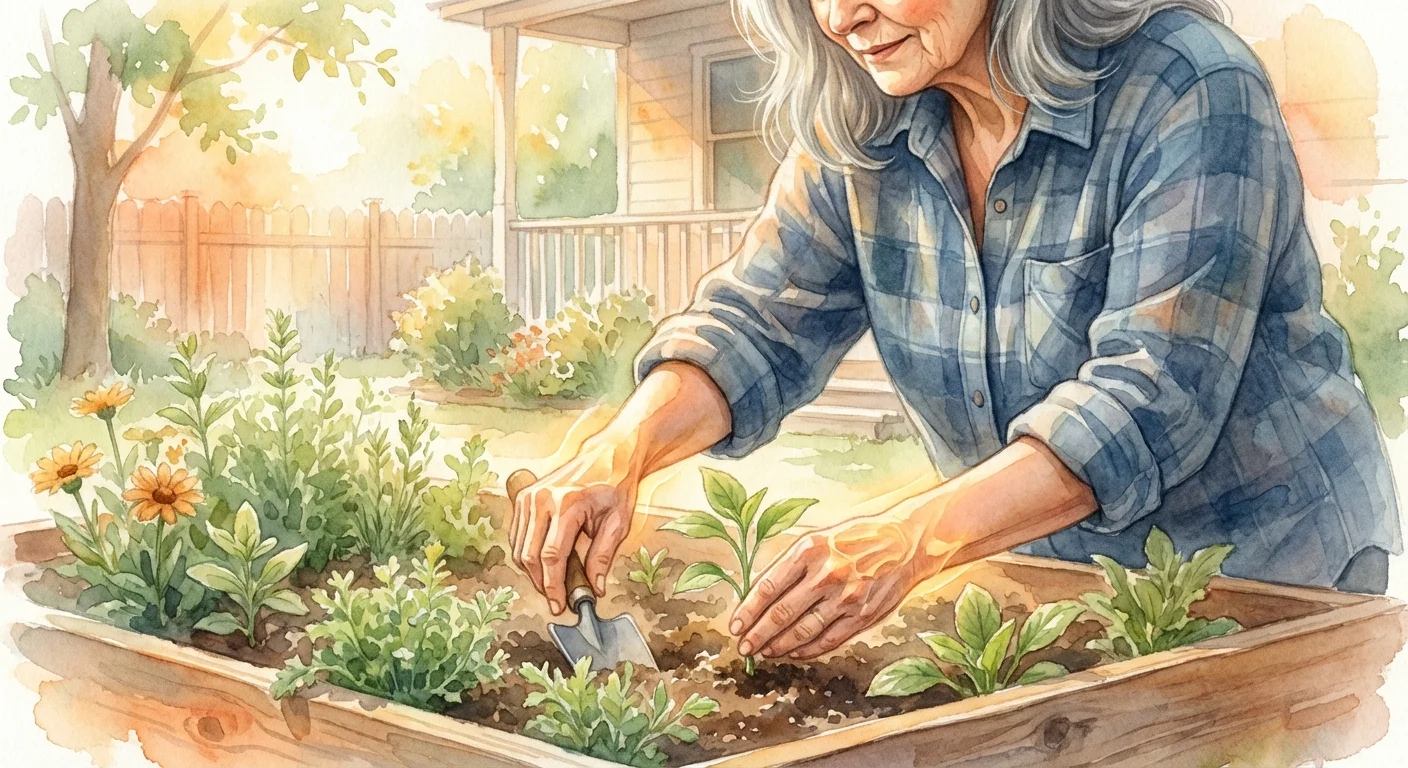
Raised beds:
- 24-36 inches high eliminates bending completely
- Can be built or purchased
- Width of 4 feet allows reaching center from both sides
- Consider table-height beds for seated gardening
Container gardening:
- Pots on stands, tables, or shelves
- Window boxes at comfortable height
- Hanging baskets at eye level
- Strawberry towers and tiered planters
Vertical gardening:
- Trellises for climbing vegetables (tomatoes, beans, cucumbers)
- Wall-mounted planters
- Living walls and green screens
- Reduces bending to harvest
Minimize Kneeling
If you must work at ground level:
Kneeling alternatives:
- Garden kneeler with handles (doubles as a seat)
- Thick foam kneeling pads
- Kneeling benches that flip to become seats
- Sitting on an overturned bucket or low stool
Better yet:
- Design beds you can reach from paths
- Use long-handled tools to work from standing position
- Mulch heavily to reduce weeding needs
Minimize Gripping
Repetitive gripping (pruning, weeding, harvesting) strains hand joints:
Proper technique:
- Use your palm and larger joints when possible
- Avoid pinching between thumb and fingers
- Let tools do the work—don’t squeeze hard
- Take frequent breaks during grip-intensive tasks
Tool selection:
- Larger, cushioned handles
- Ratcheting pruners (require less force)
- Tools with rotating handles
- Ergonomic grips designed for arthritis
Posture and Body Mechanics
General principles:
- Keep your back straight, not rounded
- Bend at the knees and hips, not the waist
- Work close to your body (don’t reach far)
- Pivot your feet rather than twisting your spine
- Use both hands when lifting
Specific techniques:
- Squat rather than stoop for ground-level work
- Carry small loads more often rather than heavy loads
- Push wheelbarrows rather than pulling
- Use a cart instead of carrying pots
Adaptive Tools for Arthritic Gardeners
Investing in the right tools makes an enormous difference.
Hand Tools
Essential features:
- Large, cushioned grips (easier to hold)
- Lightweight materials (aluminum, fiberglass)
- Ergonomic angles that align with natural wrist position
- Spring-loaded or ratcheting action (requires less force)
Specific tools:
- Ergonomic trowels: Angled handles reduce wrist strain
- Ratcheting pruners: Cut with 50% less effort
- Arm-support weeding tools: Transfer effort from hands to forearms
- Ergonomic cultivators: Curved handles for better leverage
Long-Handled Tools
Extend your reach and eliminate bending:
- Stand-up weeding tools: Remove weeds while standing
- Long-handled trowels and cultivators: Work at ground level from standing
- Extended-reach pruners: Trim without climbing or straining
- Lightweight rakes: Easier to maneuver for extended periods
Wheeled and Rolling Tools
- Garden cart or wagon: Carry tools and supplies without lifting
- Rolling garden seat: Sit at comfortable height and roll between areas
- Wheelbarrow with two wheels: More stable, easier to maneuver
- Potting bench on wheels: Bring the workstation to the garden
Watering Solutions
Heavy hoses and watering cans strain joints:
- Drip irrigation: Set it and forget it—no watering chores
- Soaker hoses: Lay once, water automatically
- Lightweight hoses: Expandable hoses weigh a fraction of traditional ones
- Hose reel on wheels: No dragging heavy hoses
- Watering wands: Extend reach without bending
- Self-watering containers: Reduce watering frequency
Garden Design Modifications
Accessible Paths
- Wide enough for wheelbarrow or rolling seat (at least 3 feet)
- Firm, level surface (no stepping stones or uneven pavers)
- Gentle slopes instead of steps where possible
- Handrails along sloped areas
Raised Bed Design
Height: 24 inches allows access while seated; 36 inches eliminates bending while standing
Width: 4 feet maximum (2 feet if accessible from one side only)
Length: Whatever works for your space
Materials: Wood, stone, metal, or composite. Consider weight if you might move them.
Extras: Built-in seating along edges; ledges wide enough to hold tools
Minimize Maintenance Needs
Plant choices:
- Perennials over annuals (less planting)
- Native plants (less watering and care)
- Disease-resistant varieties (less intervention)
- Slow-growing plants (less pruning)
Design strategies:
- Heavy mulching (reduces weeding dramatically)
- Groundcovers instead of lawn (less mowing)
- Smaller lawn area
- Automated irrigation
What to Grow
Easy-Care Vegetables
- Tomatoes on cages (minimal support needed)
- Pole beans (harvest at standing height)
- Zucchini and squash (prolific producers)
- Salad greens in raised beds (cut-and-come-again)
- Herbs in containers (near kitchen door)
Low-Maintenance Flowers
- Daylilies (extremely hardy)
- Black-eyed Susans
- Coneflowers (echinacea)
- Sedums (drought-tolerant)
- Ornamental grasses (minimal care)
Plants to Avoid
- Anything requiring frequent deadheading
- Plants that need staking (unless you enjoy the task)
- Aggressive spreaders that need constant control
- Roses (thorns and heavy pruning)—unless you’re passionate about them
Managing Flares While Gardening
Recognize Warning Signs
- Increasing pain during activity
- Swelling in hands or knees
- Fatigue setting in
- Stiffness limiting movement
Response: Stop immediately. It’s better to come back tomorrow than push through and be down for a week.
Post-Gardening Recovery
Immediately after:
- Gentle stretching while muscles are warm
- Cool water for hydration
- Ice any joints that feel inflamed
That evening:
- Warm bath or shower
- Gentle range-of-motion exercises
- Extra rest if needed
Next day:
- Light activity only if joints are complaining
- Return to gardening when symptoms settle
Frequently Asked Questions
Is gardening considered exercise?
Yes. Gardening involves strength, flexibility, and moderate cardiovascular activity. Studies classify it as moderate physical activity, and 30-45 minutes of gardening provides health benefits comparable to walking or cycling.
What if I can’t kneel at all?
You don’t have to. Raised beds, containers, vertical gardens, and long-handled tools eliminate the need for kneeling entirely. Many successful gardeners never kneel.
Should I wear gloves?
Padded gardening gloves can protect hands and provide cushioning, but they can also make gripping harder. Try different options—some people prefer fingerless gloves for dexterity. For thorny plants or rough work, gloves are essential.
How do I manage a large property?
Focus your energy on a smaller “main garden” that you maintain intensively. Let peripheral areas become low-maintenance with native plants, groundcovers, or naturalized areas. Consider hiring help for heavy tasks like mowing large lawns.
When should I consider giving up certain gardening tasks?
You don’t have to give up gardening—just adapt. If certain tasks become impossible, either find adaptive tools, modify your garden design, or hire occasional help for those specific tasks while continuing everything else yourself.
Looking for more ways to stay active? Check out our guides on chair exercises for knee arthritis and gentle yoga poses for arthritis.
Last medically reviewed: January 2025
Medical Disclaimer: This article is for informational purposes only and is not a substitute for professional medical advice. Consult your healthcare provider about appropriate activity levels for your specific condition.
Enjoyed this article?
Get more insights like this delivered to your inbox weekly.
Join 10,000+ readers. No spam.