Hip Osteoarthritis: Symptoms, Causes, and Treatment
Everything you need to know about hip arthritis. Learn about symptoms, diagnosis, conservative treatments, and when hip replacement might be needed.
By Joint Pain Authority Team
Key Takeaways
- Hip osteoarthritis causes groin pain, stiffness, and difficulty walking that gradually worsens over time
- Conservative treatments like physical therapy, medications, and injections can provide significant relief for months or years
- Hip replacement surgery is highly successful when conservative treatments no longer work
- Staying active with low-impact exercise helps maintain hip function and reduces pain
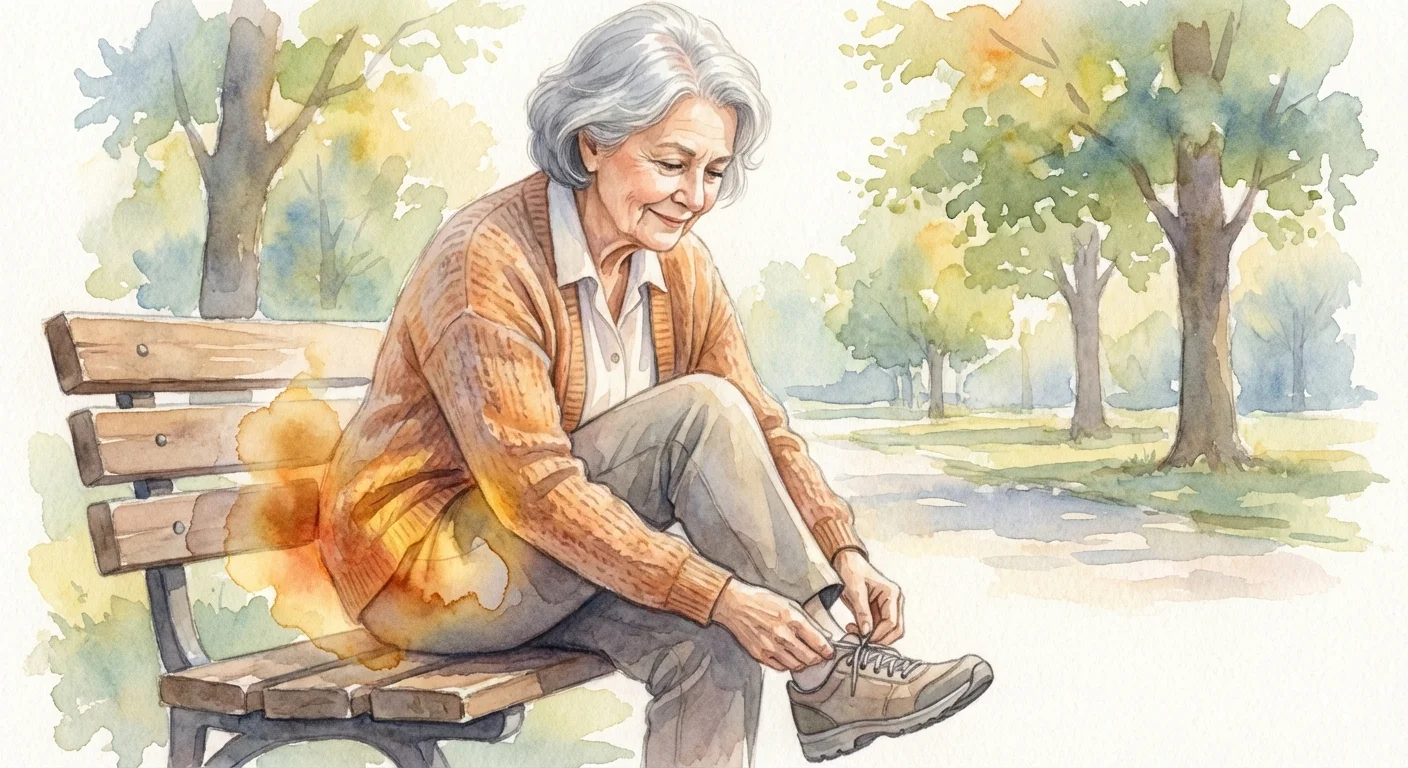
Hip osteoarthritis affects more than 10% of adults over age 60, making it one of the most common causes of hip pain and disability in older adults. If you’re experiencing deep groin pain, morning stiffness, or difficulty putting on your shoes, you may be dealing with hip arthritis.
This guide explains everything you need to know about hip osteoarthritis—from early symptoms to treatment options that can help you stay active and independent.
What Is Hip Osteoarthritis?
Hip osteoarthritis (OA) is a degenerative joint condition where the protective cartilage cushioning your hip joint gradually breaks down. Think of cartilage as the smooth coating that lets your hip ball glide freely in its socket. As this coating wears away, bone rubs against bone, causing pain, inflammation, and stiffness.
Understanding Your Hip Joint
Your hip is a ball-and-socket joint:
- The femoral head (top of your thigh bone) forms the ball
- The acetabulum (cup-shaped socket in your pelvis) cradles the ball
- Smooth cartilage covers both surfaces, allowing friction-free movement
- Synovial fluid lubricates the joint, like oil in an engine
When osteoarthritis develops, this cartilage gradually thins and roughens. Your body tries to compensate by producing extra bone (bone spurs), which can further limit movement and cause pain.
Common Symptoms of Hip Arthritis
Hip osteoarthritis symptoms typically develop slowly over months or years. Many people notice the pain comes and goes at first, then becomes more constant as the condition progresses.
Primary Symptoms
Pain in the groin or front of the hip is the hallmark symptom. The pain often:
- Starts as a dull ache after activity
- Becomes sharper with prolonged standing or walking
- Radiates to the buttock, thigh, or knee
- Worsens with weight-bearing activities like climbing stairs
Morning stiffness is another telltale sign. You might notice your hip feels “locked up” when you first wake up or after sitting for a while. This stiffness typically improves within 30 minutes of moving around.
Decreased range of motion makes everyday tasks challenging:
- Difficulty putting on socks or shoes
- Trouble getting in and out of a car
- Problems bending down to pick things up
- Reduced ability to spread your legs apart
Walking changes often develop as your hip becomes more painful:
- Limping to avoid putting weight on the affected hip
- Taking shorter steps
- Feeling unstable or off-balance
- Needing a cane or walker for support
When Pain Strikes
Hip arthritis pain follows predictable patterns:
- Worse with activity: Walking, standing, climbing stairs
- Better with rest: Sitting or lying down provides relief
- Nighttime pain: Many people experience aching that disrupts sleep, especially when lying on the affected side
- Weather sensitivity: Some people report increased pain during cold, damp weather
What Causes Hip Osteoarthritis?
Hip OA develops when the balance between cartilage breakdown and repair tips in the wrong direction. Several factors increase your risk:
Age and Genetics
Age is the biggest risk factor. After age 50, the cartilage’s ability to repair itself slows down while normal wear and tear continues. Most people with hip OA are over 60.
Family history matters. If your parents or siblings had hip arthritis, you’re more likely to develop it too. Researchers have identified specific genes that affect cartilage strength and joint shape.
Previous Hip Injuries
Any injury that damages your hip joint increases arthritis risk:
- Hip fractures
- Labral tears (cartilage rim tears)
- Hip dislocations
- Sports injuries
Even injuries from decades ago can lead to arthritis later in life. This is called post-traumatic arthritis.
Hip Structure Problems
Some people are born with hip abnormalities that cause uneven wear on the cartilage:
- Hip dysplasia: When the socket doesn’t fully cover the ball
- Femoroacetabular impingement (FAI): When extra bone on the hip causes pinching
- Leg length differences: When one leg is significantly shorter than the other
Other Risk Factors
Excess weight puts extra stress on your hip joints. For every 10 pounds of excess weight, you add 30-60 pounds of force on your hips with each step.
Repetitive stress from certain occupations or activities can accelerate cartilage breakdown. Jobs requiring heavy lifting, squatting, or prolonged standing increase risk.
Other medical conditions can contribute to hip OA:
- Rheumatoid arthritis or other inflammatory conditions
- Avascular necrosis (loss of blood supply to the hip bone)
- Paget’s disease of bone
How Hip Osteoarthritis Is Diagnosed
Your doctor will use several approaches to diagnose hip OA:
Medical History and Physical Exam
Your doctor will ask about:
- When your symptoms started and how they’ve progressed
- What activities make your pain better or worse
- Previous hip injuries or surgeries
- Family history of arthritis
During the physical exam, your doctor will:
- Watch how you walk
- Check your hip’s range of motion
- Look for muscle weakness or leg length differences
- Press on areas around your hip to locate tenderness
Imaging Tests
X-rays are the primary tool for diagnosing hip OA. They show:
- Joint space narrowing (indicating cartilage loss)
- Bone spurs (extra bone growth)
- Changes in bone shape
- Bone cysts or sclerosis (hardening)
MRI scans aren’t usually needed but may be ordered if:
- X-rays look normal but symptoms are severe
- Your doctor suspects a different problem (like a labral tear)
- Surgery is being considered
Blood tests typically aren’t needed for osteoarthritis diagnosis, but may be done to rule out inflammatory arthritis like rheumatoid arthritis.
Conservative Treatment Options
Most people with hip OA can manage their symptoms effectively without surgery. The key is finding the right combination of treatments for your situation.
Physical Therapy and Exercise
Physical therapy is often the first treatment recommended. A physical therapist can:
- Teach you exercises to strengthen hip muscles
- Improve your range of motion
- Correct walking problems
- Show you ways to protect your hip during daily activities
Low-impact exercises are essential for hip health:
- Swimming or water aerobics (water supports your weight)
- Cycling (stationary bikes work well)
- Elliptical machines (less impact than walking)
- Tai chi (improves balance and flexibility)
Aim for 30 minutes of gentle movement most days. Contrary to old advice, staying active helps more than rest.
Weight Management
If you’re carrying extra pounds, losing even 10-15 pounds can significantly reduce hip pain. Every pound lost takes 3-6 pounds of pressure off your hip joints with each step.
Medications
Over-the-counter pain relievers help many people:
- Acetaminophen (Tylenol) for mild to moderate pain
- NSAIDs like ibuprofen (Advil) or naproxen (Aleve) for pain and inflammation
Prescription medications may be needed for severe pain:
- Stronger NSAIDs
- Topical pain patches
- Tramadol for short-term pain relief
Always discuss medication options with your doctor, especially if you have other health conditions or take other medications.
Hip Injections
When oral medications aren’t enough, injections directly into the hip joint can provide relief:
Corticosteroid injections reduce inflammation quickly and can provide relief for several weeks to months. Most doctors limit these to 3-4 per year to avoid potential side effects.
Hyaluronic acid injections work differently by supplementing the joint’s natural lubricating fluid. While FDA-approved for knee osteoarthritis, some doctors use them off-label for hip OA. These injections may provide relief for several months. Learn more about this option in our hyaluronic acid treatment guide.
Assistive Devices
Don’t hesitate to use helpful tools:
- A cane (held in the hand opposite your painful hip) reduces joint stress by 20-30%
- Shoe inserts or orthotics can improve alignment
- Grab bars and raised toilet seats make daily activities easier
When to Consider Hip Replacement Surgery
Hip replacement is one of the most successful surgeries in modern medicine, with satisfaction rates above 95%. Your doctor might recommend surgery when:
- Conservative treatments no longer provide adequate relief
- Pain significantly limits your daily activities
- Your quality of life is seriously affected
- Hip damage is severe on X-rays
What to Expect from Hip Replacement
During hip replacement surgery:
- The damaged ball and socket are removed
- An artificial ball (metal or ceramic) is placed on a stem inserted into your thigh bone
- An artificial socket (metal with a plastic or ceramic liner) is secured in your pelvis
Most people:
- Stay in the hospital 1-3 days
- Start walking with assistance the day of or after surgery
- Return to most normal activities within 3-6 months
- Experience dramatic pain relief and improved function
Modern hip replacements typically last 15-20 years or longer. Many people say they wish they hadn’t waited so long to have the surgery.
Living Well with Hip Osteoarthritis
Whether you’re managing hip OA conservatively or waiting for surgery, these strategies can help you maintain quality of life:
Stay Active Safely
- Choose low-impact activities that don’t aggravate your hip
- Break up prolonged sitting with movement breaks
- Use proper form during exercise
- Listen to your body—some discomfort during activity is normal, but sharp pain is a warning sign
Modify Your Daily Activities
- Use a reacher to pick things up from the floor
- Sit in higher chairs (adding a cushion helps)
- Organize your home to minimize stair climbing
- Consider adaptive equipment for dressing and bathing
Heat and Ice Therapy
- Apply heat before activities to loosen stiff joints
- Use ice after activities to reduce inflammation
- Never apply heat or ice directly to skin (wrap in a towel)
Sleep Better
- Try different sleeping positions (on your back or non-painful side)
- Place a pillow between your knees when side-sleeping
- Use a supportive mattress
- Take pain medication before bed if recommended by your doctor
Join a Support Group
Connecting with others managing hip arthritis can provide emotional support and practical tips. Look for local arthritis support groups or online communities.
Frequently Asked Questions
Is hip arthritis the same as hip bursitis?
No. Hip bursitis is inflammation of the fluid-filled sacs (bursae) that cushion the outside of your hip. It causes pain on the outer hip and thigh, while hip arthritis typically causes groin pain. You can have both conditions at the same time.
Can I prevent hip osteoarthritis from getting worse?
While you can’t reverse existing cartilage damage, you can slow progression by maintaining a healthy weight, staying active with low-impact exercise, and avoiding activities that stress your hip. Physical therapy and appropriate use of medications and injections also help protect your joint.
How long can I wait before getting hip replacement surgery?
There’s no perfect timing—it depends on your pain level, function, and quality of life. Waiting too long can lead to muscle weakness and walking problems that make recovery harder. However, hip replacements don’t last forever, so if you’re younger, delaying surgery might mean you’ll need a revision surgery later in life. Discuss timing with your orthopedic surgeon.
Will I need hip replacement on both sides?
About 10-20% of people who have one hip replaced eventually need the other hip replaced. If you have arthritis in both hips, your surgeon may recommend spacing the surgeries several months apart or occasionally doing them together.
Are there any supplements that help hip arthritis?
Glucosamine and chondroitin are popular supplements, but research shows mixed results. Some people report relief, while studies show modest benefits at best. Talk with your doctor before starting supplements, especially if you take blood thinners or have shellfish allergies.
Can diet affect hip osteoarthritis?
While no specific diet cures arthritis, anti-inflammatory foods may help reduce pain. Focus on fruits, vegetables, whole grains, fatty fish (rich in omega-3s), and limiting processed foods and added sugars. Maintaining a healthy weight through diet is one of the most effective ways to reduce hip stress.
This article provides educational information and should not replace advice from your healthcare provider. Always consult with a doctor for diagnosis and treatment of hip pain.
Last medically reviewed: March 2025
Enjoyed this article?
Get more insights like this delivered to your inbox weekly.
Join 10,000+ readers. No spam.