Calcium for Bone and Joint Health: A Senior's Guide
Understand calcium needs after 65. Best food sources, supplement guidance, osteoporosis prevention, and how calcium supports joint health in seniors.
By Joint Pain Authority Team
Key Takeaways
- Adults over 65 need 1,200 mg of calcium daily for bone and joint health
- Food sources are preferred over supplements when possible
- Calcium works best when paired with vitamin D and regular weight-bearing activity
- Too much supplemental calcium (above 2,000 mg daily) may carry cardiovascular risks
- Strong bones are the foundation that supports and protects your joints
Your joints don’t exist in isolation. They depend on the bones underneath them for support, structure, and stability. When bones weaken—as they naturally do with age—your joints suffer too. Calcium is the most critical mineral for keeping that bony foundation strong.
Yet many seniors fall short of their calcium needs. An estimated 50% of women and 25% of men over 65 don’t get enough calcium from their diet alone. Understanding how much you need, where to get it, and how to maximize absorption can protect both your bones and your joints for years to come.
Why Calcium Matters for Joint Health
Most people associate calcium with bone strength, and they’re right. About 99% of your body’s calcium is stored in your bones and teeth. But calcium’s role in joint health goes beyond just bone density:
Subchondral bone support. The bone directly beneath your joint cartilage (called subchondral bone) provides the stable base your cartilage needs to function properly. When this bone weakens from calcium deficiency, cartilage above it can break down faster, accelerating knee osteoarthritis and hip arthritis.
Muscle function. Calcium is essential for muscle contraction. Without enough, muscles that stabilize your joints become weaker, putting more stress on the joint itself.
Joint repair processes. Your body needs calcium for the cellular processes involved in maintaining and repairing joint tissues.
Fall prevention. Weak bones from calcium deficiency increase fracture risk from falls—a serious concern for seniors with joint problems who may already have balance issues.
How Much Calcium Do You Need?
| Age Group | Daily Calcium Need |
|---|---|
| Adults 51-70 (men) | 1,000 mg |
| Adults 51-70 (women) | 1,200 mg |
| Adults over 70 (all) | 1,200 mg |
| Upper safe limit | 2,000-2,500 mg |
These amounts include calcium from all sources: food, fortified beverages, and supplements combined.
Best Food Sources of Calcium
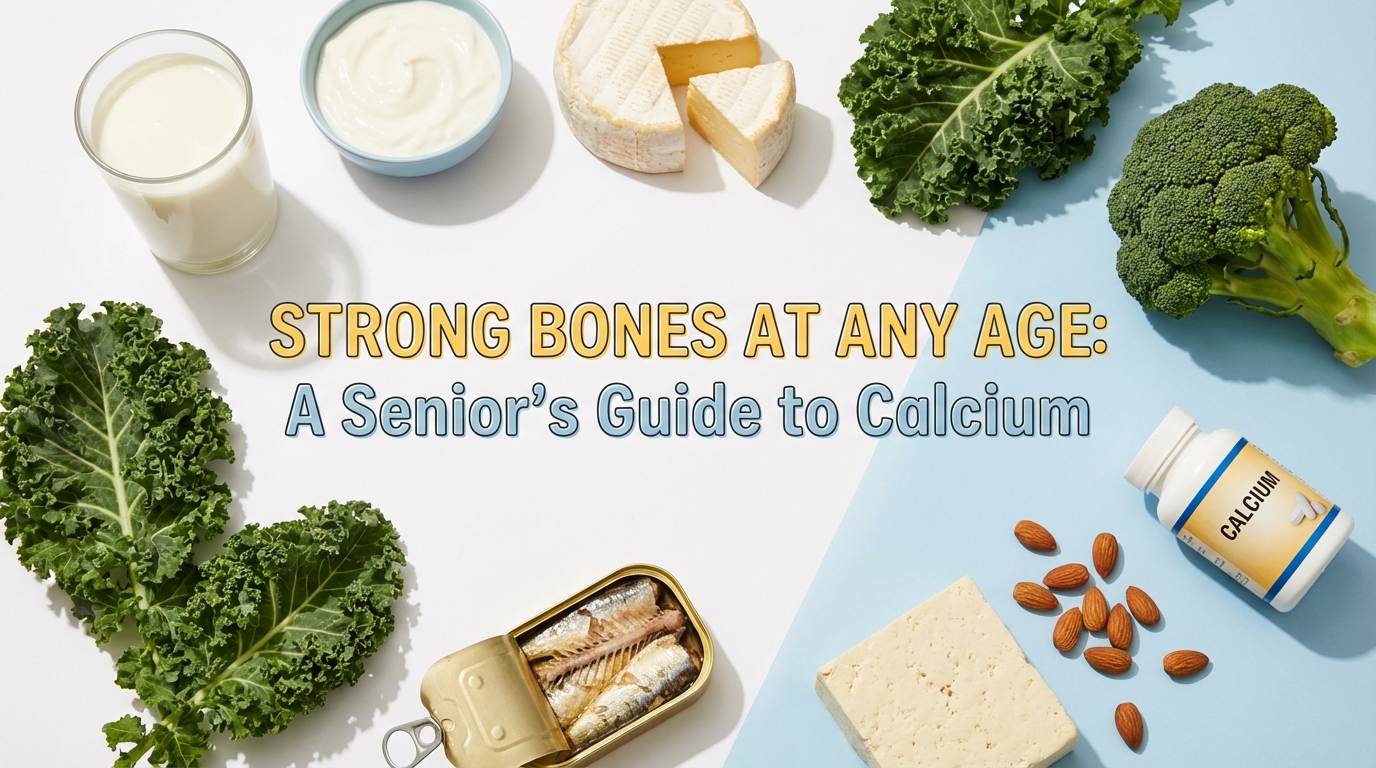
Getting calcium from food is the preferred approach. Food-based calcium is better absorbed and doesn’t carry the potential risks associated with high-dose supplements.
Dairy Products
| Food | Calcium per Serving |
|---|---|
| Plain yogurt (8 oz) | 415 mg |
| Cheddar cheese (1.5 oz) | 305 mg |
| Milk, low-fat (8 oz) | 300 mg |
| Cottage cheese (1 cup) | 190 mg |
| Mozzarella (1.5 oz) | 275 mg |
Dairy remains the most concentrated and readily absorbed source of calcium. If you tolerate dairy well, 2-3 servings daily can provide most of your calcium needs.
Non-Dairy Sources
Many people need alternatives due to lactose intolerance, dairy allergies, or dietary preferences:
| Food | Calcium per Serving |
|---|---|
| Sardines with bones (3 oz) | 325 mg |
| Canned salmon with bones (3 oz) | 180 mg |
| Fortified orange juice (8 oz) | 350 mg |
| Fortified plant milk (8 oz) | 300 mg |
| Collard greens, cooked (1 cup) | 268 mg |
| Turnip greens, cooked (1 cup) | 197 mg |
| Kale, cooked (1 cup) | 177 mg |
| White beans (1 cup) | 161 mg |
| Broccoli, cooked (1 cup) | 62 mg |
| Almonds (1 oz) | 75 mg |
| Tofu, calcium-set (1/2 cup) | 253 mg |
Tip: Canned fish with edible bones (sardines and salmon) is an excellent two-in-one food—you get calcium plus omega-3 fatty acids for joint inflammation.
A Calcium-Rich Day
Here’s how to reach 1,200 mg from food:
Breakfast: Oatmeal made with fortified milk (300 mg) + a handful of almonds (75 mg)
Lunch: Canned salmon salad (180 mg) + side of cooked kale (177 mg)
Snack: Greek yogurt (415 mg)
Dinner: Chicken stir-fry with broccoli and tofu (150 mg)
Total: approximately 1,297 mg
When You Need a Supplement
If you can’t consistently get 1,200 mg from food, a calcium supplement can help fill the gap. However, the current medical consensus favors a food-first approach, with supplements providing only the difference between what you eat and what you need.
Types of Calcium Supplements
Calcium carbonate: Contains 40% elemental calcium (most calcium per pill). Take with food for best absorption. Least expensive option. Examples: Tums, Caltrate.
Calcium citrate: Contains 21% elemental calcium (need more pills). Can be taken with or without food. Better for people with low stomach acid, which is common in seniors. Better for those taking acid-reducing medications. Examples: Citracal.
Supplementation Guidelines
- Don’t take more than 500 mg at a time. Your body absorbs calcium best in smaller doses. Split your supplement into two servings if needed.
- Take with food (especially calcium carbonate) for better absorption.
- Don’t exceed 1,000 mg from supplements daily. Get the rest from food.
- Space calcium away from certain medications by 2 hours: thyroid medications, some antibiotics, bisphosphonates, and iron supplements.
Calcium and Vitamin D: The Essential Partnership
Calcium without adequate vitamin D is like buying groceries and leaving them in the car. Vitamin D is essential for calcium absorption in your intestines. Without it, you absorb only 10-15% of the calcium you consume. With adequate vitamin D, absorption increases to 30-40%.
Most seniors need 1,000-2,000 IU of vitamin D3 daily alongside their calcium. For a detailed guide on vitamin D and joint health, see our article on vitamin D and joint pain.
Other nutrients that support calcium utilization:
- Magnesium (320-420 mg daily): Helps convert vitamin D to its active form
- Vitamin K2: Directs calcium into bones rather than soft tissues
- Protein: Adequate protein supports bone matrix formation
Calcium and Joint Supplements
If you’re taking joint supplements like glucosamine or chondroitin, calcium doesn’t interfere with them. In fact, they complement each other—glucosamine supports cartilage while calcium strengthens the bone beneath it.
For people with degenerative joint disease, maintaining bone density with adequate calcium is especially important because the disease process affects both cartilage and underlying bone.
Safety Concerns: Finding the Right Balance
Recent research has raised questions about high-dose calcium supplements and heart health. Here’s what you need to know:
The concern: Some studies have linked calcium supplement doses above 1,000-1,200 mg daily to a slightly increased risk of cardiovascular events, particularly in people not taking vitamin D.
The consensus: Major health organizations still recommend meeting calcium needs, but emphasize food sources first and moderate supplementation. The key points:
- Food-based calcium does not carry cardiovascular risk
- Supplement doses under 1,000 mg daily appear safe when combined with adequate vitamin D
- Total intake should not exceed 2,000-2,500 mg daily from all sources
- People with kidney disease need to follow their doctor’s specific calcium guidelines
Exercise: The Other Half of Bone Health
Calcium alone doesn’t build strong bones. Weight-bearing exercise stimulates bone formation and helps calcium get deposited where it’s needed.
Bone-building activities for seniors:
- Walking (30 minutes, most days)
- Light strength training with resistance bands or small weights
- Standing exercises (heel raises, mini-squats to a chair)
- Stair climbing (if joints allow)
- Dancing or tai chi
Water exercise is excellent for joints but does less for bone building because of the buoyancy factor. Try to include both land-based and water-based activities in your routine.
Frequently Asked Questions
Can I get enough calcium without dairy?
Yes, but it requires planning. Fortified plant milks, canned fish with bones, tofu, leafy greens, and fortified orange juice can meet your needs. You may need a small supplement (300-600 mg) to make up any shortfall.
Does calcium help with arthritis pain directly?
Calcium doesn’t directly reduce pain like an anti-inflammatory does. However, by maintaining strong bones underneath your cartilage, adequate calcium helps preserve joint structure and may slow the progression of conditions like osteoarthritis over time.
Should I take calcium and iron supplements together?
No. Calcium reduces iron absorption when taken at the same time. Separate them by at least 2 hours. Take iron in the morning on an empty stomach and calcium with lunch or dinner.
Are antacids like Tums a good calcium source?
Tums (calcium carbonate) does provide absorbable calcium—about 200-400 mg per tablet depending on strength. However, relying on antacids for calcium means you’re also taking unnecessary amounts of alkaline compounds. A dedicated calcium supplement is a better approach for regular use.
How do I know if my bones are losing density?
Ask your doctor about a DEXA scan (dual-energy X-ray absorptiometry), which measures bone mineral density. Medicare covers DEXA scans every 2 years for women over 65 and men with risk factors. This test helps identify osteoporosis early, when treatment is most effective.
The information in this article is for educational purposes only and is not intended as medical advice. Always consult with your healthcare provider before starting calcium supplements, especially if you have kidney disease, take heart medications, or are being treated for osteoporosis.
Last medically reviewed: February 2026
Enjoyed this article?
Get more insights like this delivered to your inbox weekly.
Join 10,000+ readers. No spam.