Gout Diet Guide: Foods to Avoid and What to Eat Instead
Manage gout flares through diet. Learn which high-purine foods to avoid, what to eat instead, and how to control uric acid levels naturally.
By Joint Pain Authority Team
Key Takeaways
- High-purine foods like organ meats, shellfish, and red meat trigger gout flares
- Alcohol—especially beer—raises uric acid levels significantly
- Cherries, low-fat dairy, and plenty of water can help prevent attacks
- A gout-friendly diet works best alongside medical treatment, not as a replacement
- Losing even 10-15 pounds can meaningfully reduce gout flare frequency
Few types of joint pain are as sudden and intense as a gout attack. The burning, swelling, and throbbing—often in the big toe—can wake you from a sound sleep and make walking unbearable. While medication is the cornerstone of gout management, what you eat and drink plays a major role in how often attacks occur.
The good news is that dietary changes can reduce your uric acid levels and cut your flare risk. This guide explains which foods to avoid, which to eat more of, and how to build a gout-friendly eating plan.
How Food Triggers Gout
Gout happens when uric acid builds up in your blood and forms sharp crystals in your joints. Your body produces uric acid when it breaks down purines—natural compounds found in many foods.
Not all purines are created equal. Some foods produce much more uric acid than others. By choosing lower-purine options, you can help keep uric acid levels in a safe range and reduce the chance of a painful flare.
It’s worth noting that diet accounts for about 12% of uric acid variation in most people. Genetics and kidney function play larger roles. That’s why dietary changes should complement medications for gout, not replace them.
Foods to Avoid or Limit
High-Purine Foods (Avoid During Flares, Limit Otherwise)
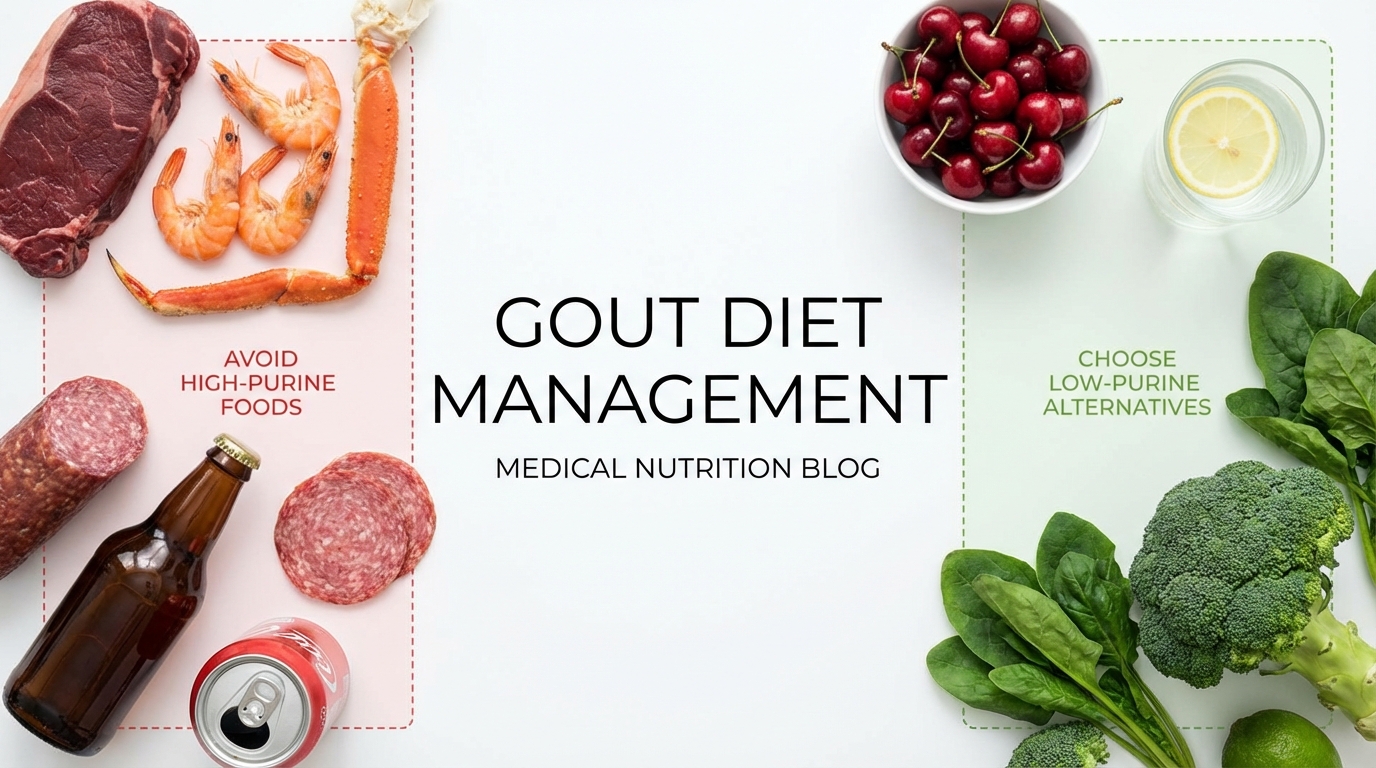
Organ meats: Liver, kidney, sweetbreads, and brain are the highest-purine foods. Even small portions can trigger a flare.
Certain seafood: Anchovies, sardines, mussels, scallops, and herring have high purine levels. Shrimp and lobster are moderate.
Red meat: Beef, lamb, and pork contain moderate to high purines. Limit to 4-6 ounces per day, and avoid during active flares.
Game meats: Venison, goose, and duck are especially high in purines.
Drinks That Raise Uric Acid
Beer: The worst offender. Beer is high in purines from brewer’s yeast and also impairs your kidneys’ ability to excrete uric acid. Studies show that even two beers can double your risk of a flare within 24 hours.
Liquor: Spirits like whiskey, vodka, and gin raise uric acid levels, though less than beer. Limit to one drink per occasion if any.
Sugary drinks: Soda, fruit punch, and sweetened juice drinks contain fructose, which increases uric acid production. One study found that men who drank 2 or more sugary sodas per day had an 85% higher risk of gout.
Interesting exception: Moderate wine consumption (one glass per day) appears to have a neutral effect on gout risk in most studies, though individual responses vary.
Other Foods to Watch
- High-fructose corn syrup in processed foods and condiments
- Yeast extracts and nutritional yeast
- Gravy and meat-based sauces
- Excessive amounts of any animal protein
Foods That Help Prevent Gout Flares
Cherries: Your Gout-Fighting Superfood
Cherries and cherry juice are the best-studied food for gout prevention. A landmark study in Arthritis & Rheumatology found that eating cherries or taking cherry extract reduced the risk of gout attacks by 35%.
- Fresh cherries: 10-12 cherries daily
- Tart cherry juice: 8 ounces daily (choose unsweetened)
- Cherry extract supplements: Follow package directions
Cherries work by lowering uric acid levels and reducing inflammation through anthocyanins, the compounds that give them their deep red color.
Low-Fat Dairy
Milk, yogurt, and cheese contain proteins (casein and lactalbumin) that help your kidneys excrete uric acid more efficiently.
- Aim for 2-3 servings of low-fat dairy daily
- Choose low-fat or skim milk, Greek yogurt, and reduced-fat cheese
- Studies show that each additional daily dairy serving reduces gout risk by about 20%
Water: The Simplest Prevention Tool
Staying well-hydrated helps your kidneys flush out uric acid. Dehydration concentrates uric acid in your blood, raising the risk of crystal formation.
- Drink at least 8-12 glasses of water daily
- Increase during hot weather or physical activity
- Keep a water bottle visible as a reminder
Vitamin C-Rich Foods
Research suggests that vitamin C lowers uric acid levels by improving kidney excretion. Good sources include:
- Oranges and orange juice (fresh, not sweetened)
- Bell peppers
- Strawberries
- Broccoli
- Kiwi fruit
A daily vitamin C supplement of 500 mg may also help, though the effect is modest (reducing uric acid by about 0.5 mg/dL).
Coffee
Several large studies have found that regular coffee drinking is associated with lower uric acid levels and reduced gout risk. Both caffeinated and decaffeinated coffee appear to help. The mechanism may involve chlorogenic acid, a compound that improves uric acid metabolism.
A Sample Gout-Friendly Day
Breakfast:
- Oatmeal with walnuts and fresh cherries
- Low-fat milk
- Coffee
Mid-Morning Snack:
- Greek yogurt with strawberries
- Glass of water
Lunch:
- Large salad with mixed greens, bell peppers, cucumbers, and chickpeas
- Olive oil and lemon dressing
- Whole grain roll
- Tart cherry juice
Afternoon Snack:
- Apple slices with almond butter
- Water
Dinner:
- Grilled chicken breast (4 oz)
- Roasted broccoli and sweet potatoes
- Brown rice
- Side salad with olive oil dressing
Evening:
- Handful of almonds
- Herbal tea
Weight Management and Gout
Carrying extra weight increases uric acid production and decreases kidney excretion. This double effect makes obesity one of the strongest risk factors for gout.
The encouraging news: even modest weight loss helps. Research shows that losing just 10-15 pounds can lower uric acid levels by 1-2 mg/dL, which is enough to meaningfully reduce flare frequency.
Important: Avoid crash diets or fasting. Rapid weight loss can temporarily spike uric acid levels and trigger a gout flare. Aim for gradual loss of 1-2 pounds per week through a balanced, low-purine diet.
If weight loss is a goal, the dietary pattern described here naturally supports it by emphasizing vegetables, lean proteins, and whole grains over processed foods. For more on how weight affects joint health, read our guide on weight loss and arthritis pain reduction.
When Diet Isn’t Enough
Diet changes alone may not control gout if you:
- Have very high uric acid levels (above 9 mg/dL)
- Experience frequent flares (more than 2 per year)
- Have tophi (uric acid deposits under the skin)
- Have kidney stones related to uric acid
In these cases, medications like allopurinol or febuxostat are essential. A gout-friendly diet enhances medication effectiveness and may allow your doctor to use lower doses over time.
If gout has affected your ankle joints, dietary management becomes even more important because repeated flares in weight-bearing joints can cause lasting damage.
Frequently Asked Questions
Can I ever eat red meat if I have gout?
Yes, in moderation. Limit red meat to 4-6 ounces per day on days you eat it, and try to keep it to 2-3 times per week or less. Choose lean cuts and avoid organ meats entirely. During an active flare, it’s best to skip red meat completely.
Is all alcohol equally bad for gout?
No. Beer is the worst because it combines high purines with alcohol’s effect on uric acid excretion. Liquor is moderately risky. Wine in moderation (one glass daily) appears to have the least impact, though individual responses vary. During a flare, avoid all alcohol.
How quickly can diet changes lower my uric acid?
Dietary changes alone typically lower uric acid by 1-2 mg/dL over several weeks. You may notice fewer flares within 1-3 months. However, if your uric acid is very high, medication will produce faster and larger reductions.
Are vegetables with purines (like asparagus and spinach) safe?
Yes. Despite containing some purines, high-purine vegetables do not increase gout risk. Large population studies have consistently confirmed this. Eat all the vegetables you want without worry.
Should I take supplements for gout?
Cherry extract and vitamin C (500 mg daily) have some evidence for modest benefit. Always discuss supplements with your doctor, especially if you take gout medications or blood thinners, to avoid interactions.
The information in this article is for educational purposes only and is not intended as medical advice. Always consult with your healthcare provider before making significant dietary changes, especially if you take gout medications.
Last medically reviewed: February 2026
Topics
Enjoyed this article?
Get more insights like this delivered to your inbox weekly.
Join 10,000+ readers. No spam.