Gout vs Osteoarthritis: How to Tell the Difference
Gout and osteoarthritis both cause joint pain but have very different causes and treatments. Learn how to tell them apart and when you might have both.
By Joint Pain Authority Team
Quick Answer
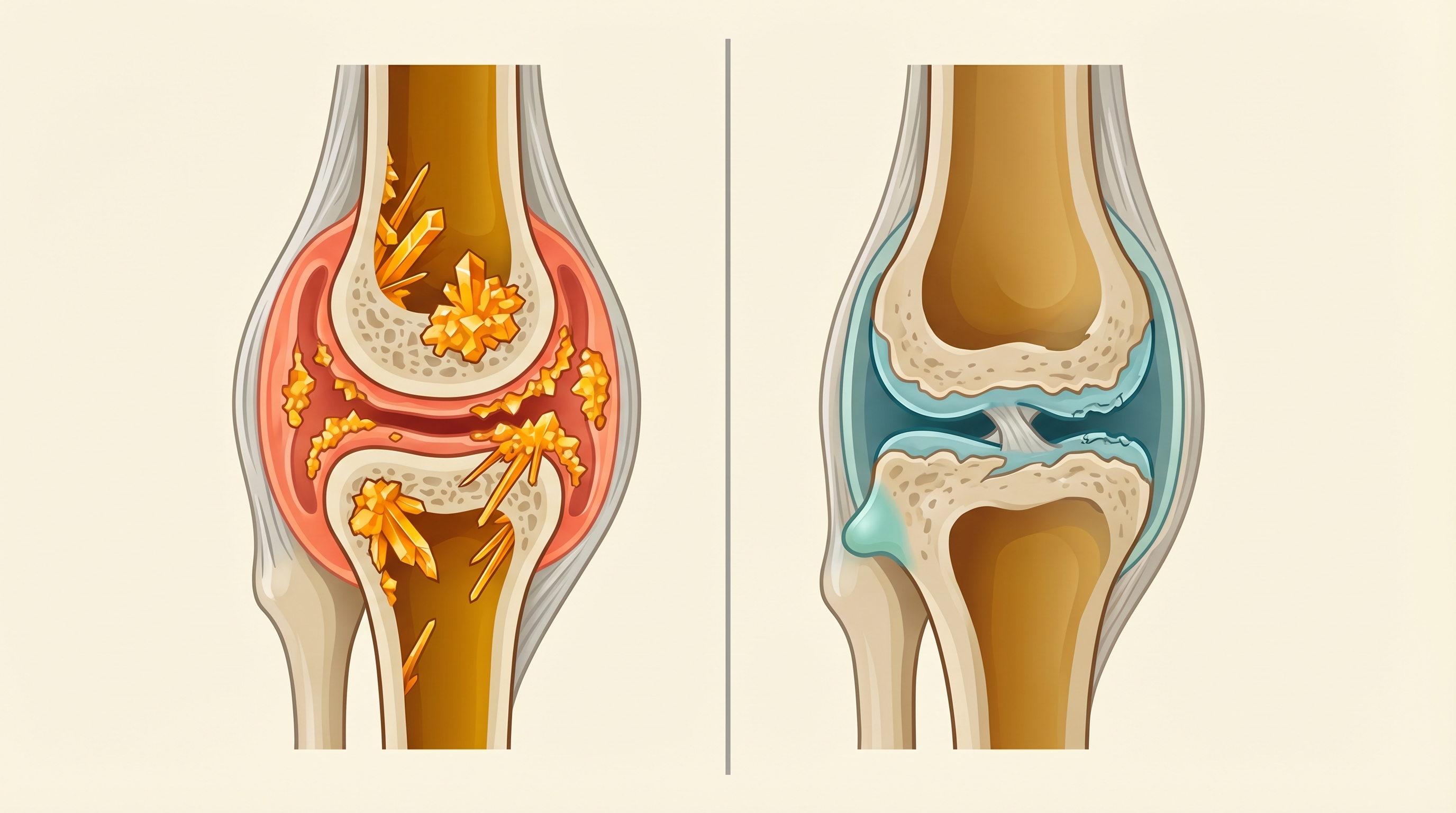
Gout is caused by uric acid crystals and causes sudden, severe attacks of red, hot, swollen joints — often the big toe. Osteoarthritis (OA) is caused by cartilage wear and causes gradual, aching joint pain that worsens with activity. Gout attacks come and go; OA pain is more constant. You can have both conditions simultaneously.
Side-by-Side Comparison
| Feature | Gout | Osteoarthritis |
|---|---|---|
| Cause | Uric acid crystal deposits | Cartilage wear and tear |
| Onset | Sudden (hours) | Gradual (months/years) |
| Pain character | Excruciating, throbbing | Aching, stiffness |
| Timing | Attacks come and go | Constant/progressive |
| Joint appearance | Red, hot, severely swollen | Mild swelling, bony bumps |
| Most common joint | Big toe, ankle, knee | Knee, hip, hands, spine |
| Triggers | Diet (red meat, alcohol, shellfish) | Activity, overuse |
| Blood test | Elevated uric acid | Normal uric acid |
| Age of onset | 30-60 (men), post-menopause (women) | 50+ typically |
| Treatment | Uric acid-lowering drugs, colchicine | PT, injections, exercise |
How to Tell Them Apart
It’s Probably Gout If:
- Pain came on suddenly overnight — you went to bed fine and woke up in agony
- The joint is hot, red, and extremely swollen
- You can’t bear even the weight of a bedsheet on the joint
- The big toe is affected (classic gout presentation)
- You recently had alcohol, red meat, or shellfish
- The attack completely resolves within 1-2 weeks
It’s Probably Osteoarthritis If:
- Pain developed gradually over months
- Stiffness in the morning that improves within 30 minutes
- Pain worsens with activity and improves with rest
- You notice bony bumps or joint enlargement
- Both sides are often affected (both knees, both hands)
- Clicking or grinding sensation in the joint
Can You Have Both?
Yes. Having both gout and osteoarthritis in the same joint is common, especially in the knee. OA-damaged joints may be more susceptible to gout crystal deposits. If you have OA and experience a sudden, severe flare that’s different from your usual pain, ask your doctor to check for gout.
Treatment Differences
Gout Treatment
- During an attack: Colchicine, NSAIDs, or corticosteroids
- Prevention: Allopurinol or febuxostat (uric acid-lowering drugs)
- Diet changes: Reduce red meat, shellfish, alcohol; increase water, dairy
- Goal: Prevent attacks by keeping uric acid below 6 mg/dL
Osteoarthritis Treatment
- Conservative: Physical therapy, exercise, weight management
- Injections: Gel injections, cortisone
- Support: Bracing, assistive devices
- Goal: Manage pain, maintain function, delay surgery
Frequently Asked Questions
Can gout cause permanent joint damage?
Yes, untreated gout can cause permanent joint damage over time. This is why uric acid-lowering therapy is recommended for patients with frequent attacks.
Does diet affect osteoarthritis like it affects gout?
Diet plays a smaller role in OA than gout, but maintaining a healthy weight significantly reduces OA symptoms. An anti-inflammatory diet may provide modest benefits.
Which is more common?
Osteoarthritis is far more common — affecting over 32 million Americans. Gout affects approximately 9 million Americans.
Can gel injections help gout?
Gel injections (HA viscosupplementation) are designed for osteoarthritis, not gout. However, cortisone injections can help during a gout attack by reducing acute inflammation.
Should I see a rheumatologist or orthopedist?
If you suspect gout, see a rheumatologist — they specialize in crystal arthritis. If you suspect OA, either an orthopedist or rheumatologist can help. If you’re unsure, start with your primary care doctor.
Stay ahead of joint pain
Get weekly insights on joint health and pain relief delivered to your inbox.
Join 10,000+ readers. No spam.
Enjoyed this article?
Get more insights like this delivered to your inbox weekly.
Join 10,000+ readers. No spam.