Gut Health and Joint Pain: The Inflammation Connection
Learn how your gut microbiome affects joint inflammation. Explore the role of probiotics, fiber, and diet in managing arthritis pain through gut health.
By Joint Pain Authority Team
Key Takeaways
- Your gut contains trillions of bacteria that directly influence inflammation throughout your body
- An imbalanced gut microbiome (dysbiosis) is linked to increased arthritis pain and progression
- Fiber-rich foods, fermented foods, and probiotics can help restore a healthy gut balance
- The gut-joint connection is especially strong in psoriatic arthritis and inflammatory conditions
- Improving gut health is a long-term strategy that complements other joint treatments
The idea that your gut could affect your knees or hips might sound far-fetched, but the science is increasingly clear: the trillions of microorganisms living in your digestive tract have a direct impact on inflammation throughout your body—including in your joints.
This field, known as the gut-joint axis, is one of the most exciting areas of arthritis research. While we’re still learning the details, there’s already enough evidence to take practical steps that support both your gut health and your joint health at the same time.
Your Gut Microbiome: A Quick Primer
Your gut is home to roughly 38 trillion bacteria, fungi, and other microorganisms—collectively called your microbiome. When this community is diverse and balanced, it performs vital functions:
- Trains your immune system to respond appropriately to threats
- Produces anti-inflammatory compounds like short-chain fatty acids (SCFAs)
- Maintains the gut barrier that prevents harmful substances from entering your bloodstream
- Synthesizes vitamins including vitamin K and B vitamins
When the microbiome becomes imbalanced—a condition called dysbiosis—the consequences reach far beyond your digestive tract.
How Gut Dysbiosis Drives Joint Inflammation
The connection between your gut and joint pain involves several pathways:
Leaky Gut and Systemic Inflammation
Your intestinal lining is designed to be selectively permeable—letting nutrients through while blocking bacteria and toxins. When the microbiome is imbalanced, this barrier can become compromised, a condition sometimes called “leaky gut” or increased intestinal permeability.
When the barrier weakens, bacterial fragments (especially a molecule called LPS, or lipopolysaccharide) leak into your bloodstream. Your immune system recognizes these fragments as threats and mounts an inflammatory response. This isn’t targeted at one joint—it’s body-wide, which is why gut problems can manifest as pain in your knees, hips, and other joints.
Immune System Dysregulation
About 70% of your immune system is located in and around your gut. The bacteria there help calibrate immune responses. When the wrong bacteria dominate, your immune system can become overactive, attacking your own tissues—including joint cartilage and synovial membranes.
This mechanism is especially relevant for autoimmune-related joint conditions like psoriatic arthritis, where the immune system plays a central role in joint damage.
Short-Chain Fatty Acid Production
Beneficial gut bacteria ferment dietary fiber to produce SCFAs like butyrate, propionate, and acetate. These compounds are powerfully anti-inflammatory:
- Butyrate strengthens the gut barrier and reduces systemic inflammation
- Propionate helps regulate immune cell activity
- Acetate influences metabolism and inflammatory pathways
When you don’t eat enough fiber or your beneficial bacteria are depleted, SCFA production drops and inflammation rises.
The Research: Gut Health and Specific Joint Conditions
Psoriatic Arthritis
The gut-joint connection is strongest in psoriatic arthritis. Multiple studies have found that psoriatic arthritis patients have significantly different gut microbiome compositions compared to healthy individuals. They tend to have:
- Reduced diversity of bacterial species
- Lower levels of beneficial bacteria like Akkermansia and Ruminococcus
- Higher levels of potentially harmful bacteria
A 2020 study in Nature Medicine found that gut microbiome patterns could even predict who would develop psoriatic arthritis before symptoms appeared.
Osteoarthritis
While osteoarthritis was long considered purely a “wear and tear” disease, research now shows that systemic inflammation plays an important role. Studies have found that people with knee osteoarthritis who also have metabolic syndrome (which involves gut dysbiosis) experience faster disease progression.
A 2019 study in JCI Insight demonstrated that gut bacteria could directly contribute to osteoarthritis in animal models, and that changing the gut microbiome altered disease severity.
Fibromyalgia
People with fibromyalgia frequently experience gut symptoms alongside their widespread pain. Research published in Pain found that fibromyalgia patients had distinct gut microbiome profiles with reduced diversity and altered bacterial ratios. The degree of microbiome disruption correlated with symptom severity.
Foods That Support Gut Health
High-Fiber Foods (Feed Your Good Bacteria)
Fiber is the primary fuel for beneficial gut bacteria. When they ferment fiber, they produce those anti-inflammatory SCFAs. Most Americans get only 15 grams of fiber daily—far less than the recommended 25-30 grams.
Best fiber sources for gut health:
- Vegetables: Artichokes, asparagus, Brussels sprouts, broccoli, onions, garlic
- Fruits: Berries, apples (with skin), bananas (especially slightly green), pears
- Legumes: Lentils, chickpeas, black beans, kidney beans (among the best fiber sources)
- Whole grains: Oats, barley, quinoa, whole wheat
- Nuts and seeds: Flaxseeds, chia seeds, almonds
Tip: Increase fiber gradually over 2-3 weeks. Adding too much too fast can cause bloating and gas as your microbiome adjusts.
Fermented Foods (Add Beneficial Bacteria)
Fermented foods introduce live beneficial bacteria directly into your gut:
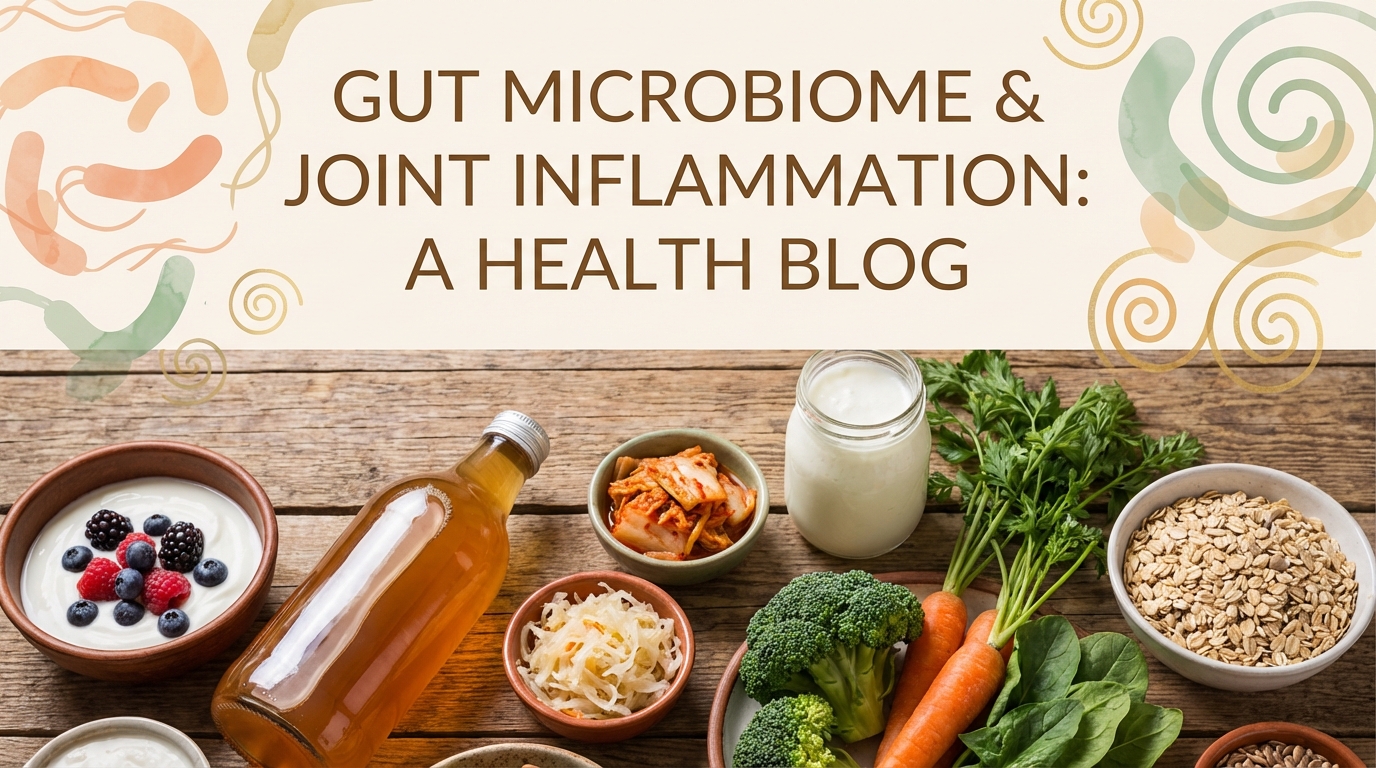
- Yogurt with live active cultures (check the label)
- Kefir (a fermented milk drink with diverse bacterial strains)
- Sauerkraut (unpasteurized, from the refrigerated section)
- Kimchi (fermented Korean vegetables)
- Miso (fermented soybean paste, use in soups and dressings)
- Kombucha (fermented tea; choose low-sugar varieties)
A Stanford University study found that eating 6 or more servings of fermented foods per week significantly increased microbiome diversity and reduced inflammatory markers—both beneficial for joint health.
Prebiotic Foods (Fertilizer for Good Bacteria)
Prebiotics are specific types of fiber that preferentially feed beneficial bacteria:
- Garlic, onions, and leeks
- Bananas (especially less ripe)
- Asparagus and artichokes
- Oats and barley
- Flaxseeds
Including a variety of prebiotic foods daily gives your beneficial bacteria the best chance to thrive.
Foods That Harm Gut Health
Certain dietary patterns disrupt the microbiome and promote the kind of dysbiosis linked to joint inflammation:
- Highly processed foods with emulsifiers and artificial additives damage the gut barrier
- Excess sugar and refined carbohydrates feed harmful bacteria and reduce microbial diversity
- Artificial sweeteners (especially saccharin and sucralose) alter gut bacterial populations
- Excessive alcohol disrupts the gut barrier and reduces beneficial bacterial populations
- Low-fiber diets starve beneficial bacteria and reduce SCFA production
Should You Take Probiotics?
Probiotic supplements contain live bacteria intended to benefit your gut microbiome. The evidence for joint health is emerging but promising:
What Research Shows
- A 2017 meta-analysis found that certain probiotics reduced inflammatory markers (CRP) in arthritis patients
- Specific strains like Lactobacillus casei and Bifidobacterium species have shown benefits in small arthritis studies
- Probiotics appear most helpful when combined with dietary improvements rather than used in isolation
If You Try Probiotics
- Choose a multi-strain formula with at least 10 billion CFU (colony-forming units)
- Look for strains with research support: Lactobacillus acidophilus, L. rhamnosus, Bifidobacterium longum, B. lactis
- Take consistently for at least 8-12 weeks before evaluating results
- Store as directed (many require refrigeration)
- Continue eating fiber-rich foods—probiotics need prebiotics to survive and thrive
Probiotics are not a replacement for a healthy diet. They work best as a supplement to an already gut-supportive eating pattern.
A Gut-Healthy Daily Eating Pattern
Breakfast: Overnight oats with ground flaxseed, berries, and a dollop of yogurt
Mid-morning: Kefir smoothie with banana and a handful of spinach
Lunch: Large salad with mixed greens, chickpeas, artichoke hearts, and olive oil dressing
Afternoon snack: Hummus with raw vegetables (garlic and chickpeas are prebiotic)
Dinner: Baked salmon with roasted asparagus, garlic, and brown rice. Side of sauerkraut.
Evening: Miso soup or herbal tea
This pattern provides fiber, fermented foods, prebiotics, omega-3s, and polyphenols—all supporting both gut health and joint health simultaneously.
What to Expect
Gut microbiome changes don’t happen overnight. Here’s a realistic timeline:
Weeks 1-2: You may notice changes in digestion as your microbiome begins adjusting. Some temporary bloating is normal if you’re increasing fiber.
Weeks 4-8: Digestive symptoms typically stabilize. Inflammatory markers may begin to decrease.
Weeks 8-12: Some people begin noticing improvements in joint stiffness and pain. The microbiome is establishing a new, healthier balance.
3-6 months: More significant and consistent improvements as a diverse, anti-inflammatory microbiome takes hold.
If you’re also taking joint supplements or following other arthritis treatments, gut health optimization can enhance their effectiveness by reducing the background level of systemic inflammation.
Frequently Asked Questions
Can fixing my gut health cure my arthritis?
No. Improving gut health can reduce systemic inflammation that worsens arthritis symptoms, but it doesn’t reverse structural joint damage. Think of it as removing one driver of inflammation—you may experience less pain and slower progression, but it works best as part of a comprehensive treatment approach.
How do I know if my gut health is affecting my joints?
Common signs include joint pain that fluctuates with digestive symptoms, worsening joint pain after eating certain foods, bloating or irregular bowel habits alongside joint stiffness, and improvement in joint symptoms when eating a cleaner diet. A gut microbiome test can provide more specific information, though interpreting results requires professional guidance.
Are antibiotics bad for gut health and joints?
Antibiotics can significantly disrupt your gut microbiome by killing beneficial bacteria along with harmful ones. While sometimes medically necessary, frequent antibiotic use is associated with reduced microbial diversity. If you need antibiotics, consider taking probiotics (separated by 2 hours from your antibiotic dose) and increasing fermented foods during and after your course.
Do I need a special gut microbiome test?
Commercial microbiome tests are available but still have limitations in clinical usefulness. For most people, focusing on a high-fiber, diverse diet with fermented foods is a practical approach that doesn’t require testing. If you have persistent digestive issues alongside joint pain, discuss testing options with a gastroenterologist.
Can stress affect my gut health and joint pain?
Absolutely. Chronic stress alters gut bacterial populations through the gut-brain axis and increases intestinal permeability. Stress also directly increases inflammatory cytokines. Managing stress through relaxation techniques, adequate sleep, and social connection supports both gut health and joint health.
The information in this article is for educational purposes only and is not intended as medical advice. Always consult with your healthcare provider before starting probiotics or making significant dietary changes, especially if you have a compromised immune system or take immunosuppressive medications.
Last medically reviewed: February 2026
Stay ahead of joint pain
Get weekly insights on joint health and pain relief delivered to your inbox.
Join 10,000+ readers. No spam.
Enjoyed this article?
Get more insights like this delivered to your inbox weekly.
Join 10,000+ readers. No spam.