Is Knee Crepitus Serious? When Clicking and Popping Means Trouble
Knee clicking, popping, and grinding (crepitus) is common but not always serious. Learn when knee crepitus needs medical attention and when it is harmless.
By Joint Pain Authority Team
Quick Answer
In most cases, knee crepitus (clicking, popping, grinding) is harmless. Painless knee sounds are extremely common, especially as we age, and don’t indicate damage. However, crepitus with pain, swelling, or loss of function may indicate cartilage wear, meniscus issues, or advancing arthritis that deserves medical evaluation.
What Is Crepitus?
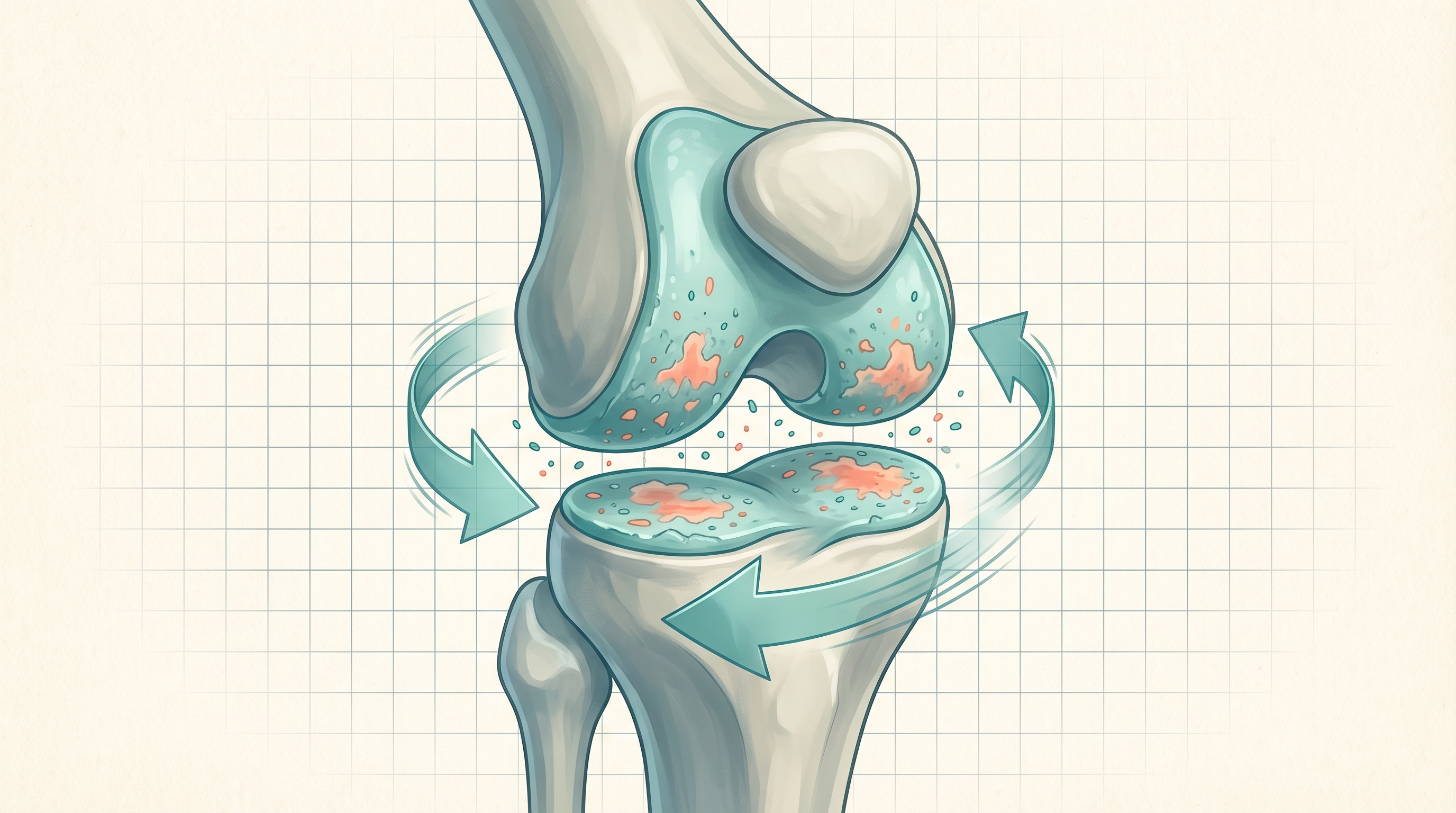
Crepitus is the medical term for any grinding, clicking, popping, or crackling sensation in a joint. In the knee, it can sound or feel like:
- Popping — a single loud pop (like cracking knuckles)
- Clicking — a regular click with each bend
- Grinding/crunching — a continuous gritty sensation
- Snapping — a tendon or ligament moving over bone
When Knee Crepitus Is Harmless
Painless crepitus is almost always benign. Common harmless causes include:
- Gas bubbles in joint fluid — same as cracking knuckles
- Ligaments sliding over bony prominences — especially when standing up
- Normal cartilage surface irregularities — nearly universal over age 50
- Muscle tightness — tight quads or IT band can cause snapping
Key reassurance: A study found that 99% of knee MRIs show some abnormality, even in people with zero symptoms. Knee sounds without pain are part of normal aging.
When Knee Crepitus IS Serious
See a doctor if your knee crepitus comes with:
- Pain during or after the clicking/grinding
- Swelling that develops alongside the sounds
- Catching or locking — the knee gets stuck
- Giving way — the knee buckles unexpectedly
- Decreasing range of motion — you can’t bend or straighten fully
- The sounds are new and getting worse over weeks
- After a specific injury — twist, fall, or impact
What Causes Painful Crepitus?
| Cause | Sound Type | Associated Symptoms |
|---|---|---|
| Osteoarthritis | Continuous grinding | Morning stiffness, aching after activity |
| Meniscus tear | Clicking or catching | Locking, swelling, sharp pain with twisting |
| Chondromalacia patella | Grinding under kneecap | Pain going up/down stairs, after sitting |
| Loose body | Intermittent catching | Random locking episodes |
| Plica syndrome | Snapping on inner knee | Pain with bending, tender spot |
What Your Doctor Will Do
If you see a doctor for knee crepitus, expect:
- Physical exam — McMurray test, patellar grind test, range of motion
- X-rays — to check joint space and bone changes
- MRI — if meniscus or cartilage damage suspected
- Treatment plan — based on the underlying cause
Treatment Options for Painful Crepitus
Most causes of painful knee crepitus can be treated without surgery:
- Physical therapy — strengthening the quadriceps and hamstrings reduces stress on cartilage
- Gel injections — lubricates the joint, often reduces grinding
- Bracing — offloads the affected compartment
- Activity modification — avoid deep squats and lunges that stress cartilage
Frequently Asked Questions
Does knee crepitus mean I have arthritis?
Not necessarily. Painless crepitus is extremely common and doesn’t indicate arthritis. Even painful crepitus can have non-arthritis causes like chondromalacia or a meniscus issue.
Should I stop exercising if my knee clicks?
If the clicking is painless, keep exercising. Exercise is protective for knee joints. Only stop or modify activities that cause pain along with the clicking.
Will knee crepitus get worse over time?
Painless crepitus often stays stable for years. Painful crepitus associated with arthritis may gradually increase, which is why early treatment is important.
Can supplements help with knee crepitus?
Glucosamine and chondroitin have limited evidence for crepitus specifically. Gel injections are more effective at reducing grinding by directly lubricating the joint.
Is it bad to “crack” my knee on purpose?
Intentionally cracking your knee (like cracking knuckles) is not harmful. However, if you need to crack your knee to relieve tightness, stretching and strengthening exercises would address the underlying issue better.
Stay ahead of joint pain
Get weekly insights on joint health and pain relief delivered to your inbox.
Join 10,000+ readers. No spam.
Enjoyed this article?
Get more insights like this delivered to your inbox weekly.
Join 10,000+ readers. No spam.