Best Stretching & Flexibility for Hip Arthritis
Evidence-based guide to daily stretching routines for hip arthritis. Safe modifications, how often, what to avoid, and when to stop.
By Joint Pain Authority Team

Quick Answer
Yes, stretching & flexibility is safe and beneficial for most people with hip arthritis. Research from 217 RCTs involving 15,684 patients confirms that exercise does NOT accelerate arthritis. Stretching & Flexibility maintains range of motion, reduces stiffness, and can be done anywhere with no equipment. Always start gently and progress gradually.
Why Stretching & Flexibility Helps Hip Arthritis
Stretching & Flexibility maintains range of motion, reduces stiffness, and can be done anywhere with no equipment. For hip joints specifically, this means:
- Reduced stiffness — regular movement keeps the joint lubricated
- Stronger supporting muscles — takes pressure off damaged cartilage
- Better balance and coordination — reduces fall risk
- Improved mood — exercise releases endorphins that naturally reduce pain perception
Getting Started Safely
Before You Begin
- Talk to your doctor or physical therapist about any limitations
- Start with 10-15 minutes and gradually increase
- Warm up with gentle range-of-motion movements for 5 minutes
- Apply the 24-hour rule: if your hip is more swollen or painful the next day, reduce intensity
Recommended Routine
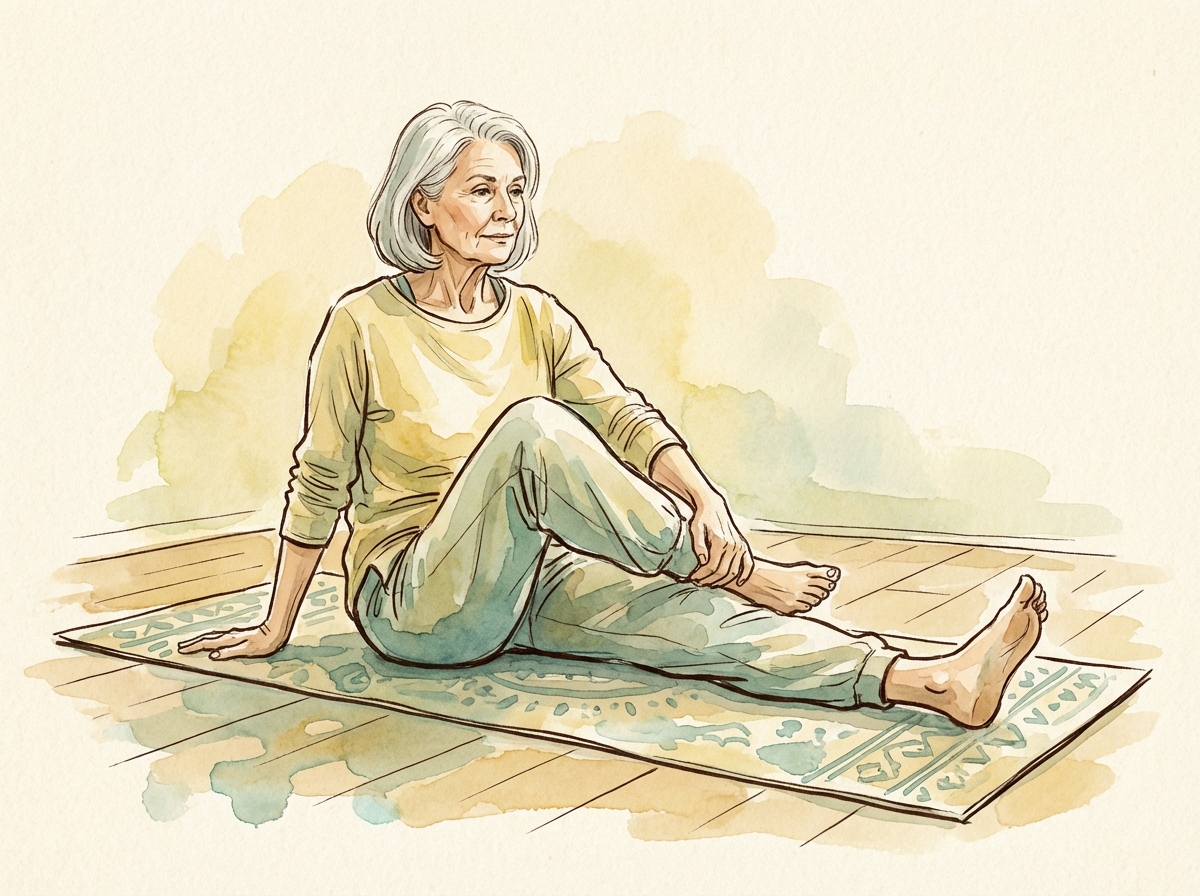
- Frequency: 3-5 times per week
- Duration: 20-30 minutes per session (work up to this)
- Intensity: Moderate — you should be able to carry on a conversation
- Rest days: At least 2 per week, especially when starting out
Modifications for Hip Arthritis
- Use supportive equipment as needed (cushion, strap, pool noodle)
- Avoid deep bending past 90 degrees if it causes pain
- Focus on smooth, controlled movements — never bounce or force
- Stop any movement that causes sharp or increasing pain
When to Stop and See Your Doctor
Stop exercising and consult your doctor if you experience:
- Sharp, sudden pain during movement
- Significant swelling that doesn’t resolve within 24 hours
- Joint locking or catching
- Pain that wakes you from sleep
- Numbness or tingling in the hip area
Combining Exercise with Other Treatments
Stretching & Flexibility works best as part of a comprehensive treatment plan. Many patients combine regular exercise with:
- Gel injections (HA viscosupplementation) for joint lubrication
- Physical therapy for guided progression
- Bracing for additional joint support during activity
Frequently Asked Questions
Can I do stretching & flexibility with bone-on-bone hip arthritis?
Yes, in most cases. Research shows that even patients with severe (Grade IV) osteoarthritis benefit from appropriate exercise. Start very gently and work with a physical therapist if possible.
How long before I see improvement?
Most patients notice reduced stiffness within 2-4 weeks. Meaningful pain and function improvements typically appear after 6-8 weeks of consistent practice.
Is stretching & flexibility better than other exercises for hip arthritis?
Every type of exercise has benefits. The best exercise is the one you’ll actually do consistently. Stretching & Flexibility is particularly good because it maintains range of motion, reduces stiffness, and can be don.
Should I exercise during a flare-up?
During a flare, switch to gentle range-of-motion exercises only. Avoid anything that increases pain or swelling. Resume your normal routine once the flare settles.
Do I need special equipment?
Minimal equipment needed — comfortable clothing and supportive shoes are sufficient to start.
Stay ahead of joint pain
Get weekly insights on joint health and pain relief delivered to your inbox.
Join 10,000+ readers. No spam.
Enjoyed this article?
Get more insights like this delivered to your inbox weekly.
Join 10,000+ readers. No spam.