Thumb Arthritis: Symptoms, Treatment
Thumb arthritis (CMC joint) affects 15% of women over 50. Learn symptoms, treatments from splinting to surgery, and the new Touch CMC prosthesis.
By Joint Pain Authority Team
Quick Answer
Thumb arthritis (CMC or basal joint arthritis) is one of the most common forms of hand osteoarthritis, affecting roughly 15% of women and 7% of men over 50. It causes pain at the base of the thumb during gripping, pinching, and twisting motions. Treatment starts with splinting and hand therapy, progresses to cortisone injections, and may eventually require surgery. A new prosthetic implant (Touch CMC 1) received FDA clearance and offers a promising alternative to traditional surgical approaches.
What Is Thumb Arthritis?
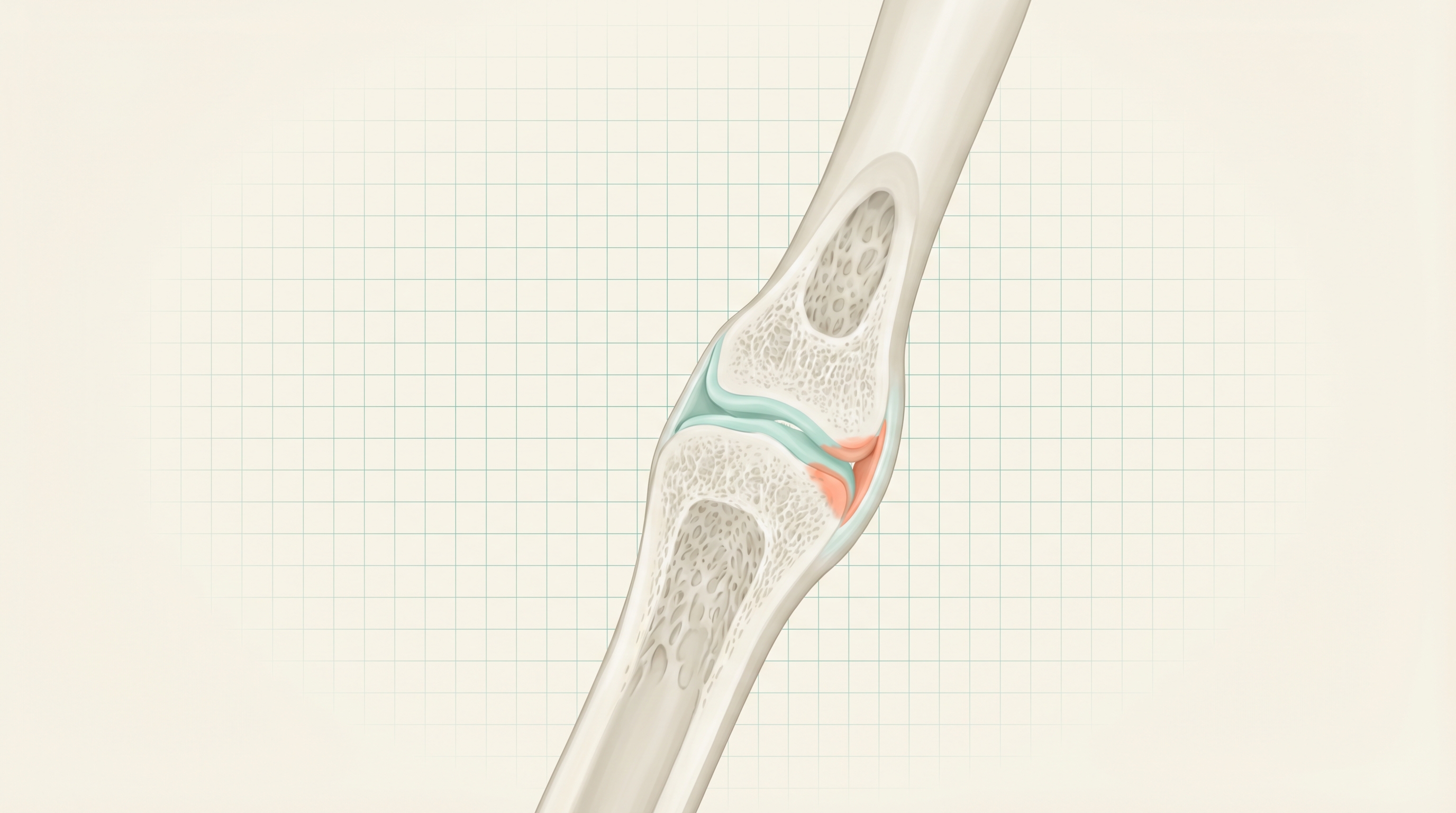
The carpometacarpal (CMC) joint at the base of your thumb is one of the hardest-working joints in your body. Every time you grip a jar, turn a key, or pinch something between your thumb and fingers, this joint bears significant force, up to 12 times the force applied at the thumb tip.
Over time, the cartilage protecting this joint wears away, leading to bone-on-bone contact, inflammation, and pain. This is thumb arthritis, also called basal joint arthritis or CMC joint arthritis.
Why the Thumb Is Vulnerable
Symptoms of Thumb Arthritis
Thumb arthritis develops gradually. Recognizing early symptoms can help you start treatment before significant joint damage occurs.
Early Symptoms
Progressive Symptoms
Diagnosis
Your doctor will examine your thumb by pressing on the CMC joint and performing a “grind test” (rotating the thumb while applying gentle pressure). An X-ray confirms the diagnosis by showing joint space narrowing, bone spurs, or subluxation (partial dislocation).
Treatment Options
Treatment follows a step-wise approach, starting with the least invasive options.
Step 1: Splinting and Activity Modification
Why this works: Reducing mechanical stress on the CMC joint gives the inflammation a chance to settle. Many patients with mild to moderate thumb arthritis manage well with splinting alone for years.
Related reading: Ergonomic Tools for Arthritis
Step 2: Hand Therapy
Medicare coverage: Part B covers hand therapy (occupational or physical therapy) with a doctor’s referral. A CHT is the gold standard for thumb arthritis rehabilitation.
Related reading: Hand and Wrist Exercises for Arthritis
Step 3: Cortisone Injections
Medicare coverage: Covered under Part B. Minimal out-of-pocket cost.
Step 4: Surgery (When Conservative Care Fails)
When splinting, therapy, and injections no longer provide adequate relief, surgical options include:
Trapeziectomy (LRTI - Ligament Reconstruction Tendon Interposition)
The traditional gold standard. The trapezium bone (the arthritic bone at the thumb base) is removed and replaced with a cushion made from a nearby tendon. Recovery takes 3-6 months, but long-term results are excellent with lasting pain relief and good strength.
Arthrodesis (Joint Fusion)
The CMC joint is permanently fused in a functional position. Eliminates pain completely but sacrifices some motion. Best for younger patients with high physical demands.
Touch CMC 1 Prosthesis (Emerging Option)
A newer prosthetic implant that replaces the arthritic joint surfaces while preserving motion. The Touch CMC 1 received FDA clearance and early clinical results show promising outcomes including faster recovery than trapeziectomy and good preservation of thumb strength and motion. This is an emerging option. Long-term data (10+ years) is still being collected. Not all hand surgeons offer this procedure yet.
Arthroscopic Debridement
A minimally invasive option for early-stage disease. A small camera and instruments clean out loose cartilage and bone spurs. May delay the need for more extensive surgery.
Hand and Joint Health Updates
Get evidence-based information about arthritis treatments, new procedures, and self-care strategies delivered to your inbox.
Join 10,000+ readers. No spam.
When to See a Specialist
Do not wait until your thumb arthritis is severe. Early treatment can slow progression and maintain function.
See a hand specialist or orthopedist if:
A hand surgeon or hand-specialized orthopedist can confirm the diagnosis, stage the severity, and create a treatment plan. For Medicare patients, an orthopedist vs. rheumatologist guide can help you choose the right starting point.
Frequently Asked Questions
What does thumb arthritis feel like?
Most people describe a deep ache at the base of the thumb (the fleshy mound near the wrist) that worsens with gripping, pinching, and twisting motions. Opening jars, turning keys, and writing are common triggers. Early on, the pain comes and goes with activity. As arthritis progresses, pain may be present at rest and can wake you at night.
How common is thumb arthritis?
Very common. Studies show that roughly 15% of women and 7% of men over age 50 have symptomatic CMC joint arthritis. Radiographic evidence (visible on X-ray but not necessarily causing symptoms) is found in up to 33% of postmenopausal women. It is the most common site of hand osteoarthritis.
Does thumb arthritis get worse over time?
Thumb arthritis is generally progressive, meaning it slowly worsens over years. However, the rate of progression varies widely. Some people have mild thumb arthritis that remains stable for decades with proper management (splinting, activity modification). Others progress more quickly. Early treatment helps slow the process.
What is the new thumb joint replacement?
The Touch CMC 1 is a prosthetic implant designed to replace the arthritic surfaces of the CMC joint. Unlike trapeziectomy (which removes a bone), this implant preserves bone stock and may allow faster recovery. Early results are encouraging, but it is still relatively new and long-term durability data is limited. Ask a fellowship-trained hand surgeon whether you might be a candidate.
Can you prevent thumb arthritis?
You cannot completely prevent it, especially given genetic and hormonal factors. However, you can reduce risk and slow progression by maintaining hand strength, using ergonomic tools, avoiding sustained forceful pinching, and wearing a support splint during activities that stress the thumb. If you have early symptoms, starting treatment promptly helps preserve joint function.
Is thumb arthritis related to texting or phone use?
There is no strong evidence that normal smartphone use causes CMC joint arthritis. However, sustained gripping of a phone or tablet can aggravate existing thumb arthritis. If you have symptoms, try using a phone stand, voice-to-text, and take breaks from extended phone use.
Should I see a hand surgeon or a regular orthopedist?
A hand surgeon (an orthopedic surgeon or plastic surgeon with fellowship training in hand surgery) has the most expertise for thumb arthritis. If no hand surgeon is available, a general orthopedist who treats hand conditions can also evaluate you. Ask whether the doctor regularly treats CMC joint arthritis.
This article is for informational purposes only and does not replace medical advice. Consult with your healthcare provider about the treatment plan that is right for your individual situation.
Last reviewed: March 2026
Related Resources
Topics
Enjoyed this article?
Get more insights like this delivered to your inbox weekly.
Join 10,000+ readers. No spam.