Turmeric and Curcumin for Joint Pain: What Research Shows
Explore the evidence for turmeric and curcumin supplements for arthritis. Dosage, bioavailability tips, supplement quality, and what studies actually prove.
By Joint Pain Authority Team
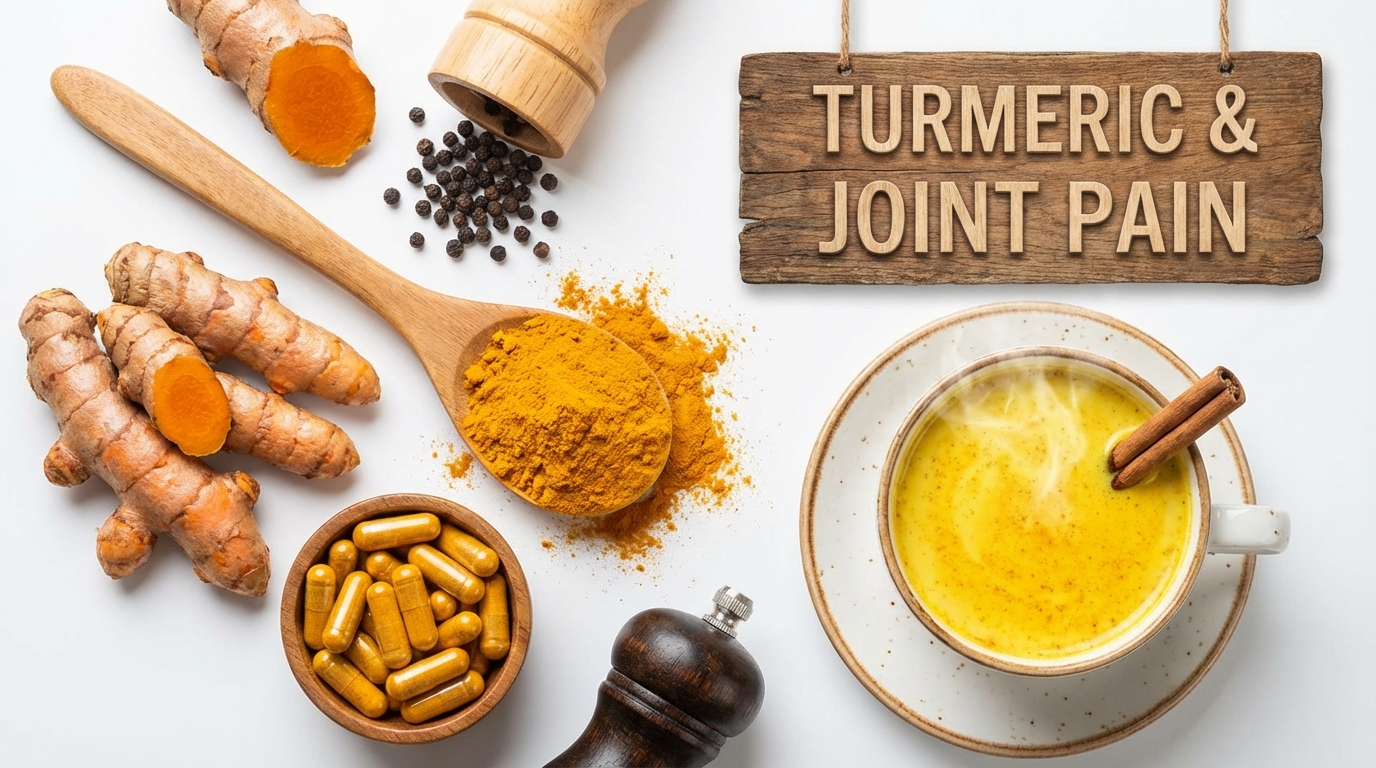
Key Takeaways
- Curcumin, the active compound in turmeric, has proven anti-inflammatory properties
- Clinical trials show it can reduce arthritis pain comparable to some NSAIDs
- Regular turmeric spice alone doesn’t provide enough curcumin for joint benefits
- Bioavailability is the biggest challenge—absorption enhancers are essential
- Quality supplements with third-party testing offer the best results
Turmeric has been used in traditional medicine for thousands of years, but only in recent decades has modern science confirmed what ancient healers suspected. Curcumin—the bright yellow compound that gives turmeric its color—is a potent anti-inflammatory that shows real promise for joint pain relief.
But here’s what the supplement industry doesn’t always tell you: not all turmeric products work equally, and the science has important nuances. This guide separates what’s proven from what’s marketing and helps you make informed decisions about turmeric for your joints.
How Curcumin Fights Joint Inflammation
Curcumin works through several mechanisms that are directly relevant to joint pain:
Blocks NF-kB pathway. This is your body’s master switch for inflammation. When activated, NF-kB turns on genes that produce inflammatory chemicals in your joints. Curcumin inhibits this pathway, reducing the production of cytokines like TNF-alpha and IL-6 that drive arthritis pain.
Inhibits COX-2 and LOX enzymes. These are the same enzymes targeted by NSAIDs like ibuprofen and naproxen. Curcumin blocks them through a different mechanism, which may explain why it has fewer gastrointestinal side effects.
Reduces oxidative stress. Curcumin is a powerful antioxidant that neutralizes free radicals—unstable molecules that damage cartilage and accelerate joint deterioration.
Protects cartilage cells. Research shows curcumin may help prevent the breakdown of cartilage in conditions like knee osteoarthritis and hip arthritis.
What Clinical Trials Actually Show
The research on curcumin for joint pain has grown substantially. Here’s what the strongest evidence says:
Osteoarthritis Studies
A 2016 meta-analysis in the Journal of Medicinal Food reviewed 8 randomized controlled trials and concluded that curcumin significantly reduced joint pain and improved physical function in osteoarthritis patients. The effect size was comparable to ibuprofen.
Another key study in Trials followed 139 patients with knee osteoarthritis and found that curcumin (500 mg three times daily) was as effective as diclofenac (a prescription NSAID) for pain relief over 4 weeks—but with significantly fewer side effects.
A 2021 systematic review confirmed that curcumin supplements reduced pain intensity and improved function across multiple osteoarthritis studies, with effects typically appearing after 4-8 weeks.
Rheumatoid Arthritis
Smaller studies suggest curcumin may help rheumatoid arthritis as well, reducing joint tenderness and swelling. However, the evidence is less robust than for osteoarthritis, and curcumin should not replace disease-modifying medications for RA.
Hand and Wrist Arthritis
For people with hand and wrist arthritis, curcumin’s anti-inflammatory effects may help reduce the swelling and stiffness that make fine motor tasks difficult. While specific studies on hand OA are limited, the general anti-inflammatory mechanisms apply to all joints.
The Bioavailability Problem
Here’s the biggest challenge with curcumin: your body barely absorbs it. When you eat turmeric or take plain curcumin, most of it passes through your digestive system without reaching your bloodstream.
This means adding turmeric to your food, while delicious, provides far too little curcumin to achieve the joint benefits seen in clinical trials.
How to Improve Absorption
Several methods dramatically increase curcumin absorption:
Black pepper (piperine). Adding piperine increases curcumin absorption by up to 2,000%. This is the most common and affordable enhancement method. Many supplements include it automatically.
Fat-based formulations. Curcumin is fat-soluble. Taking it with a fatty meal or using a lipid-based formulation (like curcumin with lecithin) improves absorption significantly.
Nanoparticle formulations. Products like Theracurmin use ultra-fine particle technology to increase absorption by 27 times compared to standard curcumin.
Phytosome technology. Meriva (curcumin bound to phosphatidylcholine) improves absorption by about 29 times. This formulation has been used in several clinical trials with positive results.
BCM-95. This combines curcumin with turmeric essential oils to enhance absorption naturally.
When choosing a supplement, look for one of these enhanced formulations rather than plain curcumin extract.
Dosage Guidelines
Based on clinical trials, effective dosages vary by formulation:
| Formulation | Typical Effective Dose | Notes |
|---|---|---|
| Standard curcumin + piperine | 500-1,000 mg, 2-3x daily | Most affordable option |
| Meriva (phytosome) | 500-1,000 mg, 2x daily | Well-studied |
| Theracurmin | 90-180 mg, 2x daily | Lower dose needed due to high absorption |
| BCM-95 | 500 mg, 2x daily | Contains turmeric essential oils |
Start low. Begin with the lower end of the dosage range and increase gradually over 2-4 weeks if tolerated.
Be consistent. Curcumin works best with regular daily intake. Skipping days reduces its effectiveness.
Give it time. Most studies show benefits after 4-8 weeks. Don’t expect overnight results.
Choosing a Quality Supplement
The supplement market is largely unregulated, so quality varies widely. Look for:
- Standardized to 95% curcuminoids (the active compounds)
- Enhanced absorption formula (piperine, phytosome, or nanoparticle)
- Third-party testing from USP, NSF, or ConsumerLab
- GMP-certified manufacturing facility
- Clear labeling of curcumin content per serving (not just turmeric weight)
Avoid products that list only “turmeric root powder” without specifying curcuminoid content. Raw turmeric contains only 3% curcumin, so a 500 mg turmeric capsule provides just 15 mg of curcumin—far below therapeutic doses.
Safety and Side Effects
Curcumin is generally well tolerated, but there are considerations:
Common side effects (usually mild):
- Digestive upset, nausea, or diarrhea at high doses
- Yellow staining of stool (harmless)
Cautions:
- Blood thinners: Curcumin may enhance anticoagulant effects. Talk to your doctor if you take warfarin, aspirin, or other blood thinners.
- Surgery: Stop curcumin supplements 2 weeks before scheduled surgery due to potential bleeding risk.
- Gallbladder disease: Curcumin stimulates bile production. Avoid if you have gallstones or bile duct obstruction.
- Iron absorption: High-dose curcumin may reduce iron absorption. If you’re anemic, take curcumin separately from iron supplements.
- Pregnancy: High-dose curcumin supplements are not recommended during pregnancy.
Curcumin vs. Cooking with Turmeric
Both have value, but they serve different purposes:
Cooking with turmeric adds flavor and provides small amounts of curcumin along with other beneficial compounds in the whole spice. It contributes to an overall anti-inflammatory diet but won’t reach therapeutic levels for joint pain.
Curcumin supplements deliver concentrated, enhanced-absorption doses that match what clinical trials have studied. If you want the joint pain benefits seen in research, supplementation is necessary.
Best approach: Do both. Use turmeric generously in cooking and take a quality curcumin supplement for therapeutic benefit.
Combining Curcumin with Other Treatments
Curcumin pairs well with other joint health strategies:
- Combined with joint supplements like glucosamine and chondroitin, you address both inflammation and cartilage support
- Used alongside topical treatments for localized relief while curcumin works systemically
- Some turmeric-based topical creams are available, though the evidence for topical curcumin is less developed than for oral supplementation
Frequently Asked Questions
Can I just eat more turmeric instead of taking supplements?
Cooking with turmeric is healthy but won’t provide enough curcumin for joint benefits. You would need to consume several tablespoons of turmeric daily to approach therapeutic doses, which is impractical and could cause digestive issues. Use turmeric in cooking for general health and a supplement for joint-specific benefits.
How long should I try curcumin before deciding if it works?
Give it at least 8-12 weeks of consistent daily use. Some people notice improvements as early as 4 weeks, but the full anti-inflammatory effects build gradually. If you see no benefit after 3 months, it may not be effective for your specific situation.
Can curcumin replace my anti-inflammatory medication?
Never stop prescribed medications without your doctor’s guidance. Curcumin may allow some people to reduce their NSAID use under medical supervision, but this should be a gradual, doctor-guided process. For people who can’t tolerate NSAIDs, curcumin may be a helpful alternative to discuss with your provider.
Is the golden milk trend actually beneficial?
Golden milk (turmeric mixed with warm milk and spices) is a pleasant drink that provides some curcumin plus the anti-inflammatory benefits of ginger and cinnamon. Adding black pepper and using whole milk (for fat-based absorption) maximizes what you get from it, but it still delivers less curcumin than a standardized supplement.
Are there any drug interactions I should know about?
Beyond blood thinners, curcumin may interact with diabetes medications (by lowering blood sugar), stomach acid reducers, and certain chemotherapy drugs. Always share your full supplement list with your doctor and pharmacist.
The information in this article is for educational purposes only and is not intended as medical advice. Always consult with your healthcare provider before starting any supplement, especially if you take medications or have liver, gallbladder, or bleeding disorders.
Last medically reviewed: February 2026
Enjoyed this article?
Get more insights like this delivered to your inbox weekly.
Join 10,000+ readers. No spam.