Aquatic Therapy for Joint Pain: Benefits of Water Exercise
Discover how aquatic therapy and pool exercises reduce joint pain, improve mobility, and build strength. A complete guide to water-based exercise for arthritis.
By Joint Pain Authority Team
Key Takeaways
- Water reduces the weight on your joints by up to 90%, making exercise nearly pain-free
- Aquatic therapy improves strength, flexibility, and balance with far less joint stress than land exercises
- Warm water (83-88 degrees F) relaxes muscles and increases blood flow for additional pain relief
- Research shows pool exercise is as effective as land-based physical therapy for knee and hip arthritis
- Most Medicare plans cover aquatic therapy when prescribed by a doctor
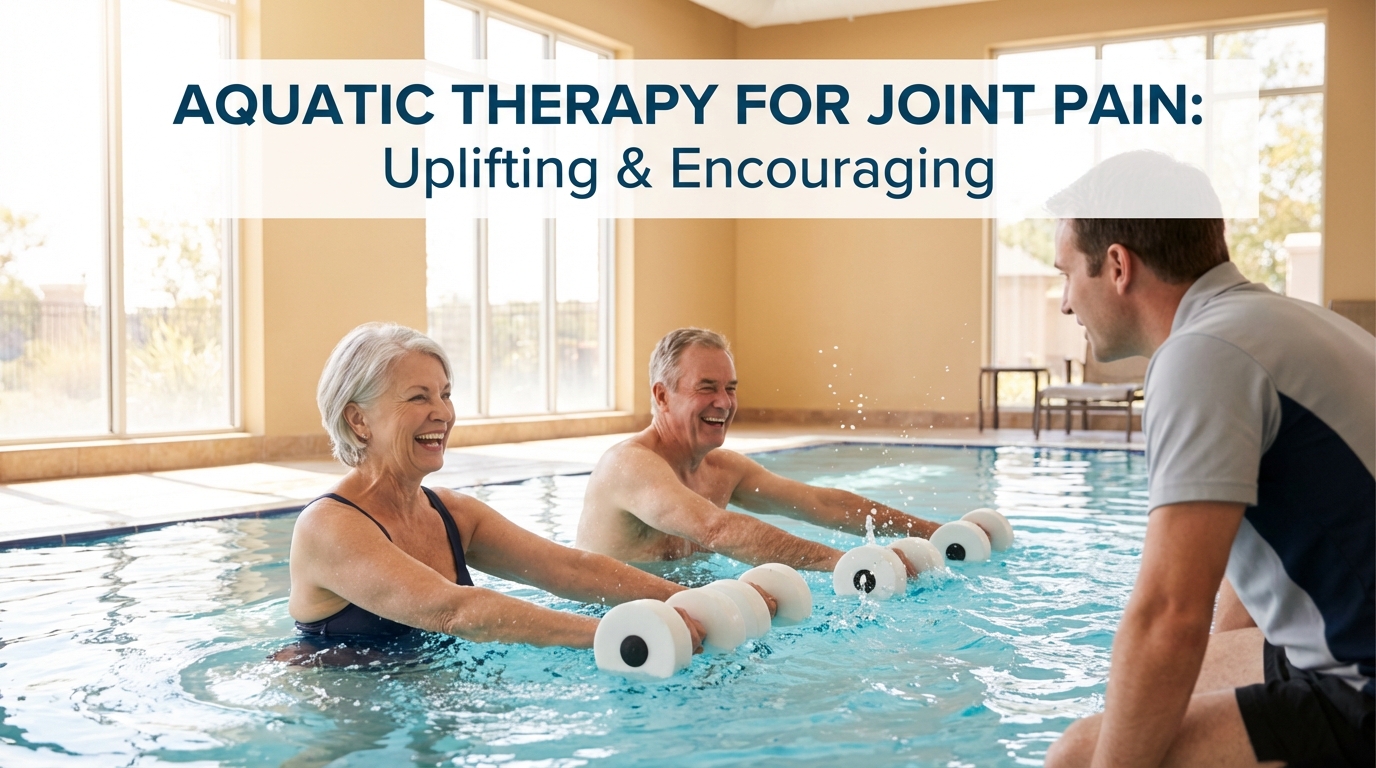
When every step on solid ground sends pain through your knees or hips, the idea of exercise can feel impossible. That’s where water changes everything. Aquatic therapy uses the unique properties of water — buoyancy, warmth, and resistance — to let you exercise with dramatically less pain.
If you have knee osteoarthritis, hip arthritis, or fibromyalgia, water may be the environment where you can finally move freely again. A study in Physical Therapy found that aquatic exercise produced the same improvements in pain and function as land-based exercise, but participants reported significantly less discomfort during the sessions.
Why Water Works for Arthritis
Buoyancy Reduces Joint Stress
When you stand in chest-deep water, buoyancy supports about 80% of your body weight. That means a 180-pound person effectively weighs just 36 pounds. This dramatic reduction in joint loading lets you walk, bend, and move with far less pain.
Warm Water Relaxes Muscles
Therapy pools are typically heated to 83-88 degrees Fahrenheit. This warmth:
- Relaxes tight muscles around painful joints
- Increases blood flow to damaged tissues
- Reduces muscle spasms
- Makes stiff joints easier to move
Water Provides Natural Resistance
Water is about 12 times more resistant than air. Every movement in the pool becomes a gentle strengthening exercise — without the need for weights or equipment. You control the intensity simply by moving faster or slower.
Hydrostatic Pressure Reduces Swelling
The pressure water exerts on your body helps push fluid out of swollen joints and improves circulation. Many people notice less swelling after pool sessions.
Getting Started: Types of Aquatic Therapy
Formal Aquatic Physical Therapy
This is one-on-one physical therapy conducted in a therapy pool by a licensed physical therapist. Your therapist designs exercises specific to your condition and guides you through each session. This option is ideal if you have:
- Severe joint pain that limits land exercise
- Recent joint surgery requiring rehabilitation
- Balance problems or fall risk
- Multiple joint conditions
Insurance: Most Medicare and private insurance plans cover aquatic physical therapy when prescribed by your doctor.
Arthritis Water Exercise Classes
Organizations like the Arthritis Foundation offer group water exercise classes designed specifically for people with joint conditions. These classes typically include:
- Warm-up walking in the pool
- Range-of-motion exercises
- Light resistance movements
- Balance activities
- Cool-down stretches
Where to find them: YMCAs, community recreation centers, senior centers, and hospital wellness programs. Many are free or low-cost.
Independent Pool Exercise
Once you learn proper techniques, you can exercise on your own in any pool. Start with a class or a few physical therapy sessions to learn safe form before going solo.
Effective Pool Exercises for Joint Pain
Water Walking
The simplest and most effective pool exercise. Walk forward, backward, and sideways in waist- to chest-deep water.
- Stand tall with your core engaged
- Walk forward across the pool at a comfortable pace
- Walk backward to your starting point
- Walk sideways (leading with your right foot, then your left)
- Duration: 5-10 minutes as a warm-up, building to 20 minutes
Leg Swings
Great for hip and knee mobility.
- Stand near the pool wall, holding the edge for balance
- Swing one leg forward and backward in a smooth, controlled motion
- Keep your back straight
- Repeat: 10 swings per leg
- Then swing each leg side to side, 10 times
Water Squats
Builds strength in your hips, knees, and thighs with much less joint stress than land squats.
- Stand with feet shoulder-width apart, back against the pool wall
- Slowly bend your knees and lower yourself as if sitting in a chair
- Go only as deep as is comfortable — even a slight bend counts
- Hold for 3 seconds
- Stand back up slowly
- Repeat: 8-12 times
Arm Circles and Pushes
For shoulder and upper body conditioning.
- Stand in chest-deep water with arms extended to the sides
- Make small circles with your arms, gradually making them larger
- Do: 10 circles forward, 10 circles backward
- Then push both arms forward against the water’s resistance and pull them back
- Repeat: 10-15 pushes
Flutter Kicks
Strengthens hips and legs while holding onto the pool edge.
- Hold the pool wall with both hands, body floating behind you
- Kick your legs in a flutter kick motion
- Keep kicks small and controlled
- Duration: 30 seconds, rest, repeat 3 times
Building a Pool Workout Routine
A well-rounded session lasts 30-45 minutes:
| Phase | Activity | Duration |
|---|---|---|
| Warm-up | Water walking | 5-10 min |
| Mobility | Leg swings, arm circles | 5 min |
| Strength | Water squats, flutter kicks, arm pushes | 10-15 min |
| Cardio | Faster water walking or jogging | 5-10 min |
| Cool-down | Gentle stretching at the wall | 5 min |
Frequency: 2-3 sessions per week gives the best results. Allow at least one rest day between sessions.
Practical Tips for Success
What to bring: Water shoes for traction, a water bottle (you sweat even in the pool), and a towel.
Pool temperature matters: Therapy pools (83-88 degrees F) are ideal. Standard lap pools (78-82 degrees F) work but may feel cool at first. Avoid hot tubs for exercise — they’re too warm and can cause dizziness.
Start easy: Begin with just 15-20 minutes and add 5 minutes each week. Soreness after water exercise is usually mild compared to land exercise, but don’t overdo it in the beginning.
Hydrate: Even though you’re surrounded by water, your body still sweats during pool exercise. Drink water before, during, and after your session.
Who Should Avoid Aquatic Therapy?
Pool exercise is safe for most people, but check with your doctor first if you have:
- Open wounds or skin infections
- Uncontrolled seizures
- Severe heart or lung disease
- Fear of water (may need gradual introduction)
- Incontinence (special precautions may be needed)
Frequently Asked Questions
Do I need to know how to swim for aquatic therapy?
No. Most aquatic therapy exercises are done while standing in shallow water (waist to chest depth). You don’t need any swimming ability. Many therapy pools also have handrails and ramps for easy entry.
How soon will I feel results from aquatic therapy?
Many people feel immediate relief during their first session thanks to the warm water and buoyancy. Lasting improvements in pain and function typically develop after 4-6 weeks of regular sessions (2-3 times per week).
Will my insurance cover aquatic therapy?
Medicare covers aquatic physical therapy when ordered by your doctor and performed by a licensed physical therapist. Coverage varies by plan, so call your insurance provider to confirm your benefits before starting.
Can I do aquatic therapy after joint replacement surgery?
Yes, once your surgical wound has fully healed (typically 3-4 weeks after surgery). Aquatic therapy is actually one of the most popular rehabilitation methods after knee and hip replacement. Your surgeon will tell you when it’s safe to start.
Is pool exercise enough, or do I need land exercise too?
For many people with significant joint pain, pool exercise alone provides excellent benefits. As your strength and confidence improve, your therapist may suggest adding gentle land-based exercises. The two approaches complement each other well.
The information in this article is for educational purposes only and is not intended as medical advice. Always consult with your healthcare provider before starting aquatic therapy, especially if you have heart conditions, open wounds, or other medical concerns.
Last medically reviewed: February 2026
Enjoyed this article?
Get more insights like this delivered to your inbox weekly.
Join 10,000+ readers. No spam.