Chair Exercises for Hip Arthritis (Seated Routine)
10 physical therapist-approved seated exercises for hip arthritis. Safe, effective chair exercises with step-by-step instructions for seniors with limited mobility.
By Joint Pain Authority Team
Quick Answer
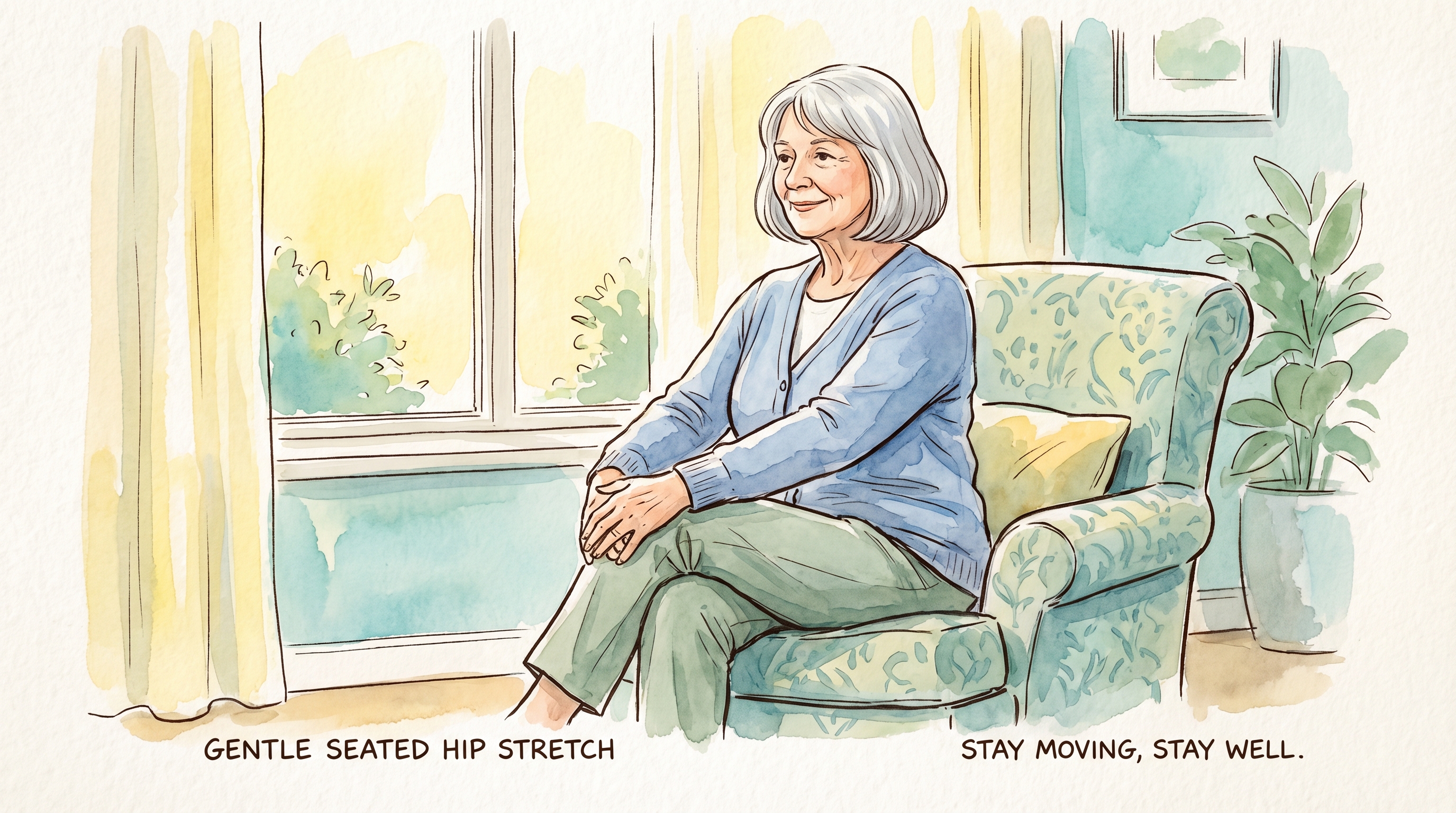
Chair exercises are a safe, effective way to strengthen the muscles around an arthritic hip without the pain of standing exercises. A study in Clinical Rehabilitation found that seated exercise programs improved hip strength and function comparably to standing programs in patients with severe hip arthritis. These 10 exercises take 15-20 minutes and require only a sturdy chair.
Why Chair Exercises Work for Hip Arthritis
When hip pain is severe, standing exercises can feel impossible. The weight of your body pressing down on an inflamed, stiff joint turns every movement into a painful ordeal. Chair exercises remove that barrier.
Seated exercises work because:
- Your body weight is supported — The chair bears your weight, so your hip joint experiences minimal compression during exercise
- You can focus on muscle activation — Without worrying about balance or joint loading, you can concentrate on strengthening the right muscles
- The progression is gentle — You can start with tiny movements and gradually increase range and resistance
- Research supports them — A 2021 study of 186 adults with hip OA found that seated strengthening exercises improved walking speed by 12% and reduced pain scores by 2.4 points on a 10-point scale over 8 weeks
These exercises are ideal if you have moderate to severe hip arthritis, are recovering from a hip injection or procedure, have balance concerns, or are new to exercise and need a gentle starting point.
Before You Begin
Choose the right chair:
- Use a sturdy, armless chair that does not slide or tip (a dining chair works well)
- The seat should be firm — avoid soft couches or recliners
- Your feet should rest flat on the floor when seated
- Sit toward the front half of the seat to allow leg movement
Safety guidelines:
- Mild discomfort (2-3/10) is acceptable; sharp pain means stop
- Breathe normally throughout — do not hold your breath
- Move slowly and with control
- Start with the lower rep range and build up over 2-3 weeks
The 10-Exercise Seated Hip Routine
Exercise 1: Seated Marching
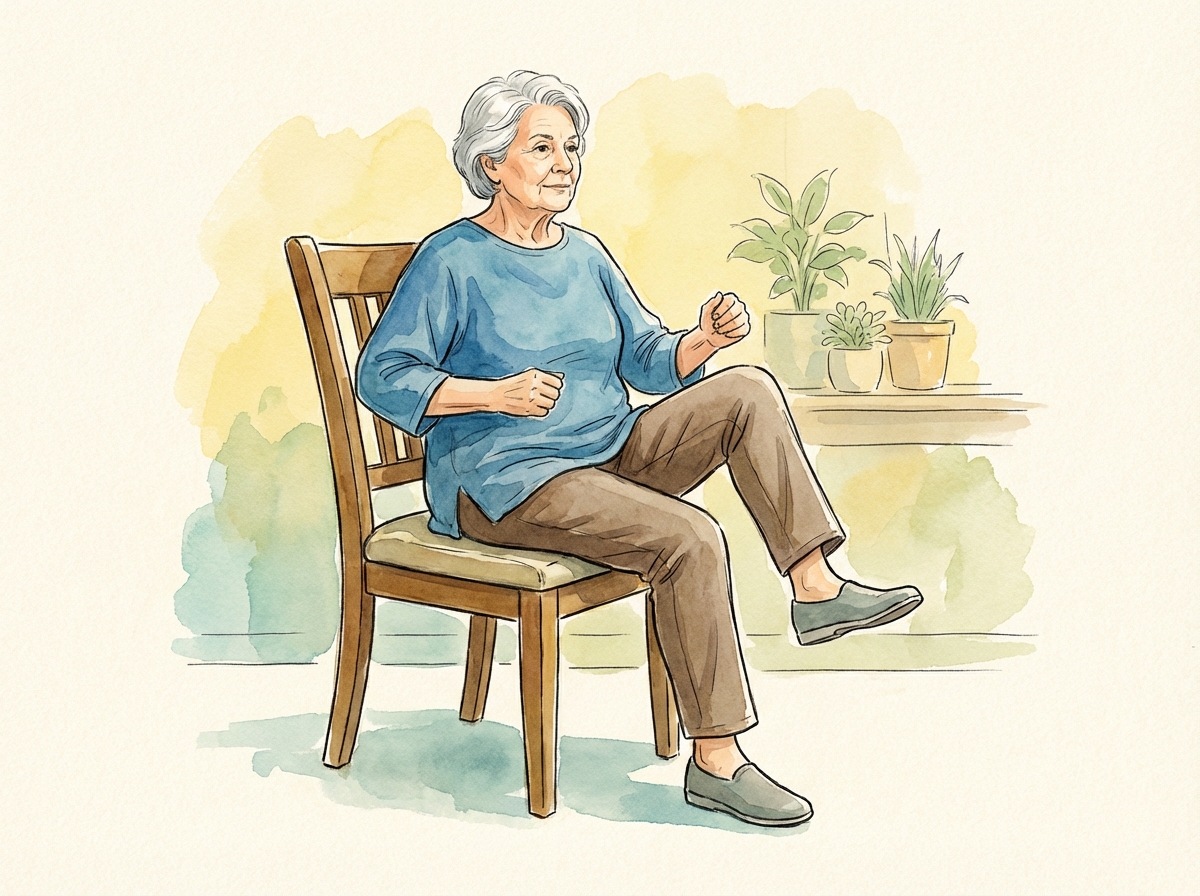
Targets: Hip flexors, core stabilizers
Seated marching warms up the hip joint and improves the range of motion needed for walking and climbing stairs.
- Sit tall with both feet flat on the floor
- Slowly lift your right knee toward your chest (only as high as comfortable)
- Hold for 2 seconds at the top
- Lower your foot back to the floor with control
- Repeat with the left leg
- Reps: 10-15 per leg, alternating
- Sets: 2-3
Modification for severe pain: Lift the knee only 2-3 inches. Even a small range of motion provides benefit.
Exercise 2: Seated Knee Extension
Targets: Quadriceps (front of thigh)
Strong quadriceps reduce the force transmitted through your hip joint with every step.
- Sit tall with feet flat on the floor
- Slowly straighten your right leg until it is parallel to the floor (or as high as comfortable)
- Hold 3-5 seconds, squeezing the muscle on the front of your thigh
- Lower slowly
- Repeat with the left leg
- Reps: 10-12 per leg
- Sets: 2-3
Tip: Point your toes toward the ceiling when the leg is extended to maximize quadriceps engagement.
Exercise 3: Seated Hip Abduction
Targets: Gluteus medius (outer hip)
This is arguably the most important exercise for hip arthritis. Weakness in the gluteus medius is directly linked to increased hip pain and a waddling gait. A 2023 study in Osteoarthritis and Cartilage showed that strengthening this muscle reduced hip pain by 30%.
- Sit tall with knees together and feet flat on the floor
- Place your hands on the outsides of your knees
- Press your knees outward against your hands (your hands provide gentle resistance)
- Hold the push for 5 seconds
- Relax for 2 seconds
- Reps: 10-12
- Sets: 2-3
Progression: Use a resistance band looped around both thighs just above the knees.
Exercise 4: Seated Inner Thigh Squeeze
Targets: Hip adductors (inner thigh)
Balanced strength between inner and outer thigh muscles stabilizes the hip joint during walking.
- Sit tall with feet flat on the floor, hip-width apart
- Place a rolled towel, small pillow, or soft ball between your knees
- Gently squeeze your knees together
- Hold 5 seconds
- Relax for 2 seconds
- Reps: 10-12
- Sets: 2-3
Exercise 5: Seated Hip Flexion with Hold
Targets: Hip flexors, deep core
This exercise builds the strength needed to lift your leg when walking over obstacles or climbing stairs.
- Sit tall near the front of the chair
- Lift your right knee as high as comfortable and hold for 10 seconds
- Lower slowly
- Repeat with the left leg
- Reps: 5-8 per leg (longer holds = fewer reps needed)
- Sets: 2
Tip: Keep your back straight and avoid leaning backward. The effort should come from the hip, not momentum.
Exercise 6: Seated Heel Slides
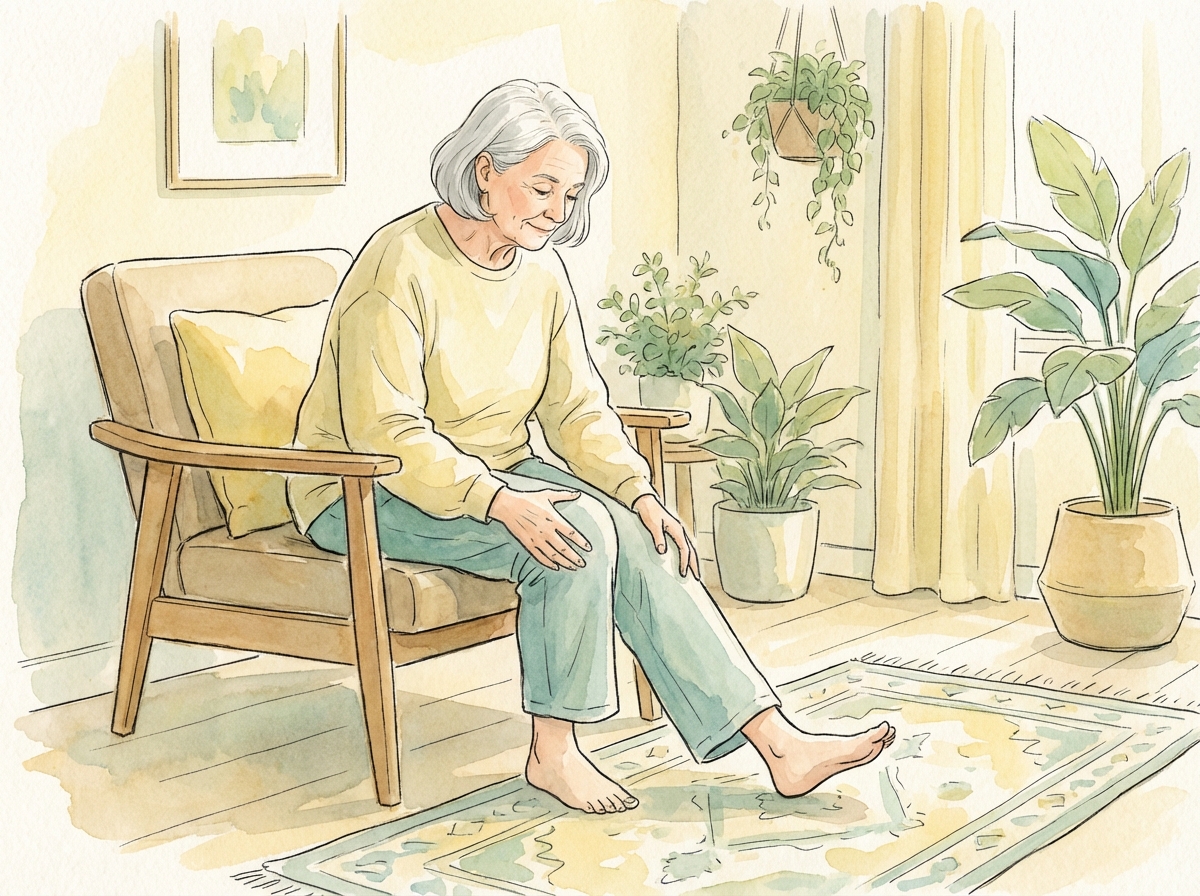
Targets: Hip flexors, hamstrings, range of motion
- Sit tall with both feet flat on the floor
- Slowly slide your right heel back under the chair as far as comfortable
- Hold for 2 seconds
- Slide the heel forward, straightening the leg as far as comfortable
- Return to the starting position
- Reps: 10-12 per leg
- Sets: 2
Exercise 7: Seated Figure-Four Stretch
Targets: Hip external rotators, piriformis, glutes
This stretch addresses one of the most common complaints in hip arthritis — tightness and pain in the buttock and outer hip.
- Sit tall in the chair
- Cross your right ankle over your left knee, letting the right knee fall gently outward
- Sit up straight and lean slightly forward from the hips until you feel a stretch in the right buttock
- Hold for 20-30 seconds
- Switch sides
- Reps: 2-3 per side
Modification: If crossing the ankle over the knee is too painful, place the ankle on a low stool in front of you and lean forward.
Exercise 8: Seated Hip Circles
Targets: Hip joint mobility, synovial fluid circulation
Gentle circular movements help distribute synovial fluid (the joint’s natural lubricant) across cartilage surfaces.
- Sit tall near the front of the chair
- Lift your right foot slightly off the floor
- Make small clockwise circles with your knee (moving from the hip)
- Do 10 circles clockwise
- Do 10 circles counterclockwise
- Switch legs
- Sets: 2 per leg
Tip: Keep the circles small and controlled. Bigger is not better — the goal is gentle lubrication, not stretching.
Exercise 9: Seated Glute Squeeze
Targets: Gluteus maximus (buttock)
A strong gluteus maximus powers walking, stair climbing, and standing from a seated position.
- Sit tall with feet flat on the floor
- Squeeze your buttock muscles tightly, as if you are trying to lift yourself slightly off the chair
- Hold for 5-10 seconds
- Relax for 3 seconds
- Reps: 10-15
- Sets: 2-3
Progression: Try to hold for longer (up to 15 seconds) as you get stronger.
Exercise 10: Seated Ankle Pumps
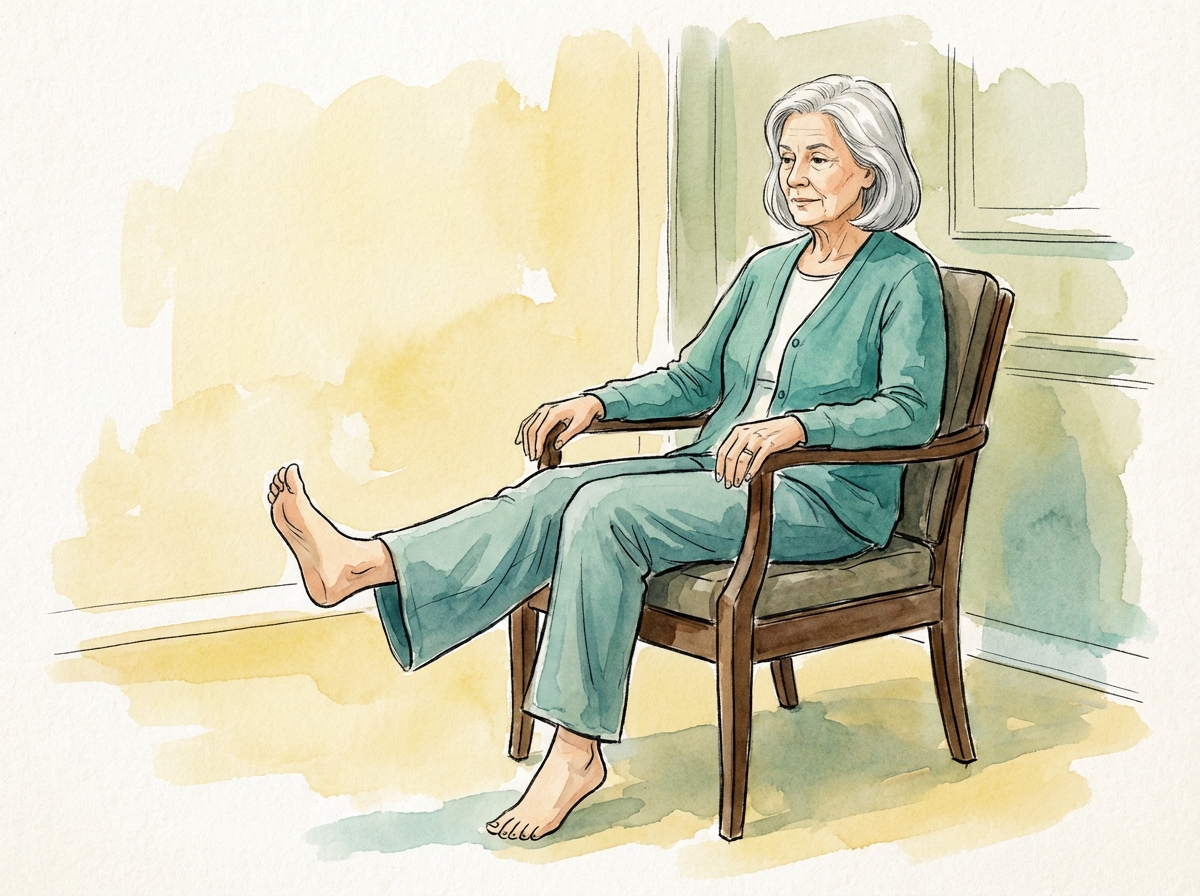
Targets: Calf muscles, circulation, ankle mobility
Ankle pumps improve blood flow, reduce swelling in the legs, and warm up the lower extremity.
- Sit with both feet flat on the floor
- Lift the toes of your right foot toward your shin, keeping the heel on the floor
- Hold 2 seconds
- Press the toes away from you (like pressing a gas pedal)
- Hold 2 seconds
- Reps: 15-20 per foot
- Sets: 2
Get your printable chair exercise guide
Weekly seated exercise plans for hip arthritis, plus tips for progressing safely.
Join 10,000+ readers. No spam.
Building Your Weekly Chair Exercise Routine
Beginner (Weeks 1-2):
- Do exercises 1, 2, 4, 7, and 10 (5 exercises)
- Lower rep range (8-10 reps)
- 3 days per week
- Duration: 10-12 minutes
Intermediate (Weeks 3-6):
- Add exercises 3, 5, and 9
- Full rep range (10-15 reps)
- 4 days per week
- Duration: 15-18 minutes
Advanced (Weeks 7+):
- Complete all 10 exercises
- Add resistance band for exercises 2 and 3
- 4-5 days per week
- Duration: 18-22 minutes
Progressing Beyond Chair Exercises
Chair exercises are an excellent foundation, but as you get stronger, you may be ready to add more challenging activities. Consider progressing to:
- Standing exercises with chair support — Use the chair back for balance while doing standing hip abduction and hip extension
- Walking program — Start with 10-minute walks and build up. Read our walking for hip arthritis guide
- Aquatic exercise — Pool exercise has the strongest evidence for hip arthritis pain relief (effect size d=1.12). See our aquatic exercises for hip arthritis guide
- Physical therapy — A therapist can design a personalized progression plan
For a comprehensive overview of all exercise options, see our hub guide on the best exercises for hip arthritis.
Frequently Asked Questions
How often should I do these chair exercises?
Aim for 3-5 days per week. Daily is fine for gentle exercises like marching, ankle pumps, and stretches. Strengthening exercises (hip abduction, knee extension, glute squeeze) benefit from 1-2 rest days per week to allow muscle recovery.
Can chair exercises replace physical therapy?
Chair exercises are a great complement to physical therapy, but a therapist provides hands-on assessment, personalized exercise selection, and manual therapy techniques that self-directed exercise cannot replicate. If you have moderate to severe hip arthritis, consider at least 4-6 PT sessions to learn proper form and get a customized program.
What if I feel pain during these exercises?
Mild discomfort (2-3 out of 10) is normal and expected when you start exercising arthritic joints. Sharp pain, pain above 4/10, or pain that causes you to hold your breath means stop that exercise. Try reducing the range of motion or number of reps. If pain persists the next day, you did too much — dial back at the next session.
Are these exercises safe after a hip injection?
After a cortisone injection or hyaluronic acid injection, rest for 24-48 hours, then start with the gentlest exercises (ankle pumps, marching, glute squeeze) and gradually add the others. The reduced pain from the injection often creates a window where exercise is much more productive.
Can these exercises help delay hip replacement?
Yes. Regular exercise strengthens the muscles that support your hip, reduces pain, and improves function — all of which can delay or possibly avoid surgery. A 12-year study in BMJ found that patients who completed a structured exercise program were 44% less likely to need hip replacement compared to a control group. Read our guide on hip replacement alternatives for more.
The information in this article is for educational purposes only and is not intended as medical advice. Always consult with your healthcare provider or physical therapist before starting a new exercise program for hip arthritis.
Last medically reviewed: April 2026
Enjoyed this article?
Get more insights like this delivered to your inbox weekly.
Join 10,000+ readers. No spam.