Can Knee Cartilage Grow Back? What's Realistic for Your Arthritis in 2026
Knee cartilage has very limited ability to heal itself. This plain-language guide covers what treatment options genuinely exist for arthritis patients in 2026 — from gel injections to MACI — what is still experimental, and practical steps you can take today to protect your knees.
By Joint Pain Authority Team
Quick Answer
No — you cannot regrow knee cartilage with any treatment available in 2026. Promising early research published in June 2026 showed cartilage regrowth in human tissue samples using an enzyme-blocking drug, but a clinical treatment for arthritis patients is still 5-10 years away at the earliest. Today’s proven options like gel injections and physical therapy remain your best path forward.
Every few months, a headline promises “a cure for arthritis.”
Scientists report regrowing cartilage in mice. New injections show promise in lab samples. Researchers share findings that could someday shift how joint damage is treated.
The headlines are not wrong — the early science is genuinely interesting. But if you have knee arthritis, you need to know the difference between a laboratory result and a treatment your doctor can actually offer you today.
This guide explains what is real, what is coming, and — most importantly — what you can do right now to protect your knees and manage pain while the science catches up.
The Honest Answer First
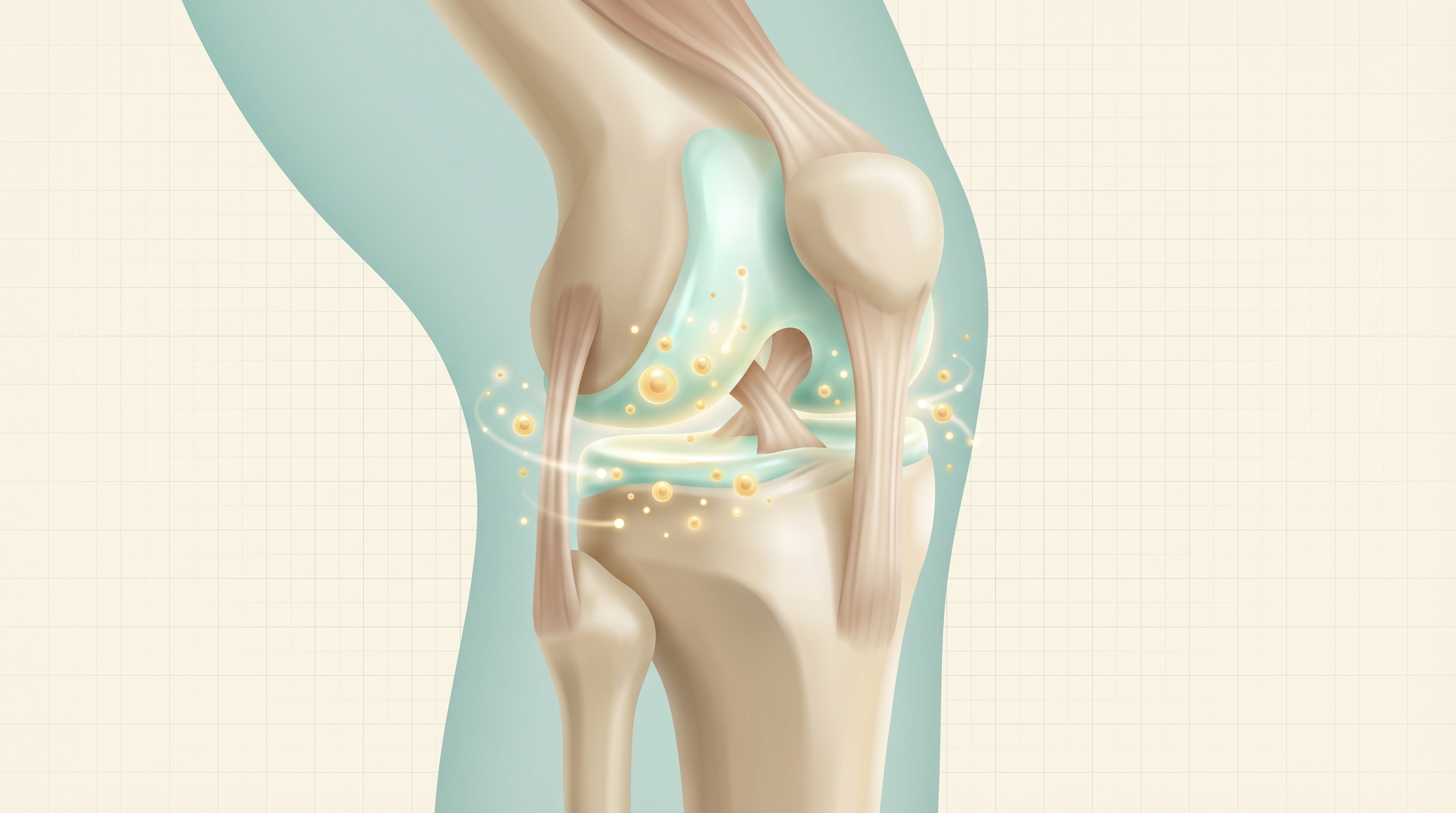
Cartilage is the smooth cushioning tissue that lines the ends of your knee bones. Unlike skin or bone, it has almost no blood supply, which means it cannot heal itself when it wears down from arthritis.
No treatment approved in the United States in 2026 can reliably regrow cartilage in arthritic knees. There are procedures that can repair specific cartilage injuries (more on MACI below), but they are not solutions for the wear-and-tear damage of osteoarthritis.
That said, recent years have produced some genuinely interesting early-stage research. Here is what the evidence currently shows.
What Recent Cartilage Research Means for Arthritis Patients
A Drug That May Re-Enable Cartilage Repair — Still in Early Research
What researchers found: A research team discovered that an enzyme called 15-PGDH accumulates in aging joints and actively blocks cartilage repair — essentially suppressing the joint’s ability to heal itself. Blocking this enzyme with a single injection caused significant cartilage regrowth in older mice and, crucially, produced new cartilage in human knee tissue samples tested in the lab.
Why it matters for patients: This is the first approach that has shown the ability to stimulate true hyaline cartilage — the smooth, load-bearing type — not the inferior scar tissue that earlier methods produced. The drug has already completed Phase 1 safety testing in humans for a different condition, which could help accelerate the path to cartilage trials.
Current status: No dedicated cartilage trial for arthritis patients has started yet. The researchers are actively working to launch one. The drug has been licensed for further development.
Realistic timeline for patients: 5-10 years. If a trial launches soon and succeeds, an FDA-approved treatment could potentially arrive in the early 2030s.
Source: Blau HM et al. (Stanford Medicine), published in Science, June 2026.
Gene Therapy to Reduce Knee Inflammation: Phase 1 Clinical Results
What it is: Researchers developed a gene therapy that delivers an anti-inflammatory gene (IL-1Ra) directly into the knee joint using a harmless virus. IL-1Ra blocks interleukin-1, one of the main chemicals that drives joint inflammation and cartilage breakdown in arthritis.
Phase 1 results: Nine patients received the injection. Anti-inflammatory levels in the joint remained elevated for at least a year. Patients reported reduced pain and improved function. No serious safety issues were found.
Current status: A company formed to advance this research completed a larger Phase Ib study and is in discussions with the FDA about a pivotal efficacy trial — the final stage before potential approval.
Realistic timeline: 5-8 years if current trials succeed. Of the approaches covered here, this one is currently closest to clinical availability.
Source: Phase 1 clinical trial results (Mayo Clinic), peer reviewed.
Motion-Activated Cartilage Repair: The Injectable Gel Research
What it is: Biomedical engineers developed an injectable gel containing a biodegradable material that generates tiny electrical signals when compressed — including during normal walking. These electrical pulses stimulate cartilage cells to grow and repair.
The appeal: It requires no drugs, no stem cells, and no surgeries beyond the injection. Everyday movement becomes the power source for healing.
Current status: This research has received federal funding to advance to large animal model testing. Human trials have not started.
Realistic timeline: 8-12 years minimum before potential clinical use.
Source: Piezoelectric gel research summary (UConn Today), 2025.
The Gap Between Research Headlines and Your Treatment Options
If you have knee osteoarthritis today, none of these early-stage findings will help you in the next few years. The gap between a laboratory result and a treatment your doctor can prescribe is measured in many years of clinical trials, FDA review, insurance coverage decisions, and manufacturing scale-up.
The right way to think about this research: it confirms that cartilage repair is biologically possible, not just a fantasy. That is genuinely good news. It also means that protecting the cartilage you still have — and managing pain effectively now — is the most important thing you can do, because the treatments you may eventually benefit from will work better if your joint health is preserved.
What Is Actually Available Right Now
MACI — The One Real Cartilage Repair Procedure
How it works:
- Your surgeon takes a small cartilage sample from a low-stress area of your knee
- Your own cartilage cells are grown in a lab on a collagen scaffold for 6-8 weeks
- The scaffold is implanted into the cartilage defect during a second surgery
Who it is for — and who it is NOT for:
- Designed for specific cartilage damage from an injury (not widespread arthritis)
- Best results in patients typically under 55
- Requires two surgeries and 6-12 months recovery
- Costs $30,000-$50,000; insurance coverage is variable
Important: MACI is not a treatment for osteoarthritis. If your knee pain comes from years of wear-and-tear rather than a specific injury, MACI is not indicated. Ask your orthopedist whether you have a focal cartilage defect that might qualify.
Stem Cell Injections: What Patients Are Told vs. What Evidence Shows
Stem cell clinics are common, and many make strong claims about cartilage regeneration. Here is what the evidence actually shows:
Most stem cell treatments marketed for knee arthritis are not FDA-approved for this use. They typically involve concentrating cells from your own bone marrow or fat tissue and injecting them into the knee. Costs run $3,000-$10,000 and are almost never covered by insurance. Rigorous controlled trials have not consistently shown these treatments produce new cartilage. Some patients report pain relief, but this is not the same as cartilage regeneration. Be cautious of any clinic claiming to “regrow your cartilage” with injections available today. Read our full stem cell evidence review.
The Honest Timeline
When Could Cartilage-Regenerating Treatments Reach Regular Patients?
Now
Available today: MACI (for focal injury-related defects only), microfracture surgery. These are not solutions for typical osteoarthritis.
3-5y
Possible by 2029-2031: The gene therapy targeting knee inflammation could reach FDA review if a pivotal efficacy trial succeeds. Would likely be available first at major academic medical centers.
5-10y
Possible by 2031-2036: The enzyme-blocking drug approach could enter trials soon and, if successful, reach clinical practice — potentially for OA patients broadly, not just injury-related defects.
10y+
Longer term: Widespread, Medicare-covered cartilage regeneration for all OA patients. Getting from clinical trial to covered treatment at your local clinic takes many additional years beyond FDA approval.
Get Updates on Cartilage Research
We'll alert you when cartilage-regenerating treatments move closer to clinical availability — no spam, just signal.
Join 10,000+ readers. No spam.
What You Can Do Right Now to Protect Your Knees
While waiting for regenerative treatments, you can protect the cartilage you still have and manage pain effectively. This is not a consolation prize — it is the strategy that gives you the best chance of benefiting from future treatments when they arrive.
Proven Options That Work Today
The Bridge Strategy
The most practical approach for knee OA patients in 2026 is what you might call the bridge strategy: use today’s proven treatments to manage pain, preserve joint function, and protect remaining cartilage — while giving the next generation of treatments time to mature.
Gel injections are particularly relevant here. Research shows they can delay knee replacement surgery by years in many patients. If you have significant cartilage loss, see our guides on bone-on-bone knee treatment options and what gel injections cost and what insurance covers. The extra time you buy may matter a great deal as cartilage-regenerating treatments edge closer to availability. If you’re not sure where to start, our guide to non-surgical options before knee replacement can help you build a practical plan with your doctor.
Explore Today's Proven Treatment Options
Connect with specialists who offer evidence-based treatments including gel injections to protect your knees now.
Your information is secure. See our Privacy Policy and Terms of Service.
Thank You!
We've received your request. A provider specialist will contact you within 1-2 business days to help you find the right care.
What happens next?
- 1 We'll verify your insurance coverage
- 2 Match you with quality providers in your area
- 3 Contact you to discuss your options
Questions? Browse our guides:
How to Choose a ProviderShould You Wait for Future Treatments Before Getting Knee Replacement?
This is one of the most common questions patients ask, and the answer depends on your situation.
If your pain is manageable with non-surgical treatments and you can maintain a reasonable quality of life, waiting is reasonable. Delaying surgery preserves your options, and the treatments on the horizon may reduce — or eliminate — the need for replacement for some patients.
If your quality of life is severely affected, you are having trouble sleeping, you cannot walk normally, and conservative treatments have failed — waiting years for unproven future treatments is not advisable. Today’s knee replacement is a highly effective surgery with good long-term outcomes. See our guide on when knee replacement becomes necessary.
How to Follow the Research Yourself
If you want to stay current on clinical trial progress, these are the most reliable sources:
- ClinicalTrials.gov — Search “cartilage regeneration knee osteoarthritis” to find active and recruiting trials
- Arthritis Foundation — Publishes accessible summaries of new research
- NIH News — Covers major breakthroughs from federally funded research
- OARSI — The Osteoarthritis Research Society International, where the research community publishes the latest evidence
Frequently Asked Questions
Can knee cartilage grow back?
No — you cannot regrow knee cartilage with any treatment widely available in 2026. Cartilage has almost no blood supply, which severely limits its ability to heal on its own. MACI can repair specific cartilage defects caused by injury (not widespread arthritis), and several research approaches are in early-stage trials. But a reliable regeneration treatment for standard osteoarthritis is still years away from reaching your doctor’s office. The most important thing you can do right now is protect the cartilage you have and manage pain effectively with proven options.
Do stem cell injections regrow cartilage?
Current evidence does not support stem cell injections as a reliable way to regrow cartilage in arthritis patients. Some patients report pain relief, but controlled studies have not consistently shown true cartilage regeneration. Most stem cell treatments marketed for arthritis are not FDA-approved for this use. Read our full stem cell evidence review before spending thousands on an unproven treatment.
Is stem cell therapy for knee arthritis covered by insurance?
Almost never. Because stem cell treatments for knee arthritis are not FDA-approved for this use, Medicare and most private insurance plans classify them as experimental and will not cover the cost. Out-of-pocket costs typically run $3,000–$10,000 per treatment. This is a key reason to be cautious of any clinic offering stem cell injections for arthritis outside of a formal clinical trial. Always ask for written evidence of FDA approval and your insurer’s coverage decision before agreeing to treatment.
What is MACI and could I be a candidate?
MACI (Matrix-Induced Autologous Chondrocyte Implantation) is an FDA-approved procedure where your own cartilage cells are grown in a lab and implanted back into a specific damaged area of your knee. It is designed for focal cartilage defects — typically from an injury — in patients who are generally under 55. It requires two surgeries and a 6–12 month recovery. It is not indicated for widespread osteoarthritis. Ask your orthopedic surgeon whether you have a specific focal defect that might qualify.
What are realistic alternatives to knee replacement?
For most people with knee osteoarthritis, there are several proven non-surgical options to try before considering surgery. These include physical therapy (to strengthen the muscles that support the knee), gel injections (hyaluronic acid / viscosupplementation) to reduce pain and improve mobility for months at a time, weight management to reduce joint load, and low-impact exercise. MACI is also an option for specific injury-related cartilage defects in younger patients. See our full guide to knee replacement alternatives and what to try before surgery for a detailed treatment sequence.
What does the recent cartilage research mean for my arthritis?
Researchers published early findings in 2026 showing that blocking certain enzymes in the knee can stimulate cartilage to grow in lab samples and animal models. Separately, a gene therapy to reduce joint inflammation completed Phase 1 safety trials. These are genuinely encouraging results. But no clinical treatment from these studies is available yet. Realistically, it may be 5–10 years before any of these approaches reach general clinical practice — and that only happens if the subsequent trials succeed. The most important takeaway for patients: protecting your joints now gives you the best chance of benefiting from these treatments when they do arrive.
Does exercise help cartilage or make it worse?
Regular low-impact exercise does not regrow lost cartilage, but it is essential for preserving what you have. Movement keeps joint fluid circulating (which is how cartilage gets nourishment, since it has no blood supply), maintains muscle support around the knee, and slows further cartilage loss. Inactivity actually accelerates breakdown. See our walking program for knee arthritis for a practical starting plan.
Should I wait for cartilage treatments before getting knee replacement?
If you can manage your symptoms with non-surgical treatments — gel injections, physical therapy, weight management — waiting is reasonable and may allow you to benefit from treatments arriving in the next decade. However, if your quality of life is severely affected and conservative treatments have not helped, waiting years for unproven future treatments is not advisable. Your doctor can help you weigh these factors. See our guide on when knee replacement becomes necessary.
References
-
Blau HM, Bhutani N, et al. 15-PGDH inhibition restores cartilage in aged joints. Science, June 12, 2026. Research summary (Stanford Medicine).
-
Evans CH et al. Phase 1 clinical trial testing gene therapy treatment for knee osteoarthritis. Mayo Clinic.
-
Nguyen TL et al. Injectable piezoelectric gel for cartilage regeneration. Research summary (UConn Today), 2025. Federally funded research.
-
MACI (autologous cultured chondrocytes on porcine collagen membrane). FDA prescribing information, approved December 2016.
-
Rai MF, Pham CT. Viscosupplementation in knee OA: evidence summary. Osteoarthritis and Cartilage, 2025.
Related Articles
Understanding Your Knee Pain
- What Is Knee Osteoarthritis?
- Cartilage Breakdown Explained
- Bone-on-Bone Knee: What It Actually Means
Treatment Options to Consider Now
- Clinical Evidence for Gel Injections: What 6,000+ Patients Show
- Knee Gel Injection Cost Guide: Pricing and Insurance Coverage
- Gel Injection Brand Comparison Guide
- Stem Cell Therapy: The Evidence Review
- Bone-on-Bone Knee: Treatment Options and What to Expect
- What to Try Before Knee Replacement Surgery
- Knee Replacement Alternatives in 2026
- When Is Knee Replacement Necessary?
Protecting Your Knees Today
Topics
Enjoyed this article?
Get more insights like this delivered to your inbox weekly.
Join 10,000+ readers. No spam.