Gout Diet: Foods to Eat and Avoid (Complete Guide)
A complete gout diet guide with high-purine foods to avoid, low-purine alternatives, meal plans, and the evidence behind cherries, coffee, and dairy for uric acid control.
By Joint Pain Authority Team
Quick Answer
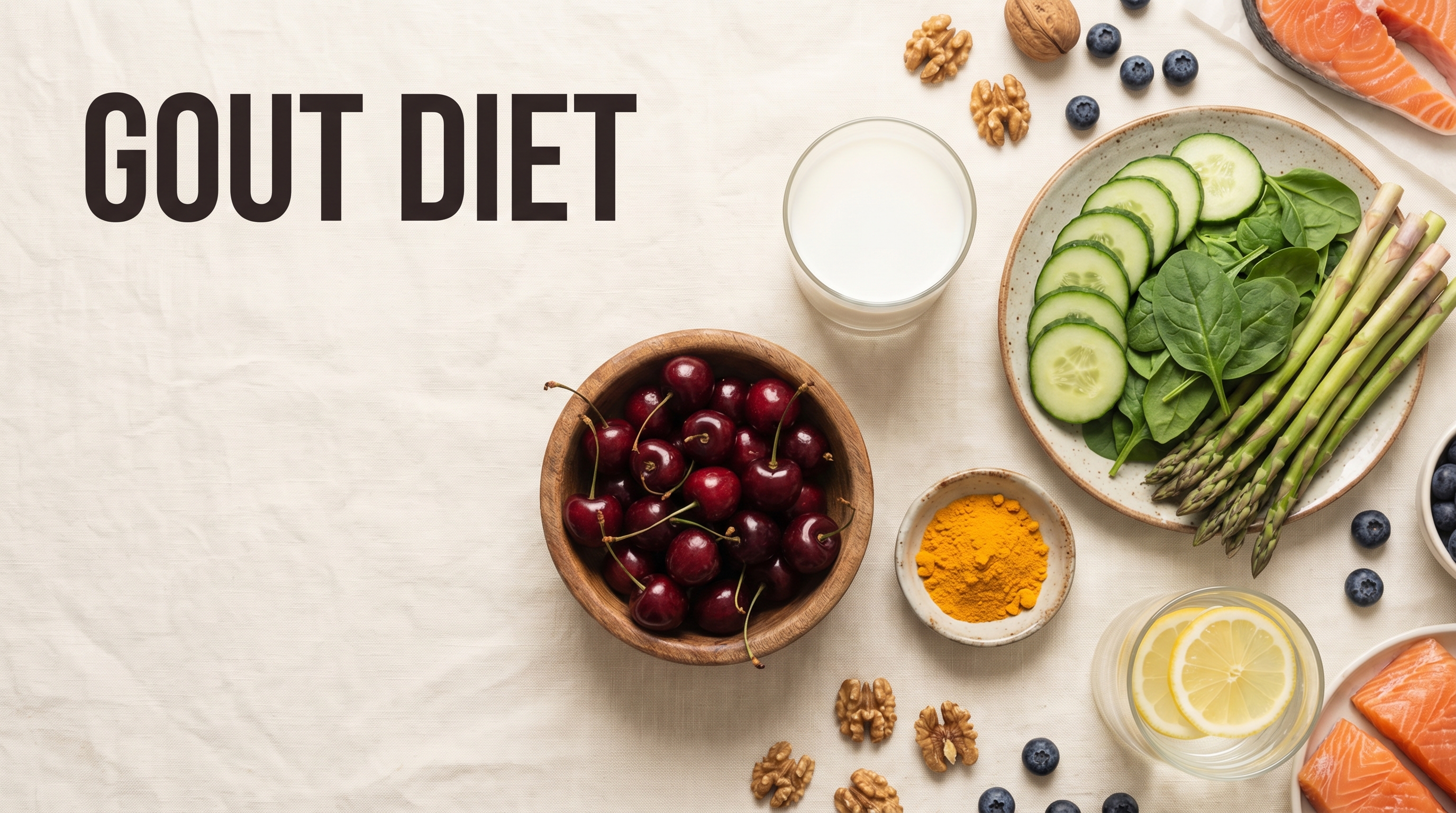
A gout-friendly diet limits high-purine foods (organ meats, shellfish, beer) and emphasizes low-fat dairy, cherries, vegetables, and plenty of water. Diet alone can lower uric acid by 1-2 mg/dL. Combined with medication, these changes significantly reduce flare frequency — especially important for older adults managing gout alongside other joint conditions.
How Food Affects Gout
Your body produces uric acid when it breaks down purines — natural compounds found in your cells and in many foods. When uric acid levels stay above 6.8 mg/dL, crystals can form in your joints and trigger a gout flare.
Here is the key number: diet accounts for about 12% of the variation in uric acid levels, according to a large population study in the British Medical Journal. That means diet alone will not cure gout for most people. But it absolutely matters. A study of 633 gout patients found that those who followed a low-purine diet had 40% fewer flares over 12 months compared to those who did not change their eating habits.
Diet works best as a complement to medical treatment, not a replacement.
Foods to Avoid or Strictly Limit
High-Purine Foods (Avoid)
These foods produce the most uric acid and should be eliminated or reserved for rare occasions.
| Food | Purine Content (mg/100g) | Risk Level |
|---|---|---|
| Liver (beef, chicken) | 300-400 | Very High |
| Sweetbreads (thymus) | 825 | Very High |
| Anchovies | 410 | Very High |
| Sardines | 345 | Very High |
| Mussels | 310 | Very High |
| Herring | 290 | Very High |
| Game meats (venison, duck) | 200-300 | High |
| Scallops | 200 | High |
Moderate-Purine Foods (Limit to 4-6 oz per day)
- Red meat — Beef, lamb, and pork. Limit to 2-3 servings per week.
- Poultry — Chicken and turkey are moderate in purines. Choose these over red meat.
- Fish — Salmon, tuna, and cod have moderate purine levels but offer heart-healthy omega-3s. Limit to 2-3 servings per week.
- Shellfish — Shrimp, lobster, and crab are moderate risk. Limit to occasional small portions.
Beverages That Raise Uric Acid
Beer is the worst offender for two reasons: it is high in purines from brewer’s yeast, and alcohol itself blocks uric acid excretion by the kidneys. A study in The Lancet found that men who drank 2 or more beers daily had a 2.5 times higher risk of gout compared to non-drinkers.
Hard liquor (whiskey, vodka, gin) raises uric acid less than beer but still increases flare risk. Limit to no more than 1 drink per occasion.
Sugar-sweetened beverages — Soda, sweet tea, and fruit punch contain fructose, which increases uric acid production independent of purines. A study of 46,393 men in BMJ found that 2 or more sugary sodas per day increased gout risk by 85%.
Diet soda — Appears to have no effect on uric acid levels and is a safe alternative.
Wine — Moderate wine consumption (1 glass per day) has a neutral effect on gout risk in most studies. However, during an active flare, avoid all alcohol.
Foods That Fight Gout
Cherries: The Best-Studied Gout Food
Cherries are the only food with direct clinical trial evidence for gout prevention. A landmark study of 633 gout patients in Arthritis & Rheumatology (2012) found:
- Eating cherries over 2 days reduced gout attack risk by 35%
- Cherry intake combined with allopurinol reduced risk by 75%
- Both sweet and tart cherries were effective
How much: 10-12 fresh cherries daily, or 8 ounces of unsweetened tart cherry juice, or tart cherry extract supplements. Cherries lower uric acid and reduce inflammation through anthocyanins, the compounds responsible for their deep red color.
Low-Fat Dairy: 2-3 Servings Daily
Milk, yogurt, and cheese contain proteins (casein and lactalbumin) that increase uric acid excretion through the kidneys.
- Each additional daily serving of low-fat dairy reduces gout risk by approximately 21%, according to a study of 47,150 men over 12 years published in the New England Journal of Medicine
- Choose low-fat or skim options — full-fat dairy is less studied for gout
- Greek yogurt provides extra protein while keeping purines low
Coffee: A Surprising Ally
Multiple large studies consistently show that regular coffee consumption lowers uric acid levels:
- A study of 89,433 participants found that 4-5 cups of coffee per day lowered uric acid by 0.26 mg/dL
- Both caffeinated and decaffeinated coffee appear effective
- The benefit likely comes from chlorogenic acid, not caffeine itself
- Tea does not have the same effect
Vitamin C-Rich Foods
Vitamin C improves kidney excretion of uric acid. A meta-analysis of 13 studies found that supplementing with 500 mg of vitamin C daily lowered serum uric acid by 0.35 mg/dL.
Good food sources:
- Bell peppers (1 cup = 190 mg vitamin C)
- Oranges (1 medium = 70 mg)
- Strawberries (1 cup = 90 mg)
- Broccoli (1 cup cooked = 100 mg)
- Kiwi (1 medium = 64 mg)
Water: The Simplest Prevention Tool
Dehydration concentrates uric acid in the blood and significantly raises flare risk. A study in the American Journal of Medicine found that adequate water intake (8+ glasses daily) reduced gout attack risk by 46% compared to drinking 1 glass or less.
- Aim for 8-12 glasses of water daily
- Increase during hot weather, exercise, or illness
- Keep a water bottle visible as a reminder
- Unsweetened sparkling water counts
Vegetables: All Safe, Including “High-Purine” Ones
A common myth is that vegetables like asparagus, spinach, mushrooms, and cauliflower trigger gout because they contain purines. Large population studies in the BMJ and Annals of the Rheumatic Diseases have consistently found that high-purine vegetables do not increase gout risk.
The likely reason: vegetable purines are processed differently by the body than animal-derived purines. Eat all the vegetables you want without worry.
Sample 7-Day Gout-Friendly Meal Plan
Monday
- Breakfast: Oatmeal with walnuts and fresh cherries, skim milk, coffee
- Lunch: Large garden salad with chickpeas, bell peppers, olive oil dressing, whole grain bread
- Dinner: Baked chicken breast (4 oz), roasted broccoli, brown rice
- Snack: Greek yogurt with strawberries
Tuesday
- Breakfast: Scrambled eggs with spinach and tomatoes, whole wheat toast, coffee
- Lunch: Lentil soup with carrots and celery, side salad
- Dinner: Grilled salmon (4 oz), sweet potato, steamed green beans
- Snack: Apple slices with almond butter
Wednesday
- Breakfast: Whole grain cereal with skim milk and blueberries, coffee
- Lunch: Turkey sandwich (3 oz) on whole wheat with lettuce, tomato, avocado
- Dinner: Vegetable stir-fry with tofu over brown rice
- Snack: Tart cherry juice (8 oz) with a handful of almonds
Thursday
- Breakfast: Greek yogurt parfait with granola and mixed berries, coffee
- Lunch: Black bean and corn salad with lime dressing, whole grain crackers
- Dinner: Pasta primavera with vegetables and olive oil
- Snack: Cottage cheese with pineapple
Friday
- Breakfast: Peanut butter on whole wheat toast, banana, skim milk, coffee
- Lunch: Egg salad on mixed greens with whole grain bread
- Dinner: Grilled chicken (4 oz) with roasted cauliflower and quinoa
- Snack: Cherries (10-12) with a small handful of cashews
Saturday
- Breakfast: Vegetable omelet with low-fat cheese, whole wheat toast, coffee
- Lunch: Minestrone soup with whole grain roll
- Dinner: Baked cod (4 oz), roasted asparagus, baked potato
- Snack: Smoothie with tart cherry juice, banana, and yogurt
Sunday
- Breakfast: Pancakes with fresh berries, skim milk, coffee
- Lunch: Mediterranean bowl with hummus, cucumber, tomato, feta, and pita
- Dinner: Lean pork tenderloin (4 oz), roasted Brussels sprouts, wild rice
- Snack: Trail mix with dried cherries and almonds
Get weekly gout management tips
Evidence-based nutrition and treatment strategies for gout and joint pain, delivered to your inbox.
Join 10,000+ readers. No spam.
Weight Management and Gout
Obesity is one of the strongest modifiable risk factors for gout. Excess body fat increases uric acid production and decreases kidney excretion — a double hit.
The encouraging news: even modest weight loss helps. A study in Annals of Internal Medicine found that losing just 10-15 pounds lowered uric acid by 1-2 mg/dL — enough to meaningfully reduce flare frequency.
Critical warning: Avoid crash diets and fasting. Rapid weight loss temporarily spikes uric acid levels and can trigger severe gout flares. Aim for gradual loss of 1-2 pounds per week through the balanced, low-purine eating pattern described above.
For more on how weight affects your joints overall, read our guide on weight loss and arthritis pain reduction.
When Diet Is Not Enough
Dietary changes alone may not adequately control gout if you:
- Have serum uric acid consistently above 9 mg/dL
- Experience more than 2 flares per year
- Have tophi (visible uric acid deposits under the skin)
- Have uric acid kidney stones
- Have chronic knee gout with joint damage
In these situations, uric acid-lowering medications like allopurinol or febuxostat are essential. A gout-friendly diet enhances medication effectiveness and may allow lower doses over time.
Frequently Asked Questions
Can I ever eat steak or shellfish if I have gout?
Yes, in moderation. Limit red meat to 4-6 ounces on days you eat it, and keep it to 2-3 times per week or less. Choose lean cuts. Avoid during active flares. Shellfish like shrimp and lobster can be eaten occasionally in small portions.
Is all alcohol equally bad for gout?
No. Beer is the worst because it combines high purines with alcohol’s uric acid-raising effect. Liquor is moderately risky. Wine in moderation (1 glass daily) appears to have the least impact. During a flare, avoid all alcohol completely.
How quickly can diet changes lower my uric acid?
Dietary changes typically lower uric acid by 1-2 mg/dL over several weeks. You may notice fewer flares within 1-3 months of consistent dietary improvement. However, if your uric acid is very high, medication will produce faster and larger reductions.
Are gout supplements (cherry extract, vitamin C) worth taking?
Cherry extract has the strongest evidence and is worth trying — it reduced flare risk by 35% in clinical trials. Vitamin C at 500 mg daily has a modest benefit (lowering uric acid by about 0.35 mg/dL). Always discuss supplements with your doctor to avoid interactions with gout medications.
Is a vegetarian or vegan diet good for gout?
Plant-based diets tend to produce less uric acid than meat-heavy diets. However, high-fructose foods and alcohol can still trigger flares regardless of meat intake. If you follow a plant-based diet, focus on whole foods, limit added sugars, and ensure adequate protein from legumes, tofu, and dairy (if not vegan).
Does drinking more water really prevent gout attacks?
Yes. Research in the American Journal of Medicine showed that people who drank 8 or more glasses of water daily had a 46% lower risk of gout attacks compared to those who drank very little water. Hydration helps kidneys flush uric acid more efficiently.
The information in this article is for educational purposes only and is not intended as medical advice. Always consult with your healthcare provider before making significant dietary changes, especially if you take gout medications or have kidney disease.
Last medically reviewed: April 2026
Topics
Enjoyed this article?
Get more insights like this delivered to your inbox weekly.
Join 10,000+ readers. No spam.